

If there’s one thing most strata managers would love less of, it’s the “surprise” maintenance job.
The burst pipe. The stuck garage door. The lift that suddenly refuses to cooperate on a Monday morning. The complaint that lands at 7:03 am with five residents CC’d, a committee member replying-all, and someone asking, “Why wasn’t this picked up earlier?”
Here’s the uncomfortable truth: most of those surprises aren’t truly unexpected. They’re just unscheduled.
That’s why a preventive maintenance calendar is such a game-changer for residential strata. It turns maintenance into a predictable operating rhythm, so you’re not constantly reacting. You’re planning, inspecting, servicing, and fixing small issues before they become expensive emergencies.
And when you pair that calendar with solid preventive maintenance management, you’re not just making a list. You’re building a repeatable system: tasks are scheduled, suppliers are allocated, residents are informed, compliance records are captured, and committees get clean reporting. That’s the difference between “we meant to do it” and “it’s done, and here’s the evidence.”
This article is designed to be practical. It’s not a generic “do maintenance sometime” checklist. It’s a month-by-month 2026 calendar you can actually use, then tailor to each building you manage.
The 2026 Month-by-Month Preventive Maintenance Calendar
A quick note before we jump in: every building is different. Some schemes have lifts and basements. Others have pools, gyms, rooftop plants, or complex access systems. So think of this calendar as a core template, a reliable structure you can adjust based on your asset register, servicing contracts, and local conditions.
Let’s get into it.
January – Reset and Baseline Checks
January is your reset button. Holiday periods tend to create little pockets of chaos: delayed supplier attendance, minor issues ignored, and extra wear-and-tear from high resident movement. If you start the year with a messy backlog, you’ll feel behind for months.
This is the time for you to clear the “mystery jobs,” confirm what’s open/closed, and set a clean plan for Q1.
Key tasks:
- Review open work orders and close anything resolved (or rebook what’s still pending)
- Walk common areas to spot obvious problems like lights out, broken doors, and signage issues.
- Check entry and garage access systems for reliability
- Confirm supplier availability for the quarter (so you’re not scrambling in February/March)
January is a great time to set expectations with contractors. A short email like, “Here’s our Q1 servicing plan and preferred booking windows”, can save you a lot of back-and-forth later.
February – Routine Servicing and Resident-Facing Reliability
February is about the things residents experience daily: lighting, access, security, and general safety. When these are smooth, complaints drop. When they’re unreliable, people notice fast.
By this time, your building should feel “quiet” operationally, no constant niggles, no recurring faults, no reputation for being unreliable.
Key tasks:
- Test common area lighting timers/sensors and replace failures early
- Inspect stairwells, handrails, entry mats, and trip hazards
- Check intercom/entry systems for audio clarity and response consistency
- Review the waste/bin room condition
- Inspect garden/irrigation performance to prevent water waste and dead zones
These are the jobs that often turn into reputational pain. A broken entry door doesn’t just become a repair; it becomes “the building is unsafe.”
March – End-of-Summer Building Envelope Checks
Think “water management.” Late summer and early autumn are a perfect time to get ahead of roof, gutter, and drainage issues before heavier rains arrive.
This will ensure gutters are clear, downpipes flow properly, drainage is doing its job, and known weak spots are documented.
Key tasks:
- Inspect roofs, flashings, and visible membrane issues
- Clear gutters and downpipes
- Check stormwater pits, grates, and drains for blockages
- Inspect basements and lower levels for early signs of ingress
- Flag balcony drainage issues for inspection if there’s a history of complaints
If you catch a drainage issue in March, you often prevent the “emergency plumber in the rain” job in July.
April – Autumn Prevention and Moisture Control
April is about tightening up the building before winter: seals, ventilation, moisture hotspots, and minor repairs that are easy to do now, but painful later.
By this time, you should have turned the March findings into action. You’re not just “noting” problems; you’re fixing them.
Key tasks:
- Check seals around common doors/windows for drafts and water entry points
- Inspect common area waterproofing hotspots like planters, podiums, and known leak areas
- Book minor patching/repairs identified in March inspections
- Check ventilation in enclosed spaces such as basements and stairwells, where applicable.
- Confirm that any contractor recommendations are logged for follow-up
Remember: winter doesn’t create defects. It reveals them.
May – Pre-Winter Systems Readiness
This is the “hidden assets” month. Pumps, basement ventilation, plant rooms, and mechanical systems often get attention only after they fail, usually at the worst time.
This is the time to make sure your key systems are serviced, alarms work, and you’ve reduced the risk of after-hours failures.
Key tasks:
- Service pumps and verify alarms are operational
- Inspect basement ventilation and airflow
- Check the common hot water plant and pipe insulation condition
- Confirm the emergency callout process for winter
- Review lighting in high-risk areas like entries, ramps, and carparks
May is also a good time to re-check slip risks in entry areas before wet weather.
June – Mid-Year Compliance and Documentation Tidy-Up
June is the month to make sure you’re not missing certificates, reports, and servicing documentation. You don’t want to hunt for proof under pressure later.
Prioritise paper trail, records, and “audit readiness, this time of the year. Stand ready so you can quickly pull the service history and compliance docs for key systems without digging through emails.
Key tasks:
- Review compliance servicing schedule vs completed jobs
- Chase outstanding certificates/reports from contractors
- Spot-check emergency lighting, signage, and obvious safety items in common areas
- Clean up your job categories (preventive vs reactive) for clearer reporting
- Provide a simple mid-year summary for the committee (what was done, what’s coming)
This is where strong preventive maintenance management shines. You’re not just collecting documents; you’re attaching them to the exact job record so they’re never lost.
July – Winter Risk Checks: Leaks, Lighting, Slips
Winter problems are loud. Water leaks, lighting failures, slippery entries, and access issues tend to spike now, and residents are understandably less patient.
Ensure you’re inspecting actively during winter, not waiting for complaints to tell you where the problems are.
Key tasks:
- Inspect for leaks in corridors, ceilings, basements, and plant rooms
- Check exterior lighting performance
- Review slip risks at entries, stairs, ramps, and carpark transitions
- Confirm drainage remains clear after heavy rain events
- Revisit any known “repeat offender” issues and escalate if needed
Keep your sanity intact by scheduling a short, recurring winter walk-through. Even 30 minutes can prevent multiple escalations.
August – Performance Review and Planning Ahead
August is a strategic month. You’ve seen what winter brought up. Now you use that information to refine your calendar and improve outcomes.
By this time, you’ve identified patterns like repeat faults, slow suppliers, and recurring complaints. It is now time to act on them.
Key tasks:
- Review supplier response time, quality, reporting, and invoice accuracy
- Identify repeat issues like the same gate failing, the same pump faulting, the same lighting zones
- Update the asset register with what you’ve learned
- Start scoping spring and summer works early
- Align committee expectations for the upcoming planned works
You’re not just doing tasks; you’re improving the system.
September – Spring Uplift and Pest Pressure Points
Spring is when buildings can look tired or feel fresh. It’s also when pest activity and external wear-and-tear become more noticeable.
This is the time to show that common areas feel cared for, and small issues are handled before they become resident frustrations.
Key tasks:
- Pest inspection in bin rooms, garages, and roof voids
- Exterior checks: fencing, gates, external lights, signage, paint deterioration
- Common area “touchpoint” uplift with cleanliness and reliability
- Irrigation testing and schedule adjustment
- Review any garden safety risks
September is often when residents start noticing “presentation.” It’s also a great time to fix minor defects before summer usage increases.
October – Pre-Summer Readiness
Prioritise summer load. Systems get worked harder, and amenities get used more. If something is going to fail due to stress, it often happens now.
October is the time to ensure high-use assets are serviced and reliable before the busy season.
Key tasks:
- Service common HVAC/ventilation systems where applicable
- Inspect pool/spa areas and safety barriers
- Test external lighting and timers
- Check shading, fans, and airflow in common areas
- Confirm garden watering plan for the hotter months
Preventative checks in October reduce December callouts, when supplier availability is usually worse.
November – Annual Inspections and Quote Season
Time is the time for planning and approvals. November is when you need to conduct annual inspections and line up quotes so you’re not rushing into end-of-year decisions.
This means you must have a clear list of planned works, grouped sensibly, with quotes ready for committee review.
Key tasks:
- Annual common property walkthrough to document defects and priorities
- Bundle minor works into one job for better pricing, fewer callouts, faster outcomes
- Get quotes for planned works and lifecycle items
- Draft a “next-year priorities” list
- Review recurring service contracts for renewal timing
Bundling is key here. Ten tiny reactive jobs can become one planned minor works package.
December – Holiday Risk Reduction and Continuity Planning
Making the building stable over the holiday period is critical. When decision-makers are away, small issues can escalate quickly. December is about reducing preventable emergencies and making sure everyone knows what to do if something happens.
Ensure emergency contacts are clear, key assets are stable, and residents aren’t left guessing.
Key tasks:
- Confirm emergency contacts and escalation steps
- Pre-check access systems, garage doors, and entry lighting
- Tidy known high-risk faults before shutdown periods
- Confirm on-call arrangements with key suppliers
- Pre-book January reset tasks so the year starts smoothly
A little planning here can save you a heap of stress and emails when half the world is on leave.
Other Important Things to Consider When Planning Your Calendar
The calendar above is the main event, but it works best when the foundations are solid. Here are the supporting pieces that make the month-by-month plan actually stick.
Start with a simple asset list
Every building has a different “maintenance personality.” A low-rise walk-up will focus on lighting, entry doors, gutters, and general common property wear. A high-rise with lifts, basements, fire systems, and access control needs a more structured servicing rhythm.
Even a basic asset list makes your calendar smarter because it helps you:
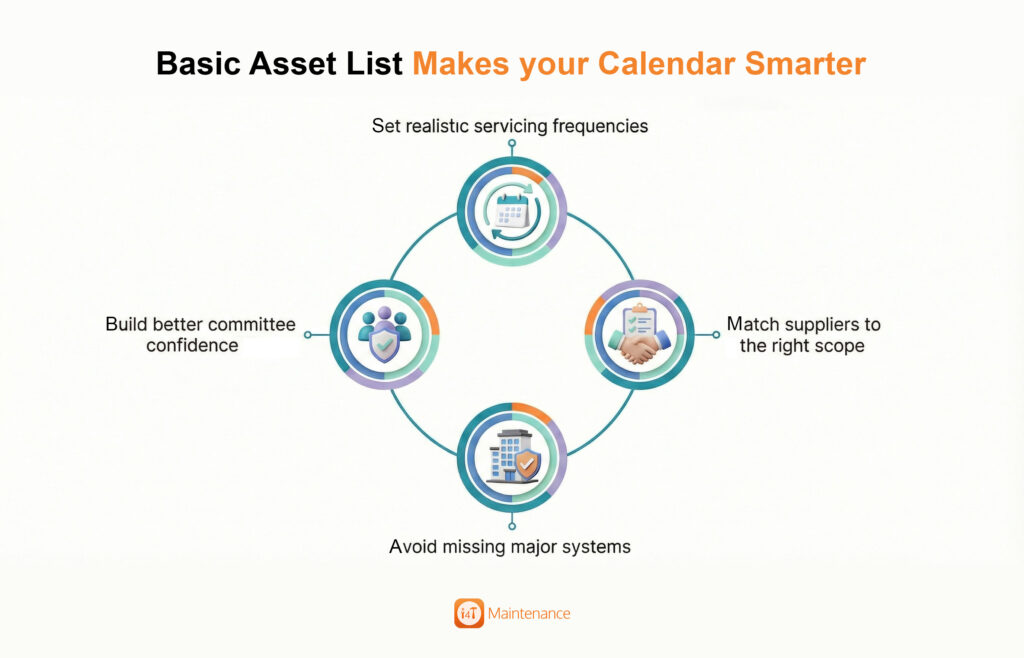
- set realistic servicing frequencies
- match suppliers to the right scope
- avoid missing major systems
- build better committee confidence
Build a repeatable rhythm
A calendar shouldn’t feel like 12 separate plans. It should feel like a rhythm you can repeat year after year, refining it as you go.
A practical approach is:
- monthly: quick, resident-facing checks
- quarterly: scheduled servicing and performance reporting
- annual: deeper inspections, quote season, contract review
This is exactly what preventive maintenance management should enable: recurring tasks, reminders, tracking, and visibility.
Compliance and record-keeping aren’t optional
In strata, “we did it” isn’t always enough. Sometimes you need to show the when, who, what, why, and how around something that happened andwas taken care of.
If your documents live across email threads, shared drives, and supplier portals, things get lost.
That’s why a system that links work orders to service records makes such a difference. It reduces admin load and protects you when questions come up later.
Use the calendar to budget for nasty surprises
A month-by-month calendar helps you predict costs earlier. It also helps you bundle minor works and spread spending across the year rather than dealing with random spikes.
A simple way to structure it:
- Routine servicing
- Small fixes found during inspections
- Planned works requiring quotes/approvals
Even if you’re not doing a full lifecycle plan, this approach makes your budgeting calmer and your committee conversations easier.
Keep communication short and regular
The best maintenance comms are the ones residents barely notice, because they’re clear, consistent, and not panicked.
A simple monthly note can be:
- What’s scheduled this month
- Any disruptions to access/services
- How residents can report issues properly
When residents feel informed, complaints tend to soften. When they feel surprised, the tone often escalates.
Operationalise with preventive maintenance management
A calendar on its own is just intent. Execution is where things usually fall apart: chasing suppliers, following up on overdue work, tracking status, storing reports, managing invoices, and responding to residents.
That’s why the goal isn’t just “have a calendar.” It’s to run that calendar through real preventive maintenance management, so the work actually happens, stays visible, and leaves a clean history.
Make 2026 the Year Maintenance Feels Predictable
A month-by-month preventive maintenance calendar gives strata managers something rare: control. Instead of reacting to the loudest issue of the week, you’re running a plan that reduces failures, smooths budgets, improves resident experience, and makes committee reporting easier.
Start simple. Use the calendar as your backbone, tailor it to each building’s assets, and refine it as you learn. The real win is consistency, because consistency is what stops “surprises” from becoming emergencies.
If you want your 2026 calendar to run like clockwork, with recurring work orders, supplier allocation, tracking, tenant communication, compliance documents, and a full maintenance history in one place, i4T Maintenance helps strata managers deliver reliable preventive maintenance management across every building they manage.
FAQs
A preventive maintenance calendar is a 12-month schedule of inspections, servicing, and minor works designed to prevent breakdowns and reduce emergency callouts in common property.
Start with a basic asset list, set task frequencies, then map those tasks across the year so nothing is missed.
Most buildings use a mix: monthly visual checks, quarterly servicing for key systems, and annual inspections for deeper review and planning. The exact timing depends on building assets and contracts.
Yes. When entry doors work, lighting stays reliable, drainage is maintained, and common areas feel looked after, residents experience fewer disruptions, so complaints drop.
Use preventive maintenance management software to schedule recurring jobs, allocate suppliers, track progress, store service records, and report clearly to committees.