

In Short
Managing strata properties doesn’t have to feel overwhelming. Here are 5 creative strata maintenance hacks that every manager needs to know to make property maintenance smarter, faster, and stress-free.
- Turn reactive fixes into preventive wins.
- Use digital logs to track everything.
- Build a reliable contractor network before you need it.
- Create communication shortcuts for faster response times.
- Measure resident satisfaction after every job.
Managing Strata Maintenance Doesn’t Have to Be Stressful
If you’re a strata manager, you already know how hectic property maintenance can get. One day it’s a leaking roof; the next, it’s a flickering hallway light or a blocked drain. Between handling tenant complaints, coordinating contractors, and managing budgets, there’s barely any breathing space.
But here’s the good news; managing maintenance doesn’t have to be a constant fire drill.
With a few clever “maintenance hacks,” you can stay ahead of issues, keep your residents happy, and save time and money along the way.
These aren’t just ordinary tips; they’re creative, practical, and proven methods to make your job simpler. Whether you manage a small residential block or a large strata complex, these five hacks will help you run maintenance operations like a pro.
Hack #1: Turn Reactive Fixes into Preventive Wins
Most strata maintenance work starts only after something breaks. A leaking pipe. A broken lift. A burnt-out light. It’s what we call reactive maintenance, and while it’s sometimes unavoidable, it often leads to unnecessary stress and higher costs.
The smarter approach? Preventive maintenance.
Preventive maintenance means staying a few steps ahead of potential issues. Instead of waiting for things to fail, you schedule regular inspections, servicing, and small repairs before they turn into major problems.
- Create seasonal checklists: For example, check roofs and gutters before storm season, or test smoke alarms quarterly.
- Monitor asset lifespan: Keep a record of when each system (HVAC, plumbing, lifts, etc.) was installed and serviced.
- Use reminders: Set calendar alerts or digital notifications for upcoming inspections.
- Encourage resident input: Tenants often notice issues first. Invite them to report minor problems early, before they become expensive emergencies.
The result? Fewer breakdowns, lower costs, and a property that runs like clockwork.
Think of it as turning “maintenance emergencies” into “maintenance wins.”
Hack #2: Use Digital Logs to Track Everything
Still managing maintenance requests on paper or in endless email threads? It’s time to upgrade.
Paper-based tracking might have worked years ago, but today it’s a recipe for confusion. Things get misplaced, updates get lost, and accountability disappears.
Switching to digital maintenance logs can transform how you handle repairs, inspections, and supplier communication. Here’s what you get:
- Centralised record keeping: Every job request, approval, and completion note is stored in one place.
- Real-time updates: You can check the progress of a job anytime; no chasing emails or phone calls.
- Faster reporting: Digital tools often let residents log issues directly, saving you time.
- Better accountability: You can track who did what and when, ensuring nothing slips through the cracks.
Plus, digital records are easy to search, sort, and share with committees, auditors, or new team members. No more digging through binders; everything you need is just a few clicks away.
.
Hack #3: Build a Reliable Contractor Network Before You Need It
Imagine this: it’s Sunday evening, and a water main bursts in one of your buildings. You scramble to find a plumber who’s both available and trustworthy, and the clock is ticking.
That’s why building a reliable contractor network in advance is one of the best hacks a strata manager can master.
When you have a pre-approved list of trades ready to go, you can act fast; no guesswork, no stress, no delays. Here are the steps you need to take to build a reliable supplier network:
- Verify compliance: Make sure each supplier is licensed, insured, and qualified for the work they do.
- Check past performance: Look for reviews, referrals, or feedback from other managers.
- Test response times: Send small trial jobs to gauge reliability and communication.
- Keep an updated list: Maintain a database with contact info, service areas, and specialisations.
- Rate and review after each job: A quick internal rating system helps keep quality consistent.
This proactive approach not only helps during emergencies but also builds stronger relationships with suppliers who know your buildings and expectations. Over time, you’ll find that jobs get done faster, better, and with fewer surprises.
Hack #4: Create Communication Shortcuts for Faster Response Times
If there’s one thing that can slow down maintenance more than anything else, it’s poor communication. Messages get lost. Residents follow up multiple times. Contractors miss updates. It’s frustrating for everyone involved.
That’s where communication shortcuts come in.
- Use dedicated channels: Create a single email address or form just for maintenance requests.
- Automate updates: Send automatic “job received,” “job in progress,” and “job completed” notifications to residents.
- Group chats or portals: Set up shared spaces where committee members can see updates in real time.
- Set response expectations: Let residents know how quickly issues will be acknowledged and handled.
When everyone’s on the same page, maintenance doesn’t just get done faster; it feels smoother and more professional.
Clear communication also boosts trust. Residents see that issues are being taken seriously, contractors stay accountable, and you spend less time managing confusion.
Hack #5: Measure Resident Satisfaction After Every Job
This one might surprise you, but feedback is a powerful maintenance tool.
Many strata managers close a maintenance job as soon as it’s done, but that’s where the real opportunity begins. Asking residents for quick feedback helps you identify whether jobs are truly being completed to satisfaction and where there’s room for improvement.
Feedback matters because: it:
- Uncovers hidden issues: Sometimes, a job looks finished on paper but isn’t fixed properly.
- Builds resident trust: People appreciate being heard. It shows you care about their experience.
- Improves contractor accountability: Suppliers are more likely to do their best when they know feedback is collected.
- Guides long-term decisions: Feedback trends help you prioritise repairs and manage budgets effectively.
Simple Ways to Collect Feedback
- Send a short email or text asking residents to rate the job from 1 to 5 stars.
- Include a comment box for suggestions or compliments.
- Keep results visible to the maintenance team to encourage improvement.
Small feedback loops lead to big performance boosts and a much happier community.
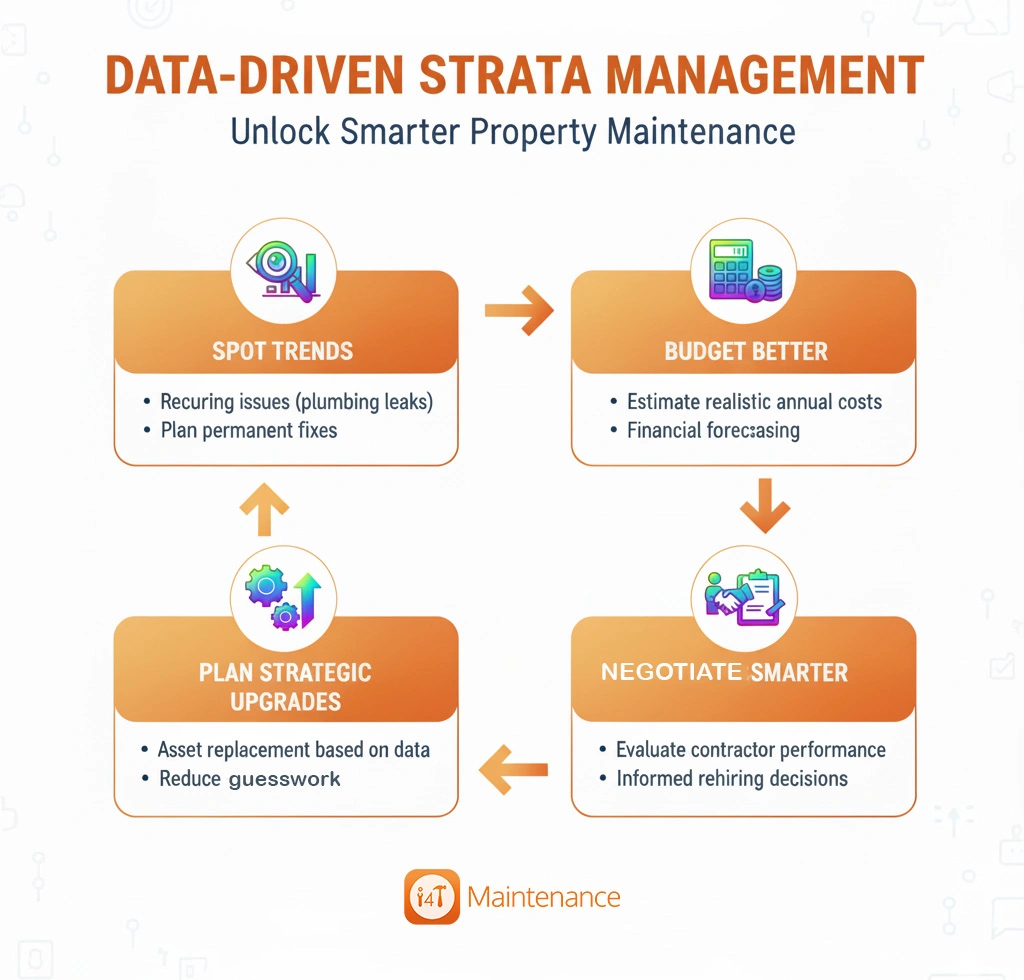
Bonus Hack: Use Data to Predict and Plan Smarter
In the digital age, data isn’t just for accountants and analysts; it’s for strata managers too.
Every maintenance job you record holds valuable insights. Over time, these records can reveal patterns, like which systems fail most often, which seasons bring the most requests, or which contractors deliver the best results.
Here’s How to Turn Data into Smarter Decisions
- Spot trends: Notice recurring issues (like frequent plumbing leaks) and plan permanent fixes.
- Budget better: Use past data to estimate realistic costs for the coming year.
- Negotiate smarter: When you have performance data, you can make informed decisions about which contractors to rehire.
- Plan upgrades strategically: Replace assets based on usage and performance, not guesswork.
By making data part of your maintenance strategy, you’re not just fixing things; you’re continuously improving how your properties run.
A Smarter Way to Manage Strata Maintenance
With so much going on every day, it’s simple to overlook these small, yet powerful hacks that not only save the day but create a maintenance system that’s more transparent, efficient, and resident-friendly.
The result? Less stress for you. More satisfaction for your residents. And smoother operations all around.
Ready to simplify strata maintenance from start to finish? i4T Maintenance is your all-in-one Maintenance Management Software designed to help you log issues, manage supplier compliance, track work orders in real time, and collect instant feedback, all in one easy-to-use platform. Experience a smarter, more efficient way to manage your strata property today with i4T Maintenance.
FAQs
Preventive maintenance is key. Conduct regular inspections, create seasonal checklists, and encourage residents to report issues early before they escalate.
Digital platforms centralise all maintenance data, automate updates, and track job progress in real time. This means less paperwork, fewer delays, and better accountability.
Always verify licences, insurance, and past performance. Choose contractors who communicate well, respond quickly, and have consistent service quality.
Feedback helps you understand if issues were resolved properly, keeps residents engaged, and highlights areas for improvement in contractor performance or communication.
It simplifies every step of maintenance, from logging jobs and assigning suppliers to tracking progress, storing records, and collecting feedback, all in one system. It saves time, reduces stress, and keeps your operations transparent.