
Strata managers know all too well the challenge of juggling planned maintenance with unexpected urgent repairs. Emergency maintenance can disrupt budgets, frustrate residents, strain contractor schedules and throw well-laid plans out the window. However, many of these emergency situations are avoidable if strata managers adopt smarter approaches. In this article, we will explore practical strategies that help you reduce emergency maintenance, creating smoother operations and happier communities.
Why emergency repairs are so disruptive in strata properties
Emergency repairs in strata properties are inherently more complex compared to single-property environments. Strata buildings involve shared assets that affect multiple residents and owners, meaning any breakdown can impact the entire community, not just one household. This creates higher pressure to resolve issues quickly and sensitively.
The shared nature of facilities like lifts, plumbing, fire safety systems and common area lighting means urgent repairs often cause resident disruption across numerous units. Emergency maintenance after hours tends to attract premium labour costs, adding financial strain to the budget. Committees and owners expect clear communication and fast action, amplifying reputational risks for strata managers.
In short, emergency repairs in strata demand juggling multiple stakeholders, higher costs, and more complicated logistics, all while maintaining resident satisfaction.
What usually causes emergency repairs in strata buildings
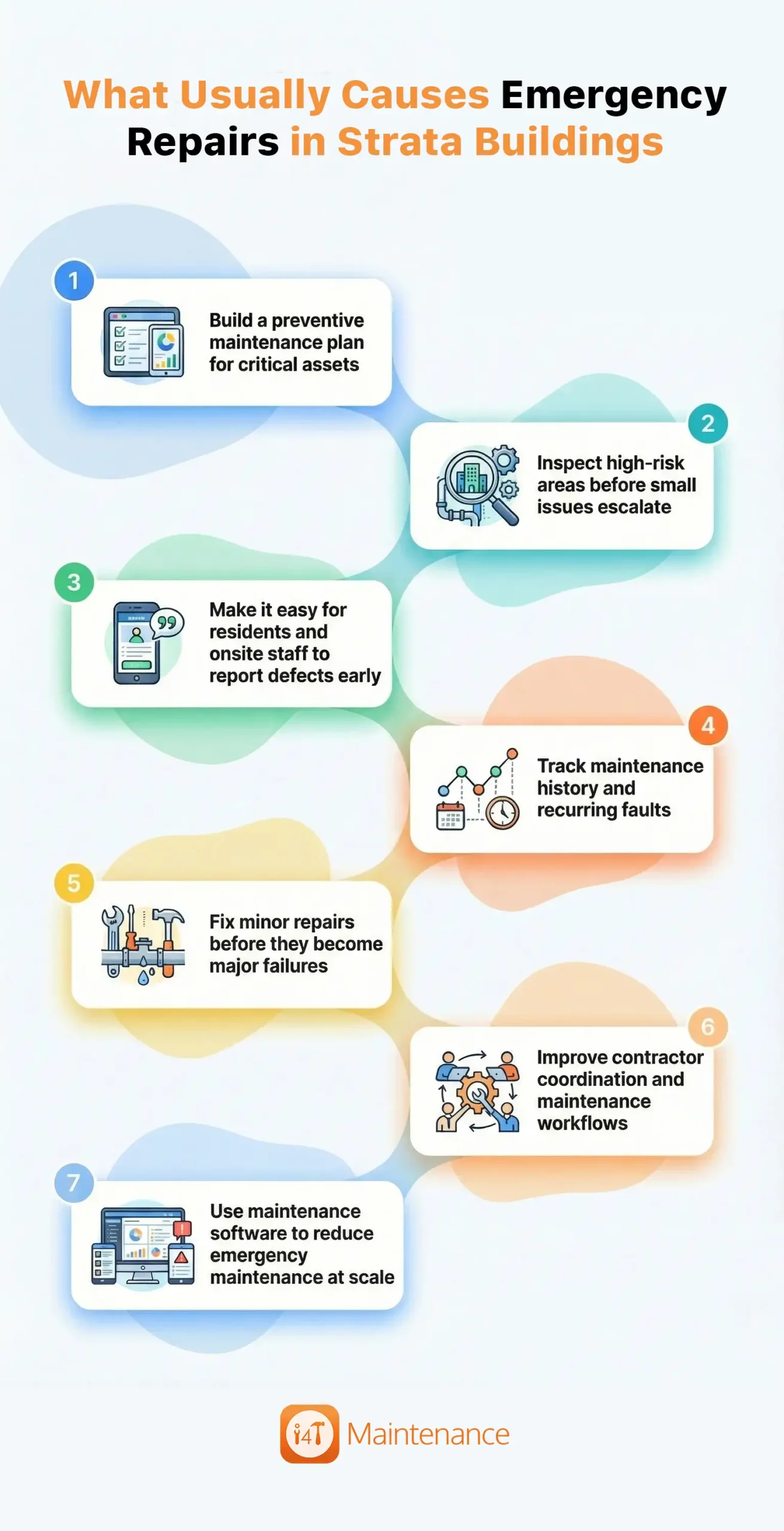
Understanding the root causes of emergency repairs helps strata managers take control. Common contributors include deferred maintenance, where minor issues are left unchecked until they force urgent intervention. Poor asset visibility and inconsistent inspection routines mean potential faults go unnoticed until they escalate.
Slow reporting of emerging issues and fragmented communication channels between residents, onsite staff and contractors also delay responses. Service history gaps make it difficult to spot recurring problems, often resulting in repairs that treat symptoms but not root causes. All these factors combine to create a reactive maintenance culture prone to emergency callouts. So, how do you reduce emergency repairs in strata properties? Let’s take a look:
1. Build a preventive maintenance plan for critical assets
Creating and implementing a tailored preventive maintenance plan is the cornerstone strategy to reduce emergency maintenance in strata properties. Planned servicing of key common property assets such as roofs, pumps, drains, fire safety systems, access controls, lighting, lifts, and plumbing helps identify wear early and remedy issues before they lead to failures.
Preventive maintenance benefits extend beyond simply avoiding breakdowns. Regular maintenance improves asset longevity and efficiency, limits costly after-hours repairs, and ensures compliance with safety standards. A clear maintenance schedule provides visibility for all stakeholders and reduces the firefighting that comes with unplanned breakdowns.
2. Inspect high-risk areas before small issues escalate
Certain parts of strata buildings demand closer and more frequent attention due to their vulnerability and potential impact. Roofs, basements, waterproofing zones, stormwater systems, plant rooms, older infrastructure and weather-exposed areas are prime candidates for scheduled inspections.
Proactive inspections spot minor cracks, blockages or corrosion early, allowing repairs to be planned during normal hours well ahead of escalating into emergencies. This reduces both sudden disruptions and expensive reactive repair costs.
3. Make it easy for residents and onsite staff to report defects early
Emergencies often arise because small defects go unreported or are reported too late. Strata managers should establish simple channels for residents and onsite staff to report maintenance issues promptly. User-friendly reporting tools or apps that allow photo attachments and quick triage save crucial time.
Clear communication around how to report issues and assurance of timely follow-up encourages early reporting, while fast internal communication ensures the right contractors are engaged swiftly. Capturing issues early is a frontline defence against urgent repairs.
4. Track maintenance history and recurring faults
Repeated maintenance requests or recurring faults usually signify deeper underlying problems and a need for more comprehensive intervention. Keeping detailed records of maintenance history and contractor callouts helps spot patterns and plan remedial actions accordingly.
Having this data centralised aids in making evidence-based decisions, promoting longer term solutions instead of patchwork reactive fixes that repeatedly fail. It also supports better communication with the strata committee and owners around asset health and investment needs.
5. Fix minor repairs before they become major failures
Many emergency repairs start as minor annoyances or defects that, if unattended, morph into major issues. Simple problems like small leaks, blocked drains, faulty lights, cracked seals, loose fittings, damaged doors or blocked gutters can quickly escalate.
Timely intervention is not only cost-effective but reduces resident disruption and protects asset life. Strata managers should proactively schedule minor repairs as part of their maintenance workflows and avoid waiting for piece-by-piece failures to cause emergencies.
6. Improve contractor coordination and maintenance workflows
Delays, unclear scopes of work, poor communication and lack of follow-up often contribute to increased emergency repairs. Better contractor coordination ensures that maintenance tasks are executed on time and to standard.
Streamlining maintenance workflows, defining roles clearly and holding contractors accountable for completing work efficiently reduces system gaps that lead to urgent breakdowns. Good contractor relationships also facilitate faster emergency response when issues do arise.
7. Use maintenance software to reduce emergency maintenance at scale
Digital maintenance management software has transformed how strata managers oversee large portfolios and multiple properties. Such platforms centralise asset data, automate service reminders, track job status in real time and store historic maintenance records.
They improve contractor communication, enable easy defect reporting from residents and onsite teams, and support proactive building maintenance by highlighting upcoming servicing needs. Using strata maintenance software ultimately leads to fewer urgent repairs, better budget control and more efficient operational management.
The practical benefits of reducing emergency repairs
Reducing emergency repairs delivers tangible benefits for strata managers and the communities they serve. Lower reactive maintenance means reduced costs, fewer premium after-hours callouts and less disruption to residents’ daily lives.
It enhances the resident experience and satisfaction by providing a sense of well-managed, safe living environments. Committees appreciate clearer reporting and realistic budgeting enabled through planned maintenance strategies. Ultimately, preventive maintenance supports longer asset life, protecting capital investments while lowering total maintenance expenditure.
Signs your strata property is too reactive
Recognising when your strata maintenance approach is overly reactive is crucial to stopping the emergency repair cycle. Some common signs include frequent after-hours callouts, repeated breakdowns of the same asset, complaints from residents about unresolved issues, escalating maintenance costs without clear budget control, and lack of documented maintenance plans or schedules.
If these symptoms sound familiar, it’s time to shift focus from firefighting to a more planned, preventive maintenance mindset.
Conclusion
Reducing emergency repairs in strata properties isn’t about just responding faster but preventing avoidable failures altogether. By building preventive maintenance plans, regularly inspecting high-risk areas, encouraging early defect reporting, tracking maintenance history, fixing minor issues promptly, improving contractor workflows, and using smart maintenance software, strata managers can create more controlled, cost-effective operations.
These changes deliver smoother day-to-day running, happier residents, and longer-lasting assets; the true markers of successful strata management.
Over to you
For strata managers ready to reduce emergency maintenance and streamline building upkeep, i4T Maintenance offers a comprehensive maintenance management software solution tailored to the complexities of strata properties. It supports better maintenance workflows, proactive asset care, transparent job tracking, and efficient contractor coordination, all critical factors to cutting down urgent repairs and improving resident satisfaction. Explore how i4T Maintenance can transform your strata maintenance today.
Frequently Asked Questions
Strata managers can reduce emergency maintenance by implementing preventive maintenance plans, encouraging early defect reporting, conducting regular inspections, tracking maintenance history, and improving contractor coordination.
Preventive maintenance helps avoid costly breakdowns, extends asset life, reduces after-hours emergency costs, and improves resident satisfaction by addressing small issues before they escalate.
Emergency repairs often happen due to deferred maintenance, poor asset visibility, slow issue reporting, fragmented communication, and a reactive maintenance culture.
Reactive maintenance fixes problems after they occur, often leading to emergencies, while preventive maintenance schedules regular upkeep to prevent breakdowns and reduce urgent repairs.
Yes, maintenance software centralises data, automates reminders, streamlines contractor coordination, and supports proactive maintenance, all helping to reduce urgent repairs.