

Key Takeaways
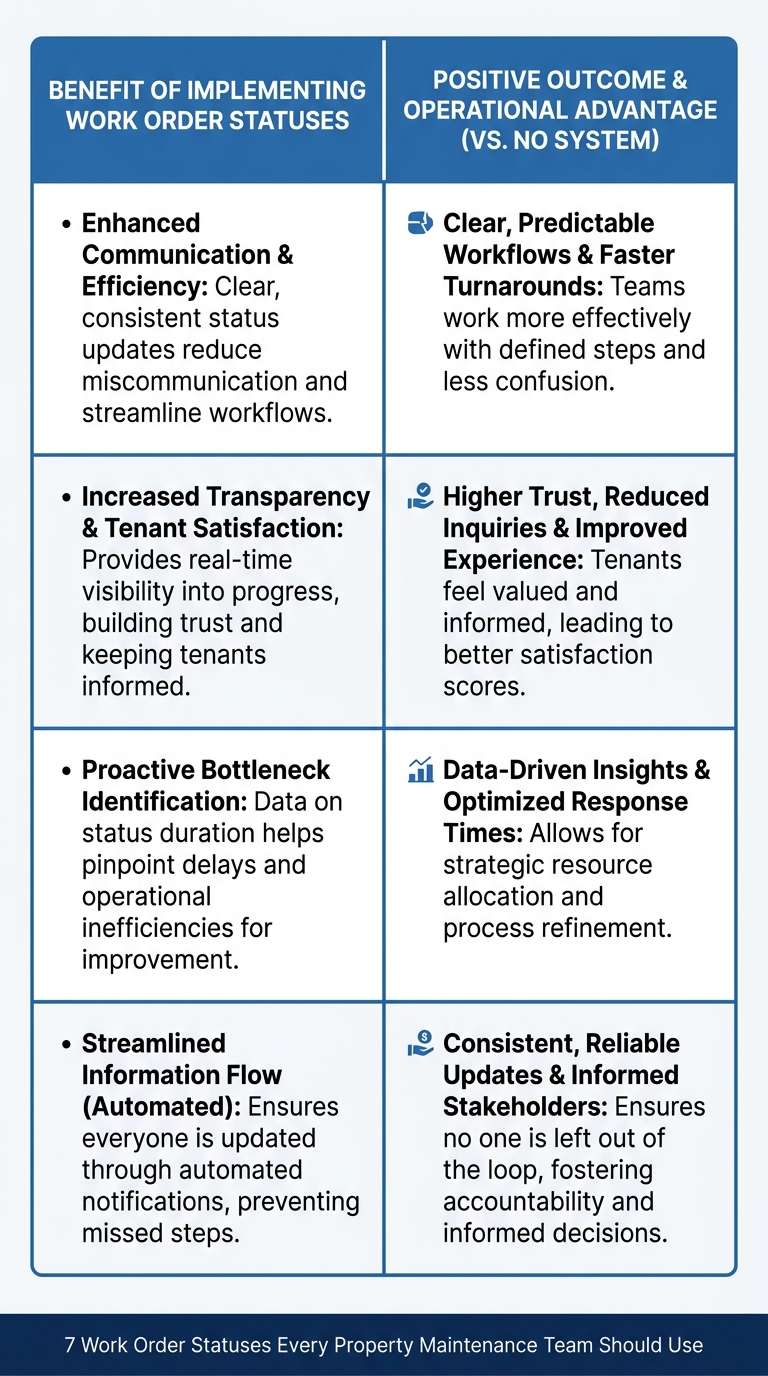
Implementing consistent work order statuses enhances communication and efficiency.
A work order management solution provides transparency and improves tenant satisfaction.
Tracking statuses helps in identifying operational bottlenecks and improving response times.
Automated notifications ensure everyone is informed throughout the process.
Key Answer
Discover the 7 essential work order statuses every property maintenance team should use to enhance efficiency, communication, and job completion rates.
In the fast-paced world of property management, staying organised is key to maintaining tenant satisfaction and ensuring smooth operations. The effective use of a work order management solution can significantly enhance your team’s ability to tackle maintenance requests efficiently. One of the simplest yet most crucial elements of this solution is having clearly defined work order statuses. By adhering to a set of seven essential statuses, you can streamline workflows, improve communication, and boost the completion rate of maintenance tasks.
Why Work Order Statuses Matter
In the realm of strata maintenance, clear communication and efficient task management are pivotal. Implementing a structured set of work order statuses within your work order management solution ensures that everyone–from property managers to contractors–knows exactly where each task stands. This reduces confusion, improves accountability, and optimises the flow of information.
Using consistent statuses helps in maintaining transparency with tenants, allowing them to be informed at every stage of the maintenance process. This transparency enhances tenant trust and satisfaction, which is crucial in retaining long-term residents. Additionally, well-defined statuses aid in tracking performance metrics such as Mean Time to Repair (MTTR), enabling managers to identify bottlenecks and streamline operations.
Status 1: New
The ‘New’ status signifies the beginning of a work order’s lifecycle. When a maintenance request is submitted, it enters the system as ‘New’, indicating that it needs attention. This status is critical for capturing all new requests without any delay, ensuring nothing slips through the cracks. By promptly acknowledging receipt of the request, you enhance tenant satisfaction from the get-go.
To effectively manage this status, ensure your work order management solution is set to notify the relevant personnel as soon as a request is logged. This proactive approach minimises response times and sets the stage for efficient task management. A well-maintained ‘New’ status can improve your service level agreements (SLAs) by guaranteeing that every request is logged and visible.
Expert Perspective
Property Management Specialist
Incorporating well-defined work order statuses is not just about ticking off administrative boxes. It embodies a strategic approach to property management that prioritises efficiency, transparency, and tenant satisfaction. This structured method can drastically reduce the chaos and miscommunication often found in maintenance operations, transforming them into a seamless and predictable process.
Status 2: Under Review
Once a work order is logged as ‘New’, the next step is to move it to ‘Under Review’. This status involves evaluating the request to understand its scope, urgency, and the resources required. Assigning an order to ‘Under Review’ ensures that every request is assessed methodically, allowing for informed decision-making.
In this phase, the maintenance team or strata manager should gather detailed information and, if necessary, contact the tenant for additional insights. This process helps in prioritising tasks and allocating resources efficiently. Implementing ‘Under Review’ as a distinct status can significantly reduce the time wasted on ambiguities and miscommunications, paving the way for faster issue resolution.
Status 3: Approved and Assigned
After a thorough review, the work order can transition to ‘Approved and Assigned’. This status is where the task is officially sanctioned and allocated to the appropriate personnel. By having an ‘Approved and Assigned’ status, you ensure that tasks are not only green-lighted but also directed to the right hands for execution.
This phase is crucial in maintaining a smooth workflow, preventing any backlog or redundant communication. It also provides the assigned personnel with clear directives and ownership of the task, which enhances accountability. Use your work order management solution to automate notifications to the assigned team members, ensuring everyone is in the loop.
Status 4: In Progress
The ‘In Progress’ status indicates that the task is actively being worked on. This stage is vital for managing expectations both internally and with tenants. Keeping this status updated provides transparency and helps in tracking the time taken for each task, which is essential for improving operational efficiency.
To manage this effectively, ensure regular updates are logged in the system. This not only keeps the team informed but also allows tenants to track the progress of their requests, enhancing their confidence in the service. The ‘In Progress’ status is a key touchpoint for communication, making it indispensable in any maintenance workflow.
Status 5: Awaiting Parts, Access or Approval
Inevitably, some tasks will encounter delays due to the need for additional parts, special access, or further approvals. The ‘Awaiting Parts, Access or Approval’ status is designed to handle these pauses effectively, providing clarity on why a task isn’t progressing. This transparency prevents any assumptions and reduces frustration among tenants.
Utilise this status to maintain clear records and communicate the reasons for any hold-ups. Your work order management solution can be set to notify relevant parties about the current status, ensuring everyone remains informed. By managing expectations, you can sustain trust and mitigate the impact of unavoidable delays.
Status 6: Completed
Once the maintenance task is finished, it transitions to the ‘Completed’ status. This stage confirms that all work has been executed to standard and no further action is required from the maintenance team. This status is crucial for signalling the end of the task and should prompt a review to ensure quality control.
Encourage feedback from the tenant to verify satisfaction, which can be facilitated through automated survey requests from your work order management solution. By doing so, you create opportunities for continuous improvement and ensure high service standards are maintained.
Status 7: Closed and Best Practices for Managing Work Order Statuses
The final status, ‘Closed’, signifies that the work order has been verified and archived for records. It marks the completion of the lifecycle and triggers data entry for historical analysis. Properly closing a work order is essential for auditing purposes and maintaining accurate records.
To manage your work order statuses effectively, employ a work order management solution that allows seamless transitions between statuses with automated prompts and notifications. Regular audits of these processes help in identifying areas for improvement. By refining these workflows, you enhance operational efficiency and strengthen tenant relations.
Ready to transform your property maintenance management? Book a Demo of i4T Maintenance – Strata Maintenance Management Software and see how it can streamline your operations with an effective work order management solution.
Frequently Asked Questions
Consistent work order statuses enhance communication, accountability, and efficiency in maintenance processes by providing clear task tracking and transparency.
A work order management solution improves tenant satisfaction by ensuring timely updates and efficient handling of maintenance requests.
This status communicates reasons for delays, ensuring transparency and reducing tenant frustration.
The ‘Completed’ status confirms task completion, prompting tenant feedback and ensuring high service standards.
The ‘Closed’ status finalises the work order, ensuring accurate record-keeping and data for future audits.