

If you’re managing a strata property in Australia, you might already be familiar with the constant juggle between fixing things that break unexpectedly and trying to keep everything ticking along smoothly. This balancing act highlights a fundamental challenge in strata maintenance: reactive maintenance versus preventative maintenance. The hidden cost of reactive maintenance in strata properties often goes unnoticed until expenses spiral out of control and property value takes a hit.
Understanding these hidden costs and making smarter strata maintenance planning decisions in Australia isn’t just good management practice; it’s essential for keeping your property in top shape and reducing long-term expenses.
Let’s break down why relying heavily on reactive maintenance can actually end up costing you more and explore practical strategies to shift towards a more planned, preventative approach.
Why Reactive Maintenance Can Drain Your Budget Faster
When maintenance teams jump into action only after something breaks down or fails, you’re essentially practising reactive maintenance. While it may seem cost-effective in the short term, this approach comes with hidden costs that can quickly add up.
Emergency repairs usually demand urgent attention, often attracting premium labour rates, rushed procurement of parts, and overtime pay. Plus, the longer a fault is left untreated, the more damage it can cause, increasing repair costs substantially.
A burst pipe, for example, fixed on the spot may be cheaper than waiting and dealing with water damage to walls, flooring, and even common property elements. These knock-on costs are rarely budgeted for, making reactive maintenance a silent expense monster.
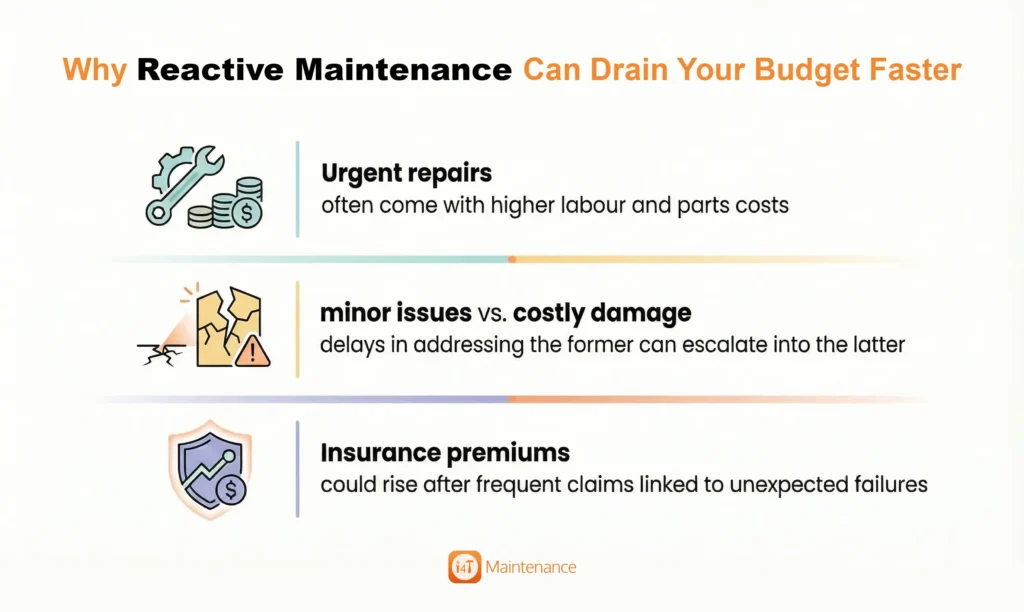
- Urgent repairs often come with higher labour and parts costs.
- Delays in addressing minor issues can escalate them into costly damage.
- Insurance premiums could rise after frequent claims linked to unexpected failures.
The Difference Between Reactive vs Preventative Maintenance
Understanding the difference between reactive and preventative maintenance is central to controlling costs. Preventative maintenance means regularly scheduled checks and upkeep aimed at catching problems before they become serious.
Reactive maintenance waits for failure, while preventative maintenance works proactively to avoid failure altogether. It’s like the difference between waiting for your car’s engine to seize before fixing it, versus regularly servicing it to keep things running smoothly.
In strata properties, adopting preventative maintenance means you’re more likely to spot wear and tear, ageing infrastructure, and potential hazards ahead of time, keeping residents safer and your budget steadier.
Common Causes Behind High Reactive Maintenance Costs in Strata
Several factors contribute to why reactive maintenance costs can soar in strata properties. For one, lack of comprehensive maintenance planning leaves managers chasing fires rather than preventing them.
Aging infrastructure is another biggie. Many strata buildings, especially those older than 20 years, often have outdated systems that require more emergency fixes due to natural wear and system obsolescence.
Poor record-keeping and communication between strata committees and contractors can also lead to missed maintenance windows and increased downtime. This mismanagement invariably boosts reactive maintenance frequency and cost.
How Reactive Maintenance Impacts Strata Property Value
Letting reactive maintenance dominate usually means your strata building looks and feels worn down over time. Persistent issues, emergency repairs causing disruption, and deteriorating common areas can negatively affect resident satisfaction and, ultimately, property values.
Buyers and investors look for well-maintained properties, not ones with an uncertain maintenance history. As upkeep costs rise unpredictably, this uncertainty can lead to lower sale or rental values, delaying sales or leases.
In this way, the hidden cost of reactive maintenance extends beyond immediate bills to an ongoing erosion of asset value that can be tough to reverse.
Long-Term Effects of Relying on Reactive Maintenance in Strata Properties
Beyond the financial strain, relying on reactive maintenance hurts the overall lifespan of your property’s assets. Equipment and building components that aren’t maintained properly tend to fail earlier than expected.
This means you’ll face premature replacements of elevators, roofs, plumbing, and electrical systems, costing your strata budget big time down the track. It can also increase environmental impact due to waste and inefficient operations.
Safety risks tick up too. Emergency repairs might not always address underlying problems fully, escalating the chance of accidents or liability issues.
Strata Maintenance Best Practices to Reduce Reactive Maintenance
Switching gears from reactive to preventative maintenance requires solid planning and systems in place. Start with a thorough condition assessment to identify priority areas that need regular monitoring.
Develop a strata maintenance plan in Australia that schedules clear timelines for inspections, cleaning, repairs, and replacements. This kind of routine work prevents unexpected breakdowns and spreads out costs evenly throughout the year.
Implementing technology, like maintenance management software, can help track tasks, deadlines, budgets, and even contractor performance, keeping everything transparent and organised.
Strategies to Manage Reactive Maintenance Without Breaking the Bank
Reactive maintenance won’t disappear overnight, but you can manage it better with a couple of practical strategies. First, set aside a contingency budget specifically for unexpected repairs, so they don’t derail your entire maintenance budget.
Next, maintain good relationships with reliable contractors who can respond quickly without inflated emergency rates. Negotiate service agreements that include reasonable response times and fixed costs if possible.
Training onsite staff or residents to spot minor faults early also helps reduce bigger reactive repairs. Sometimes a quick fix or flagging an issue early can save thousands.
How Better Planning Helps Reduce Property Maintenance Costs Overall
Effective strata maintenance planning in Australia doesn’t just stop unexpected breakdowns; it reduces total maintenance costs over time. A proactive approach minimises expensive emergency jobs and extends the lifespan of key building systems.
When maintenance work is planned, the whole process becomes more predictable. Procurement of materials and labour can be scheduled and negotiated at better rates, without pressure to rush.
Plus, resident satisfaction generally improves with fewer disruptions and more attention to building condition, making overall property management less stressful.
The Role of Digital Maintenance Management in Strata Properties
One of the smartest moves in strata maintenance today is embracing maintenance management software. These digital platforms bring all your maintenance tasks, records, and schedules into one easy-to-manage system.
You can automate service reminders, track spent budgets against forecasts, manage contractor workflows, and analyse historical data to improve decision-making. It’s like having a digital mate who watches over the building continually, spotting risks and saving money.
With digital solutions tailored for Australian strata managers, you can easily make the switch from reactive to preventative maintenance and keep things running without constant firefighting.
Moving from Reactive to Preventative with i4T Maintenance
If you want to reduce the hidden cost of reactive maintenance in your strata property, the best time to act is now. Moving to preventative maintenance management is easier with tools designed just for the trade and property industry.
i4T Maintenance offers a comprehensive maintenance management software platform to help strata managers in Australia schedule, track, and report on all maintenance activities with clarity.
By adopting such a system, you can cut down on costly emergency repairs, boost asset lifespan, enhance resident satisfaction and keep your strata maintenance budget under control. Too easy!
Book a demo today!
Frequently Asked Questions
Reactive maintenance deals with fixing problems only after they occur, whereas preventative maintenance involves regular scheduled upkeep to prevent issues before they happen.
Frequent reactive maintenance can lower property value by creating uncertainties around building condition and increasing costs, which can deter buyers and investors.
Emergency repairs come with premium labour costs, rushed parts purchasing, and can lead to further damage, all of which drive up expenses.
Adopting a preventative maintenance plan, using maintenance management software, scheduling regular inspections, and maintaining strong contractor relationships help reduce reactive maintenance.
Yes, software streamlines task scheduling, budgeting, contractor coordination, and record keeping, making it easier to shift from reactive to preventative maintenance.