
Tenant maintenance disputes are one of the most common challenges strata managers face across Australia. These disputes can create tension between tenants, owners and strata managers, often escalating unnecessarily if not handled early and effectively. For strata managers, understanding the causes of these disputes and applying practical strategies to prevent and resolve them is essential to keeping all parties satisfied and maintaining smooth property operations.
This article explores how to reduce tenant maintenance disputes by improving property maintenance communication and applying effective strata issue resolution techniques. Whether you’re a seasoned strata manager or new to the role, this guide offers expert insights and actionable tips designed specifically for Australia’s unique strata environment.
Why Tenant Maintenance Disputes Matter in Strata Management
Tenant maintenance disputes not only cause frustration but also consume valuable time and resources. They can delay repairs, increase costs, and damage the relationship between tenants, owners, and strata managers. When disputes escalate, they sometimes require formal intervention, which can sour community spirit and add administrative burdens for strata managers.
Addressing these disputes proactively benefits everyone involved. It fosters a cooperative atmosphere, improves communication, and ensures maintenance issues are resolved promptly, maintaining property value and tenant satisfaction.
1. Understand the Common Causes of Tenant Maintenance Disputes
Knowing the root causes helps strata managers to be proactive. Disputes often arise from:
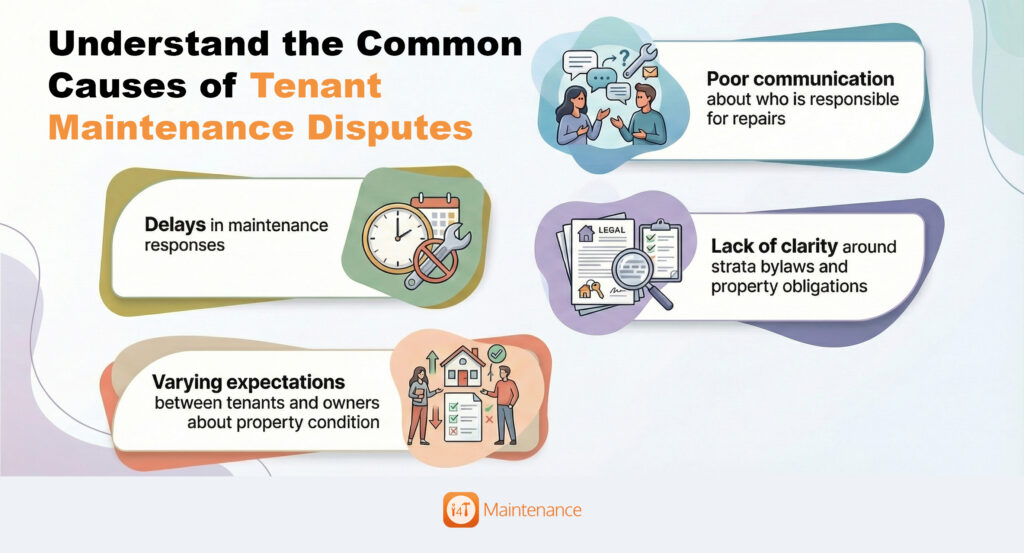
• Poor communication about who is responsible for repairs
• Delays in maintenance responses
• Lack of clarity around strata bylaws and property obligations
• Varying expectations between tenants and owners about property condition
2. Clear Communication Channels Enhance Property Maintenance Communication
Creating straightforward, accessible communication pathways is key. Strata managers should establish clear processes so tenants and owners know exactly how and when to report issues. Communicating response times, what repairs are covered by strata, and how urgent problems are prioritised helps set expectations and reduce misunderstandings.
Using multiple platforms, such as email, SMS, or dedicated online portals, gives tenants and owners confidence that their requests are heard and logged properly.
3. Define Responsibilities Explicitly Between Tenants, Owners, and Strata
Tenant maintenance disputes often stem from confusion over who is accountable for what. Clearly outlining responsibilities in tenancy agreements and owners’ corporation documentation prevents overlap and finger-pointing.
Strata managers should regularly remind tenants and owners about their obligations regarding repairs and upkeep. Providing accessible guides or FAQs summarising each party’s roles reduces unnecessary disputes.
4. Prioritise Prompt and Transparent Repairs Management
Delays in repairs often escalate tensions. Quickly acknowledging maintenance requests and providing regular updates gives tenants confidence the issue is being addressed.
Maintain a tracking system for all maintenance requests and their status. Transparency in repair progress reassures all parties, reducing dispute potential.
5. Use Mediation as a Key Strata Issue Resolution Strategy
When disputes do occur, mediation provides a constructive, low-cost pathway to resolution. Strata managers can facilitate discussions between tenants and owners to clarify issues, negotiate solutions and preserve relationships.
Mediation is far less adversarial than formal legal processes and suits the cooperative spirit essential in strata living.
6. Educate Tenants and Owners on Maintenance Procedures
Regular education sessions or newsletters help ensure everyone understands the maintenance process, including how to submit requests, what repairs strata will manage, and how emergencies are handled.
Incorporating easy-to-understand flowcharts or visual guides can further clarify process steps, reducing frustration and disputes caused by misinformation.
7. Develop and Use a Maintenance Disputes Checklist
A maintenance disputes checklist can help strata managers swiftly assess and respond to issues before they arise or escalate. This checklist should cover:
• Timely acknowledgment of maintenance requests
• Clear documentation of reported faults
• Verification of responsibility between tenant, owner, and strata
• Follow-up timelines and communication logs
• Mediation or escalation procedures if necessary
8. Leverage Technology to Streamline Maintenance Workflows
Advanced software tailored for strata management can transform how maintenance requests are logged, communicated, and resolved. Such platforms enable real-time updates, better tracking, and more efficient coordination between all parties.
Improved visibility reduces tenant maintenance disputes by minimising miscommunication and delays.
9. Foster a Culture of Respect and Cooperation
Strata living requires everyone to play their part considerately. Strata managers can promote community harmony by encouraging respectful communication and understanding between tenants and owners.
Regular community meetings or forums provide a safe space for discussing common maintenance concerns and together developing solutions.
10. Stay Informed About Local Maintenance Regulations and Requirements
Australian strata laws differ slightly between states and territories, affecting maintenance obligations and dispute procedures.
Strata managers need to keep up to date with relevant legislation to ensure compliance and offer accurate guidance to tenants and owners. Confirming local requirements helps avoid disputes caused by misinformation or unmet legal duties.
Frequently Asked Questions
They are disagreements between tenants, property owners and managers over who is responsible for maintenance and repairs in a rental or strata property.
By setting clear procedures, using multiple communication channels and providing timely updates on maintenance requests.
It’s the process of addressing and resolving conflicts or disputes within a strata community, often through discussion, mediation or negotiation.
Clear responsibilities help avoid misunderstandings about who pays for and arranges repairs, preventing disputes.
Yes, maintenance management software improves tracking, communication and transparency, making dispute resolution easier.