
For strata managers across Australia, ensuring the safety and functionality of shared properties is a top priority. One key aspect that can’t be overlooked is having a robust emergency property maintenance plan. Emergencies don’t play by business hours, and neither can a reactive maintenance response.
This article will guide you through how to build an effective 24/7 emergency maintenance response framework tailored to strata properties. We’ll cover practical steps, best practices, and systems like an after-hours maintenance system that makes strata emergency response simple and reliable. Whether you’re a seasoned strata manager or new to the role, this friendly and expert guide will equip you with everything you need to handle emergencies swiftly and smoothly.
Why Emergency Property Maintenance Matters for Strata Managers
Emergency property maintenance is more than just fixing things fast; it’s about protecting residents, preserving property values, and maintaining compliance with Australian regulations. Strata schemes involve multiple stakeholders, owners, tenants, and contractors, which means quick, organised responses are crucial.
Unplanned issues like burst pipes, electrical outages or safety hazards can escalate quickly, causing disruption, liability risks, and costly damage if not addressed promptly. A well-planned strata emergency response reduces downtime, limits property damage, and builds confidence among residents.
1. Defining Your Emergency Maintenance Protocols Clearly
Start by outlining what constitutes an emergency in your strata context. Emergencies generally include situations that threaten health, safety, or structural integrity; think gas leaks, flooding, or major electrical faults. Having clear definitions helps your team, contractors, and residents know exactly when to escalate issues.
Document the protocols step-by-step: how to report emergencies, who to contact, and what initial actions should be taken. When everyone understands these procedures, response times shrink and chaos is avoided.
2. Building an Effective After-Hours Maintenance System
Emergencies can happen any time, so an after-hours maintenance system is vital. This system ensures you have access to qualified tradespeople 24/7 without delay.
Implementing a reliable service roster or partnering with trusted emergency contractors is part of this. Use technology to streamline alerts and dispatch, so requests are tracked and addressed promptly, even outside office hours.
- Set up a dedicated emergency contact line, linked to mobile technicians or contractors.
- Use software tools for real-time alerting and job tracking.
- Regularly review contractor performance and availability after hours.
3. Coordinating a Strata Emergency Response Team
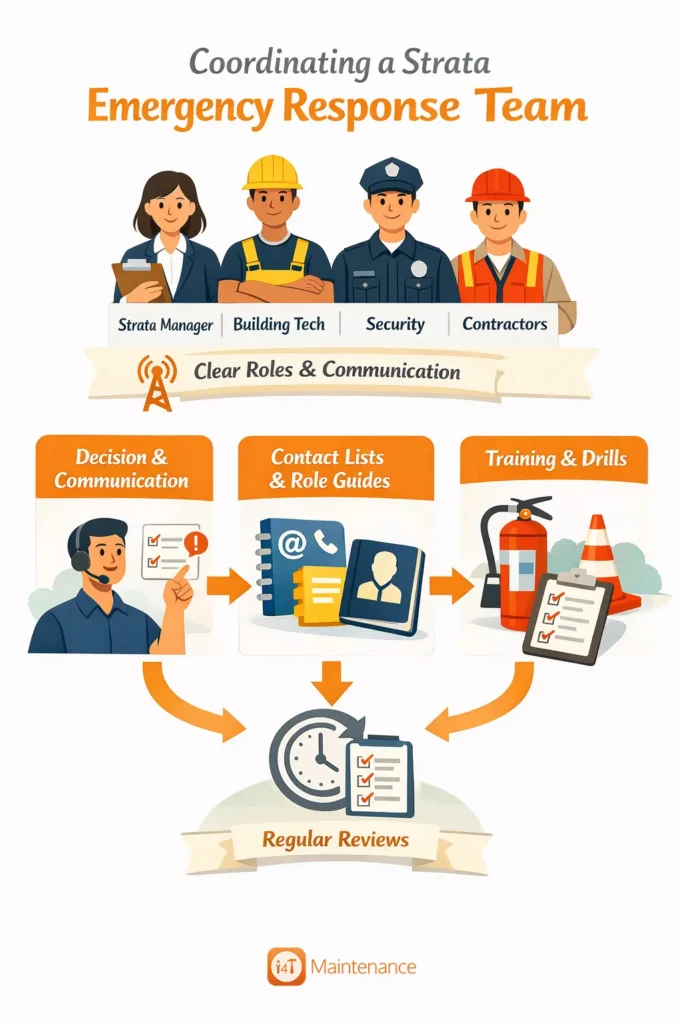
A strata emergency response team usually includes the strata manager, building technician, security personnel, and trusted emergency contractors. Each person has a defined role to ensure a smooth reaction to incidents.
Establish clear communication channels and escalation paths to avoid confusion. Regular training and simulated emergency drills can help keep the team prepared for real-life scenarios.
- Assign responsibility for emergency decision-making and communication.
- Provide team members with contact lists and role guides.
- Schedule periodic reviews of team performance and protocol updates.
4. Creating a Comprehensive Emergency Maintenance Checklist
A good checklist ensures nothing is forgotten when time is critical. Elements typically include initial hazard identification, notification steps, temporary fixes, contractor mobilisation, and follow-up inspections.
Include details about safety gear, shut-off valves, alarm systems, and documentation for insurance or legal needs. Tailor the checklist for strata risks including pools, lifts, fire systems, and common-area plumbing.
- Develop easy-to-access digital and physical copies of checklists.
- Update checklists regularly based on incident learnings and maintenance trends.
5. Leveraging Technology to Support 24/7 Maintenance Response
The best emergency property maintenance plans now rely heavily on digital tools. From receiving maintenance requests via apps to tracking job status and communicating across teams, technology boosts speed and organisation.
Maintenance management systems designed for strata properties allow logging emergencies, assigning tasks, messaging contractors and residents, and maintaining a maintenance history to help with future planning.
- Choose systems that support mobile access for on-the-go updates.
- Integrate automated alerts for new incoming incidents.
- Ensure the platform is user-friendly for both staff and residents.
6. Understanding Compliance and Legal Obligations
Strata managers must be aware of state and territory requirements for emergency maintenance. These vary but typically include timeframes for urgent repairs, safety standards, and notification rules.
While this guide provides practical advice, always check your local regulations to ensure your strata emergency response meets legal standards and avoids penalties.
- Consult government resources for your state or territory’s requirements.
- Keep documentation of maintenance actions for accountability and audits.
7. Communicating Effectively with Residents During Emergencies
Clear communication with residents reduces panic and clarifies what is being done to resolve the issue. Set up an emergency notification protocol that includes how and when residents will be informed.
Use multiple channels such as SMS alerts, emails, or building noticeboards to keep everyone in the loop. Transparency builds trust and can even help gather useful information from residents during incidents.
- Prepare template messages for common emergencies to speed communication.
- Encourage two-way communication for ongoing updates and feedback.
8. Prioritising Regular Training and Emergency Drills
Even the best plans can fail if not tested. Schedule regular training sessions for your strata emergency response team and build simulated emergency drills with contractors and residents involvement.
Practicing scenarios like water main breaks, power outages or fire alarm activations helps identify gaps and improves reaction times when real emergencies occur.
- Include training on communication tools and safety procedures.
- Review drill outcomes and update protocols accordingly.
9. Managing and Learning from Emergency Incidents
After each emergency maintenance event, conduct a thorough review to understand what went well and what could improve. Documenting lessons learnt helps refine your protocols and strengthens future response.
Keep records of repair costs, contractor response times, resident impact and any compliance issues. Over time, this builds a valuable knowledge base to inform maintenance planning.
- Hold team debriefs soon after incidents.
- Update emergency checklists and contact lists regularly based on findings.
Simplifying Emergency Property Maintenance with i4T Maintenance Software
To streamline your 24/7 response framework, consider adopting a purpose-built maintenance management solution like i4T Maintenance. It offers a simple, effective platform to track emergency property maintenance requests, coordinate your after-hours maintenance system, and manage communication across your strata emergency response team.
With features designed specifically for strata managers, i4T Maintenance helps you reduce response times, improve transparency, and maintain a clear audit trail, all while saving you time and stress.
Book a demo today and see how simple emergency maintenance management can be.
Frequently Asked Questions
Emergencies usually involve urgent issues that pose safety risks or cause major property damage, such as gas leaks, flooding, electrical failures, or fire hazards.
It ensures access to qualified tradespeople outside business hours through dedicated contact lines, rosters, and real-time communication tools, enabling rapid emergency responses.
A coordinated team with clear roles enables faster, more organised handling of emergencies, reducing confusion and improving safety outcomes.
Yes, requirements vary by state or territory covering response times and safety standards; strata managers should always confirm local regulations.
Digital tools help track requests, communicate with contractors and residents, automate alerts, and keep detailed records, making emergency management faster and more transparent.