
In the world of strata management, staying ahead of potential issues isn’t just smart; it’s essential. A well-crafted preventative maintenance schedule can make all the difference between smooth operations and costly emergencies. For 2026, property managers need a fresh, practical guide to help navigate the ever-changing demands of communal property upkeep.
This article walks you through everything you need to know about implementing an effective preventative maintenance schedule tailored for strata managers across Australia. From planning your property maintenance diligently to setting up an efficient strata maintenance calendar, you’ll discover how to protect your property investments while keeping residents happy.
Whether you’re new to strata management or a seasoned pro, this guide aims to make maintenance planning less of a chore and more of a strategic advantage.
Understanding the Importance of a Preventative Maintenance Schedule
A preventative maintenance schedule is a proactive approach to property upkeep. It involves regularly scheduled inspections, servicing, and repairs to prevent breakdowns and extend the lifespan of building components. For strata managers, this isn’t just about ticking boxes; it’s about preserving asset value and avoiding unexpected costs.
By shifting focus from reactive fixes to planned maintenance, you reduce emergency incidents, increase property safety, and enhance resident satisfaction. This is particularly vital in multifaceted strata environments where multiple stakeholders are affected by maintenance decisions.
Key Elements of Effective Property Maintenance Planning
Property maintenance planning is at the heart of a successful preventative maintenance schedule. It requires a clear understanding of the property’s infrastructure, common issues, and the seasonal challenges unique to Australia’s diverse climates.
Start with a comprehensive audit of all assets, including lifts, fire safety equipment, plumbing, electrical systems, and common areas. Include warranty details, manufacturer recommendations, and legal compliance requirements to create a baseline for your maintenance calendar.
Remember, good property maintenance planning balances frequency and cost-effectiveness, ensuring neither under-maintenance nor over-servicing.
How to Create a Strata Maintenance Calendar That Works
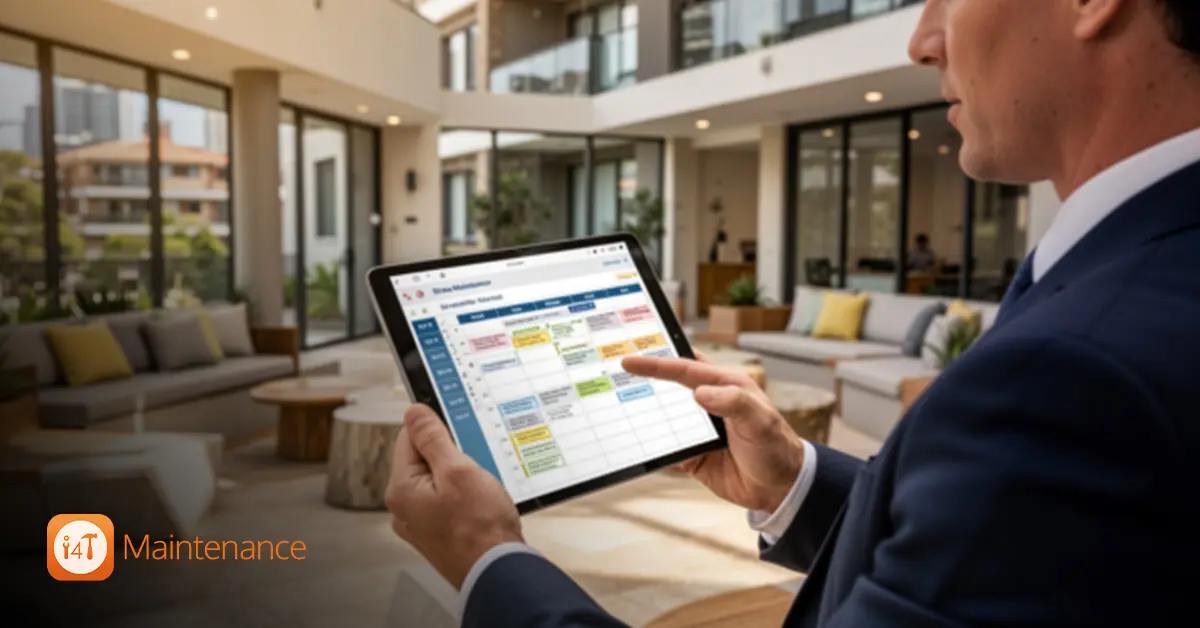
A strata maintenance calendar is your roadmap for timely upkeep tasks throughout the year. It breaks down the preventative maintenance schedule into manageable chunks, helping avoid missed inspections or rushed repairs.
Begin by mapping out crucial tasks based on priority and urgency. Identify monthly, quarterly, bi-annual, and annual responsibilities. For example, quarterly checks for lifts and fire alarms, bi-annual roof inspections before and after storm seasons, and annual servicing of HVAC systems.
Using digital tools to visualise and track these dates simplifies coordination with contractors and stakeholders. A clear strata maintenance calendar prevents overlaps and ensures smooth communication among all parties involved.
Integrating Compliance with Australian Standards in Your Schedule
Compliance is non-negotiable in property maintenance. Australian standards and state regulations set clear benchmarks for safety and functioning, with specific implications for strata management.
For instance, fire safety equipment must be inspected and maintained per strict schedules, while lift servicing and pool inspections also follow regulatory timelines. Integrating these compliance obligations into your preventative maintenance schedule safeguards against legal penalties and protects residents.
Keep an eye on updates from relevant authorities like the Australian Building Codes Board and state-based workplace safety bodies to ensure your maintenance calendar remains current.
The Financial Benefits of a Preventative Maintenance Schedule
While some may see maintenance as a cost centre, a well-executed preventative maintenance schedule delivers long-term savings. By regularly maintaining equipment and infrastructure, you stave off major repairs that come with hefty price tags.
Preventative maintenance also improves asset lifespan and keeps insurance premiums lower, as insurers often favour well-managed properties. Additionally, smooth operations reduce tenant complaints and vacancy risks, further protecting income streams.
Ultimately, effective property maintenance planning turns maintenance from a reactive headache into a strategic investment.
Tailoring Maintenance Schedules to Different Property Types
Different strata properties have varying needs: apartment complexes, townhouse estates, and mixed-use developments all present unique challenges.
For example, high-rise buildings will prioritise elevator inspections and façade maintenance, while estates might focus more on landscaping and boundary fencing upkeep. Public amenities like pools and gyms require specialised servicing.
Your preventative maintenance schedule should reflect these differences, allocating resources and frequency accordingly to ensure nothing critical slips through the cracks.
Tips for Effective Communication with Residents and Contractors
A preventative maintenance schedule is only as good as how well it’s communicated. Keeping residents informed about upcoming works reduces frustration and builds trust.
Use newsletters, notice boards, or digital portals to update residents on scheduled inspections or upgrades. Clear timelines and contact points help manage expectations.
Similarly, maintaining transparent, regular communication with contractors ensures work is completed on time and to standard. Build good relationships to foster responsiveness and reliability.
Leveraging Technology for Streamlined Maintenance Management
In 2026, technology will remain a game-changer in property maintenance planning. Software tools designed for strata management can automate scheduling, reminders, contractor management, and reporting.
Digitising your strata maintenance calendar simplifies oversight, reduces paperwork, and allows quick access to all maintenance records, handy for audits or budget planning.
Considering platforms like i4T Maintenance can empower you to manage complex maintenance workflows effortlessly, save time, and improve overall asset management.
Common Challenges in Implementing Preventative Maintenance and How to Overcome Them
Implementing a preventative maintenance schedule isn’t without hiccups. Common challenges include tight budgets, unforeseen repairs, and stakeholder resistance to change.
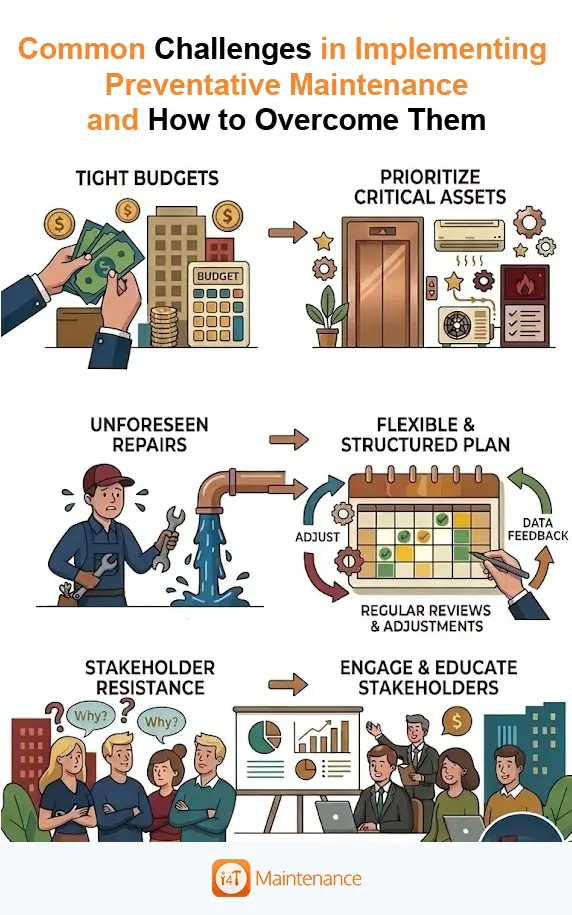
To overcome these, prioritise critical assets and build a flexible yet structured plan. Regularly review and adjust the strata maintenance calendar based on feedback and emerging needs.
Engaging stakeholders early, educating residents, and demonstrating long-term financial benefits help secure support and smooth implementation.
Evaluating and Improving Your Preventative Maintenance Schedule Over Time
Maintaining a preventative maintenance schedule is an ongoing process. Regularly evaluate performance metrics such as maintenance costs, incident rates, and resident feedback.
Use these insights to refine your property maintenance planning. Continuous improvement ensures the schedule remains relevant, cost-effective, and aligned with compliance needs.
Remember, an adaptable strategy is best suited to managing the complexities of strata properties.
Frequently Asked Questions
It’s a proactive plan for regular inspections and servicing aimed at preventing breakdowns and costly repairs in a property.
Frequency depends on the asset type and usage but generally includes monthly, quarterly, bi-annual, and annual tasks tailored to property needs.
It organises maintenance tasks across the year, helping strata managers keep track of essential checks and avoid missed or rushed jobs.
Yes, maintenance management software streamlines scheduling, contractor management, and record-keeping for simpler, more efficient workflows.
Yes, different states and territories have specific regulations. Strata managers should confirm local compliance requirements to ensure they meet obligations.