
Manual follow-ups in strata maintenance are a drain on time and resources, with repeated emails and phone calls chasing contractors or updating tenants and committees. Maintenance automation software helps strata managers by automatically notifying the right people at every stage of a maintenance request, from submission to completion. By doing this, it reduces administrative work, improves visibility, and keeps owners, tenants, committees, and contractors informed without constant manual intervention.
Why Manual Maintenance Follow-Ups Take Up So Much Time
Strata maintenance often involves a complex web of communication between tenants, owners, contractors, committees, and managers. Follow-ups become frequent because requests come through scattered channels like emails, phone calls, or texts, which makes tracking progress difficult. Responsibility can be unclear—who’s meant to respond or approve? Contractor delays are common, and without timely updates, questions pile up. Missing photos, unclear access instructions, or incomplete quotes complicate matters further. Tenants repeatedly ask “any update?” and committees require approvals or reports, adding more layers to the coordination workload. Limited visibility across open jobs results in duplicated effort chasing information.
How Maintenance Automation Software Helps Strata Managers
Maintenance automation software centralises all maintenance requests into one platform, making it straightforward for strata managers to view and manage them. When a request is submitted, the system automatically sends updates to tenants, contractors, and committees, reducing the need for manual chasing. It records all communications and tracks status changes, from logged to completed, creating a clear, accessible history of each job. This transparency improves accountability and saves time by keeping everyone on the same page without repetitive messages or calls.
The Maintenance Updates That Should Be Automated
Effective automation targets key milestones in the maintenance process. Useful automated updates include:
Request received: “Your maintenance request has been received and logged.”
More info required: “Can you provide access details or photos to help with assessment?”
Contractor assigned: “A contractor has been assigned to your request.”
Quote requested: “A quote is being obtained for the work.”
Approval pending: “The committee is reviewing the quote for approval.”
Work scheduled: “The repair is scheduled for [date].”
Job delayed: “There is a delay due to [reason], revised timing will be advised.”
Work completed: “The maintenance work is finished. Please inspect and confirm.”
Request closed: “The maintenance request has been closed. Thanks for your cooperation.”
These updates keep everyone informed in real time, cutting down on question-and-answer loops.
Using a Property Maintenance App to Keep Everyone Informed
A property maintenance app acts as a central hub accessible to tenants, owners, contractors, and strata managers. It stores all request details including photos, access notes, status updates and communication history. This transparency means residents can check progress anytime without needing to call or email for updates, which significantly reduces “any update?” enquiries. Contractors can also receive notifications and upload invoices or completion photos directly through the app, making the process more efficient and traceable.
How Work Order Software Improves Contractor Accountability
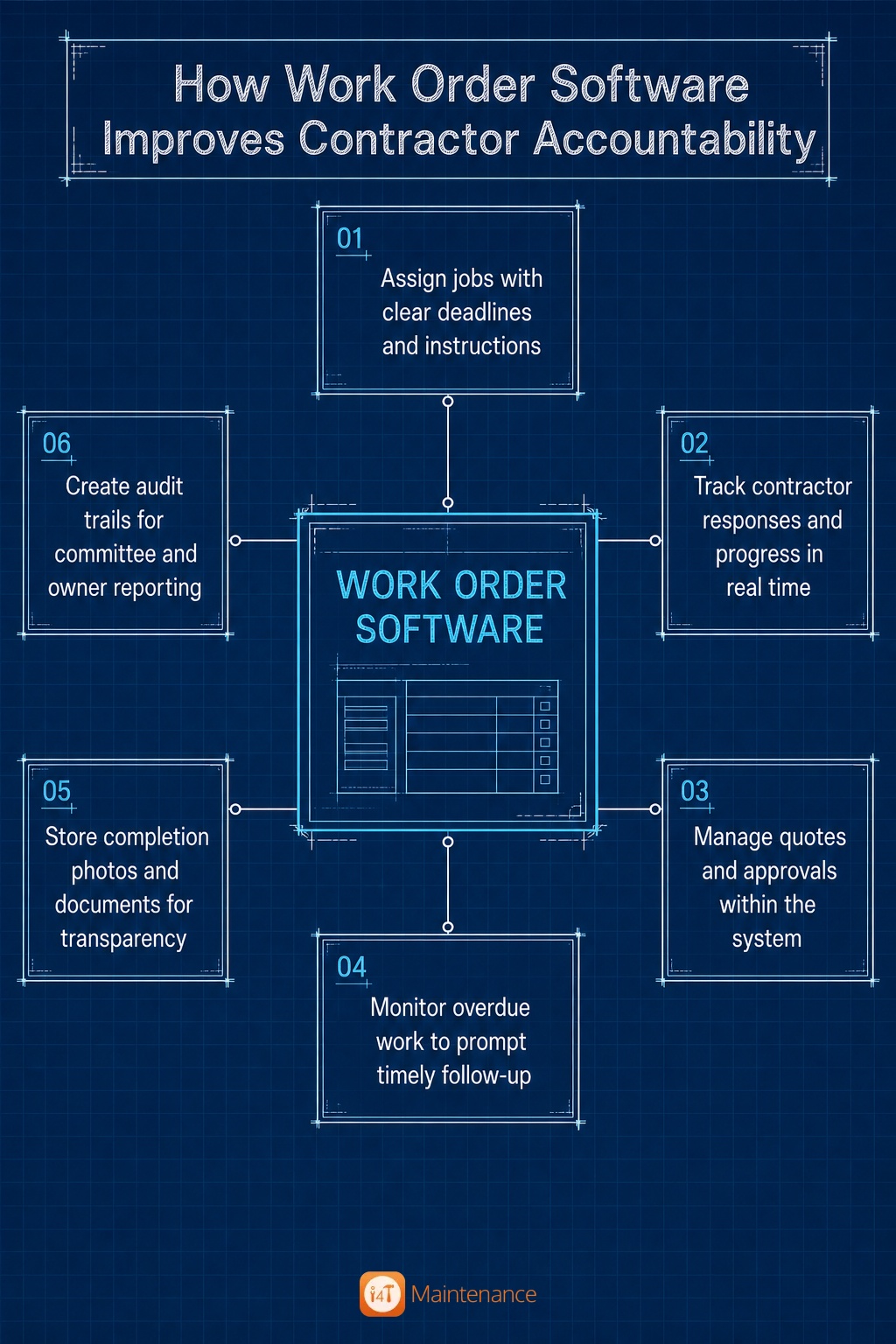
Work order software gives strata managers the tools to assign tasks clearly, track when contractors respond or update, manage quotes, and monitor overdue jobs. It captures evidence of completed work and stores approvals electronically, building a reliable audit trail for committee reporting. This structure not only helps hold contractors accountable but also speeds up decision-making and follow-ups by having all information organised in one place.
- Assign jobs with clear deadlines and instructions
- Track contractor responses and progress in real time
- Manage quotes and approvals within the system
- Monitor overdue work to prompt timely follow-up
- Store completion photos and documents for transparency
- Create audit trails for committee and owner reporting
When Tenant Maintenance Updates Should Be Automated, And When They Should Be Personal
Routine tenant updates such as request received, contractor assigned, and work scheduled can be automated successfully to save time. However, personal communication remains important for sensitive or urgent matters. Urgent repairs, safety concerns, disputes, insurance claims, and access problems usually require a direct conversation to ensure tenants feel heard and issues are handled promptly. Repeated unresolved issues might also need a tailored approach to avoid frustration and build trust.
A Simple Automated Maintenance Workflow for Strata Teams
A practical automated workflow begins with request submission via an online portal or app. An automatic confirmation goes to the tenant and relevant parties. The strata manager reviews details, then creates a work order and assigns a contractor. If a quote is needed, it’s requested and waits for committee approval. Once approved, the work is scheduled and updates sent. After completion, contractors upload photos as evidence, and the strata team closes the request following tenant confirmation. Every step triggers automated notifications to reduce manual follow-ups.
What to Look For in Maintenance Automation Software
When choosing maintenance automation software, strata managers should look for features that streamline the entire maintenance process. These include online request submission, automatic notifications at each job stage, contractor management tools, work order tracking, built-in approval workflows, and comprehensive reporting. Document storage capabilities are essential for keeping photos and quotes organised. Mobile access is a must for managers and contractors on the go. Additionally, audit trails ensure all communications and approvals are recorded securely. Integration options with existing property systems enhance efficiency further.
Common Mistakes to Avoid When Automating Maintenance Updates
A few pitfalls to watch out for include sending too many notifications, which can annoy recipients and lead to ignored messages. Using vague or overly general status updates can cause confusion rather than clarity. Failing to differentiate between urgent and non-urgent jobs can delay critical repairs. Not recording approvals within the system leaves gaps in accountability. Relying on external emails rather than managing communication inside the software fragments information. Lastly, neglecting to review contractor response times and address delays reduces the benefit of automation.
How to Measure Whether Automation Is Reducing Follow-Ups
To gauge if automation is working, strata managers can track metrics including fewer status update emails and phone calls, quicker contractor response times, reduced overdue jobs, more thorough completion records, fewer tenant complaints about updates, and less time spent preparing committee reports. A visible decrease in manual admin signals that automated maintenance updates are streamlining operations effectively.
Final Takeaway
Maintenance automation software like i4T Maintenance is a vital tool for strata managers aiming to reduce manual follow-ups. By automating tenant maintenance updates, centralising work orders, sending contractor reminders, and clarifying status changes, it cuts down time spent on repetitive admin. The result is improved visibility across open jobs, stronger contractor accountability, and better communication between tenants, owners, committees, and contractors. Streamlining these processes keeps maintenance records organised and makes the whole maintenance workflow more efficient.
Frequently Asked Questions
It is a digital tool that automates notifications, tracks maintenance requests, manages work orders, and streamlines communication between strata managers, tenants, contractors, and committees.
By using maintenance automation software to send automatic updates, centralise requests, track progress, and keep all parties informed without repeated manual chasing.
Routine updates like request received, contractor assigned, work scheduled, job delayed, and completion notifications can be automated to save time.
It assigns jobs, monitors contractor responsiveness, manages quotes and approvals, tracks overdue work, and keeps an audit trail for transparency and accountability.
A property maintenance app provides a single platform for tenants, owners, contractors, and managers to access job details, photos, updates, and communications, reducing enquiries and confusion.
Automated updates handle routine matters, but personal communication is still needed for sensitive, urgent or complex issues like safety concerns or disputes.