
Share this article

Table of Contents

How to Manage Building Defects Before the Warranty Period Expires

How to Manage Building Defects Before the Warranty Period Expires

Table of Contents

Key Takeaways

  • Identifying defects early is essential to manage within warranty periods effectively.

  • Building inspection software simplifies the process of defect tracking and management.

  • Clear communication and evidence collection are vital for successful warranty claims.

Key Answer

Learn how to manage building defects before the warranty period expires with strategic building inspection software and effective defect tracking methods for Australian strata properties.

Managing building defects before the warranty period expires is crucial for maintaining the integrity and value of strata properties in Australia. With proactive measures and the right tools, such as building inspection software, you can streamline defect management and safeguard your investment.

This guide provides essential steps for identifying, recording, and rectifying defects within warranty limits.

Why Early Building Defect Management Matters

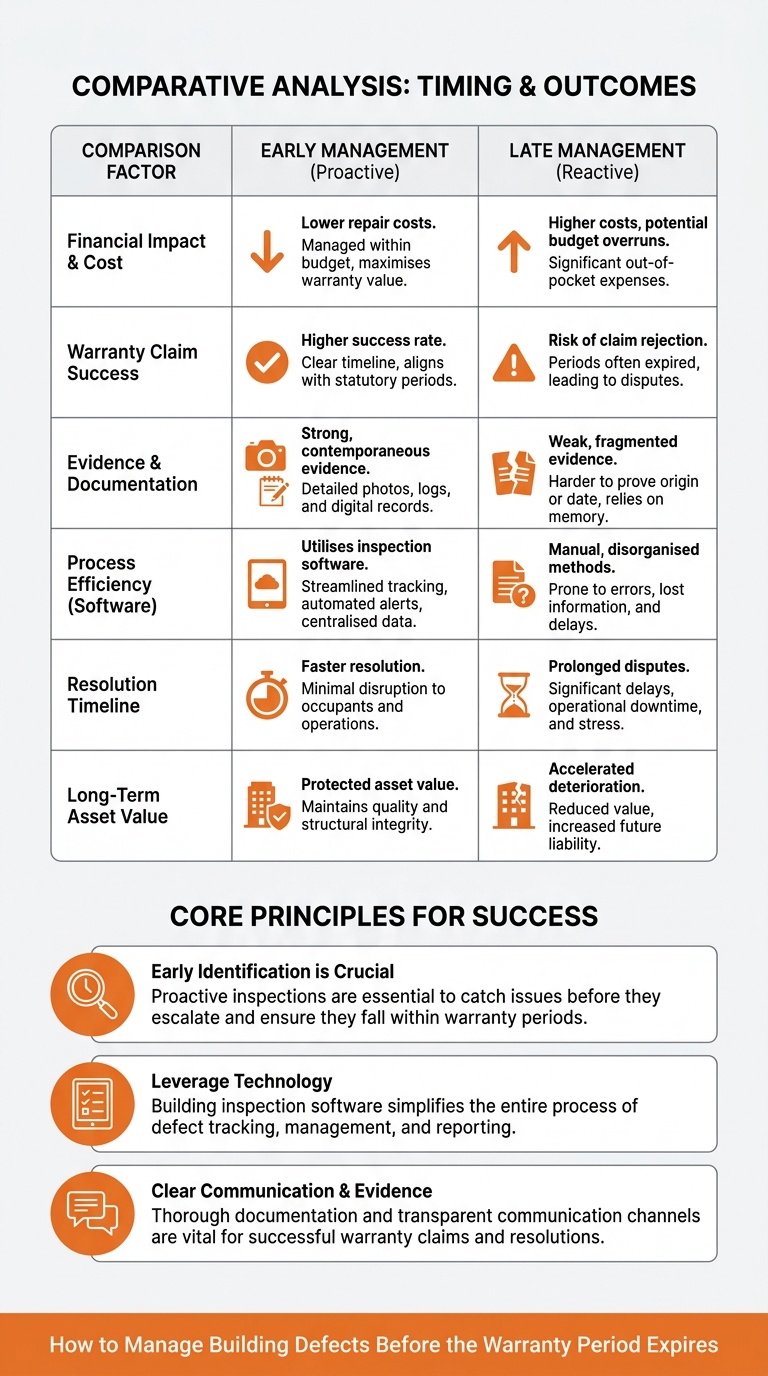
Identifying building defects early is fundamental to preserving the property’s quality and avoiding costly repairs. By catching issues before they escalate, you can prevent minor faults from developing into significant structural problems. Early defect management also ensures that you remain within warranty timeframes, allowing you to address issues without incurring extra costs.

In Australia, building warranties vary but typically last between six to ten years, depending on the state and type of defect. During this period, it’s essential to leverage tools like building inspection software to document and track defects accurately, facilitating swift actions and communications with builders.
infographic_xSWyFJMZxb.jpg

Understand Warranty Timeframes and Responsibilities

Understanding your warranty’s timeframe is vital. Building warranties in Australia often cover major structural defects for up to six years and other defects for up to two years. Knowing these timeframes helps you plan your inspections and repairs accordingly.

Responsibility during the warranty period primarily lies with the builder, but it also requires active involvement from the strata manager to ensure defects are reported and rectified. Using defect management software can help maintain clear records and schedule necessary inspections before warranty periods expire.

Identify and Record Building Defects Properly

Accurate identification and documentation of defects are crucial for successful claims. Use building inspection software to conduct thorough inspections and record defects with detailed descriptions and photographs. This documentation serves as evidence in case disputes arise about the defect’s cause or responsibility.

Consider regular inspections, as they help uncover potential issues early. Addressing these findings promptly can prevent further damage and ensure repairs are conducted within warranty timeframes. Proper record-keeping is essential in maintaining a comprehensive history of defects and actions taken, facilitating smoother processes in the future.

Prioritise Defects Before Warranty Deadlines

Prioritising defects is critical, particularly as warranty deadlines approach. Focus on defects that could lead to significant damage or pose safety risks. Use defect management software to categorise and prioritise defects based on severity and potential impact.

Setting clear priorities ensures that urgent repairs are completed first, minimising risk and ensuring compliance with warranty conditions. Remember, addressing defects promptly not only maintains the building’s safety and functionality but also enhances the property’s overall value.

Collect the Evidence Needed to Support Claims

To successfully claim under a warranty, collecting substantial evidence is imperative. Photographs, inspection reports, and detailed notes about the defects are essential components of this evidence. Use building inspection software to organise and store these documents systematically.

A well-documented claim is more likely to be processed quickly, reducing the risk of disputes. Make sure to communicate clearly with the builder, providing all necessary documentation promptly to expedite the repair process.

Track Builder Responses and Rectification Work

Effective communication with builders is vital to ensure timely defect rectification. Once defects are reported, keep track of the builder’s responses and the progress of rectification work. Defect tracking software can help you monitor these processes efficiently.

Set clear deadlines and follow up regularly to ensure the work is completed satisfactorily. Documenting every step can help resolve any misunderstandings and ensure that all parties are aware of their responsibilities.

Verify Repairs Before Closing Defect Reports

Before closing defect reports, verify that all repairs meet quality standards and resolve the issues initially identified. Conduct a final inspection using building inspection software to ensure no defects are left unresolved.

It’s crucial to verify that repairs were carried out correctly to avoid future problems and ensure the builder’s obligations have been fully met. This step prevents recurring issues and maintains the building’s integrity.

How Building Inspection Software Simplifies Defect Tracking

Building inspection software is an invaluable tool in managing and tracking building defects efficiently. Integrating it with your strata maintenance software, these platforms provide a centralised system for not just documenting defects, but also scheduling inspections, and communicating repair work with contractors. This streamlines the entire defect management process, saving time and reducing errors.

i4T Maintenance is one such Strata Maintenance Software, that can help you create work orders based on building inspection reports, find the best contractor for the job and complete defect repairs from start to end.

Book a demo today.

Frequently Asked Questions

Building defect management involves identifying, documenting, and addressing defects within a property to maintain its safety and value.

Building inspection software centralises the documentation of defects, schedules inspections, and facilitates communication with builders, making defect tracking more efficient.

Prioritising defects ensures that the most critical issues are addressed within the warranty period, preventing costly repairs and preserving the property’s value.

Evidence for a warranty claim should include photographs, detailed inspection reports, and comprehensive notes about the defects.

Building warranties in Australia often cover major structural defects for up to six years and other defects for up to two years, depending on the state.

Scroll to Top
i4T Maintenance  Australia
Privacy Overview

This website uses cookies so that we can provide you with the best user experience possible. Cookie information is stored in your browser and performs functions such as recognising you when you return to our website and helping our team to understand which sections of the website you find most interesting and useful.