

Share this article

Table of Contents

7 Details Every Tenant Should Provide Before a Maintenance Job Is Assigned

7 Details Every Tenant Should Provide Before a Maintenance Job Is Assigned

Table of Contents

Key Takeaways

  • Comprehensive maintenance requests improve contractor assignment speed and accuracy.

  • Visual aids like photos and videos enhance issue diagnosis.

  • Clear communication channels prevent delays and improve tenant satisfaction.

Key Answer

Before a maintenance job is assigned, tenants should provide details such as property location, issue description, urgency, multimedia evidence, access instructions, previous repair history, and preferred contact methods. This information, captured through a maintenance request form, ensures efficient contractor assignment and communication.

In the bustling world of Australian real estate, efficient communication between tenants and strata managers is key to maintaining harmony and satisfaction. When it comes to assigning a maintenance job, having a detailed maintenance request form is not just a procedural step; it’s crucial.

By ensuring that tenants provide comprehensive information upfront, you can streamline the assignment of the right contractor, minimise delays, avoid repeat visits, and enhance communication.

This article delves into the 7 essential details every tenant should include before a maintenance job is assigned, using a tenant repair request form and a maintenance request checklist to improve efficiency across the board.

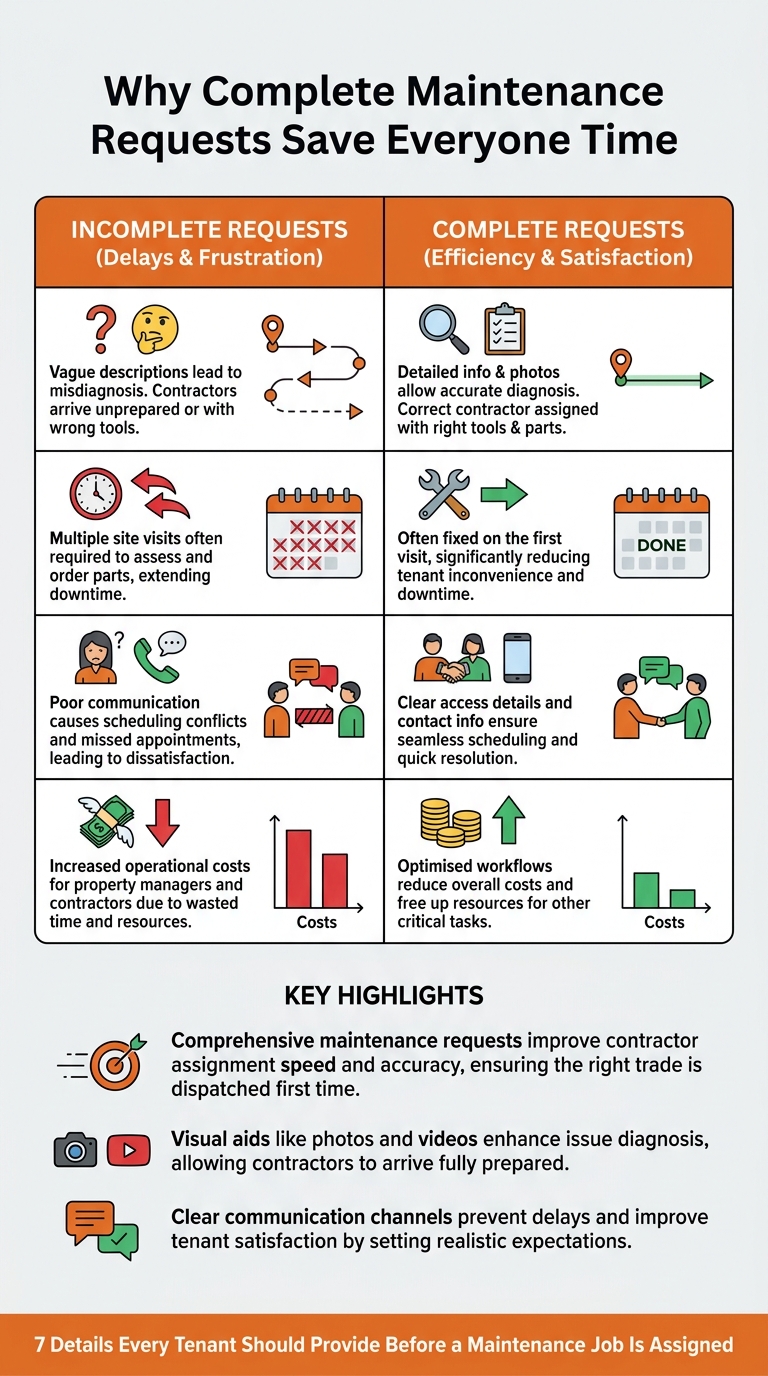
Why Complete Maintenance Requests Save Everyone Time

A comprehensive maintenance request form is the backbone of efficient strata management. Collecting detailed information upfront enables you to assign the right contractor swiftly, reducing unnecessary back-and-forth communications. This proactive approach ensures maintenance issues are resolved efficiently, contributing to tenant satisfaction and lessening the administrative burden on your team.

Moreover, using a property maintenance app can automate this process, enabling seamless communication through a tenant maintenance portal. This integration not only saves time but also helps keep all parties updated at every stage. In fact, maintaining clear and timely communication is crucial in the competitive Australian real estate market, where tenant expectations are ever-increasing.
infographic_QLiqw3TQru.jpg

1. Property and Exact Location of the Issue

Understanding the specific location of the problem is fundamental. Tenants should provide the property name and the precise location of the issue within the building, such as “Unit 5, 3rd Floor, left corner window”. This clarity enables contractors to bring the right tools and materials, thereby reducing the time taken to diagnose and resolve the issue.

Encouraging tenants to specify these details in their tenant repair request form can be particularly useful in larger complexes where issues may not be immediately obvious. Detailed location descriptions allow for a direct, efficient approach to problem-solving.

2. A Clear Description of the Problem

A thorough description of the problem helps in understanding the scope and nature of the repair required. Tenants should elaborate on what they observe, such as “leaky tap in the kitchen, dripping continuously” or “air conditioning unit not cooling”. This specificity aids contractors in preparing for the task effectively.

The maintenance request checklist should prompt tenants to think critically about what they are experiencing and record these observations. This practice minimises the potential for miscommunication and ensures the right expertise is applied to the problem from the outset.

3. When the Issue Started and Its Urgency

Knowing when a problem began and assessing its urgency can influence the prioritisation of the maintenance request. Tenants should indicate the start date and describe whether the issue is worsening or stable. Terms like “emergency” or “urgent” should be reserved for situations impacting safety or causing significant disruption, such as a water leak risking property damage.

Incorporating urgency into your property maintenance app allows for automated prioritisation, ensuring critical issues are addressed promptly and routine repairs are scheduled appropriately. This approach aids in reducing overall downtime and tenant frustration.

4. Photos or Videos of the Maintenance Issue

Visual evidence like photos or videos can significantly aid in diagnosing issues more accurately before a contractor arrives on site. Tenants should be encouraged to attach clear images or videos showing the problem in their maintenance request form. This practice not only provides clarity but can also prevent unnecessary site visits by allowing contractors to gather any needed parts beforehand.

For instance, if a tenant reports a “broken window latch”, a photo can reveal whether the entire fixture needs replacing or just a minor component. This foresight can streamline repairs, reducing the need for return trips and additional scheduling hassles.

5. Access Instructions and Preferred Appointment Times

Access to the property is a logistical hurdle that can delay repairs if not properly managed. Tenants should specify how contractors can gain entry, including details like “key left with neighbour” or “access code for the main door”. Additionally, noting their preferred appointment times helps schedule repairs at convenient times for all parties involved.

This information can be integrated into a tenant maintenance portal, ensuring the contractor has all they need to access the property efficiently. Addressing access upfront prevents missed appointments and optimises time management.

6. Previous Repairs or Temporary Actions Taken

Understanding the history of an issue can be invaluable in deciding how to proceed with repairs. Tenants should inform managers about any temporary fixes they have attempted or any past repairs related to the issue at hand. This historical insight can guide contractors in addressing the root cause effectively rather than just applying short-term solutions.

For example, if a tenant has already attempted to fix a leaking tap with temporary sealant, knowing this allows the contractor to prepare for a potentially more invasive repair. This proactive sharing of information ensures the underlying problem is resolved fully.

7. Contact Details and Preferred Communication Method

Effective communication hinges on having the correct contact details. Tenants should provide their phone number and email, indicating their preferred method of communication for updates and scheduling. Whether it’s through phone calls, emails, or updates via a property maintenance app, ensuring clarity in communication methods can improve response times and tenant satisfaction.

This detail is often overlooked but critical, as it ensures that all parties remain informed and engaged throughout the maintenance process. Utilising platforms like i4T Maintenance Community App, which offers a tenant maintenance portal, can facilitate seamless communication and foster trust between tenants and strata managers.

Book a demo

Frequently Asked Questions

A detailed maintenance request form ensures that all necessary information is collected upfront, allowing for faster and more accurate contractor assignment, reducing delays and improving communication.

A property maintenance app centralises requests, automates communication, and provides a streamlined platform for tenants and contractors to manage repairs efficiently.

Tenants should include property location, issue description, urgency, photos/videos, access instructions, previous repairs, and contact details in their maintenance request form.

Photos or videos provide visual context, helping contractors assess the situation before arriving on-site, which can lead to faster and more efficient repairs.

A tenant maintenance portal facilitates seamless communication, tracking of repairs, and ensures all parties are updated throughout the maintenance process.

Scroll to Top
i4T Maintenance  Australia
Privacy Overview

This website uses cookies so that we can provide you with the best user experience possible. Cookie information is stored in your browser and performs functions such as recognising you when you return to our website and helping our team to understand which sections of the website you find most interesting and useful.