

Key Takeaways
Contractor compliance reduces maintenance risks in strata buildings.
Ensure all contractor documents are up-to-date and match job risks.
Use software to automate compliance tracking and alerts.
Key Answer
Strata managers can reduce maintenance risks by working with compliant contractors, ensuring licences and documents are current, and tailoring checks to job risk. This proactive approach enhances safety and efficiency.
As a strata manager in Australia, you face the constant challenge of maintaining building safety and efficiency. A critical way to achieve this is by ensuring contractor compliance. Working with compliant maintenance contractors is not just about ticking boxes; it’s a proactive strategy to minimise risks associated with expired licences, missing documents, and unsuitable contractors.
Let’s explore how focusing on contractor compliance can significantly reduce maintenance risks for your building.
What Maintenance Risks Can Contractor Compliance Help Reduce?
Contractor compliance is more than a regulatory requirement–it’s your shield against various maintenance risks. By ensuring that your contractors are fully compliant, you can reduce the likelihood of accidents due to improper licensing or expired insurance. Non-compliance can lead to hefty fines, legal troubles, and even jeopardise the safety of residents. Ensuring compliance helps avoid these pitfalls, securing your reputation and the building’s operational integrity.
What Makes a Maintenance Contractor Compliant?
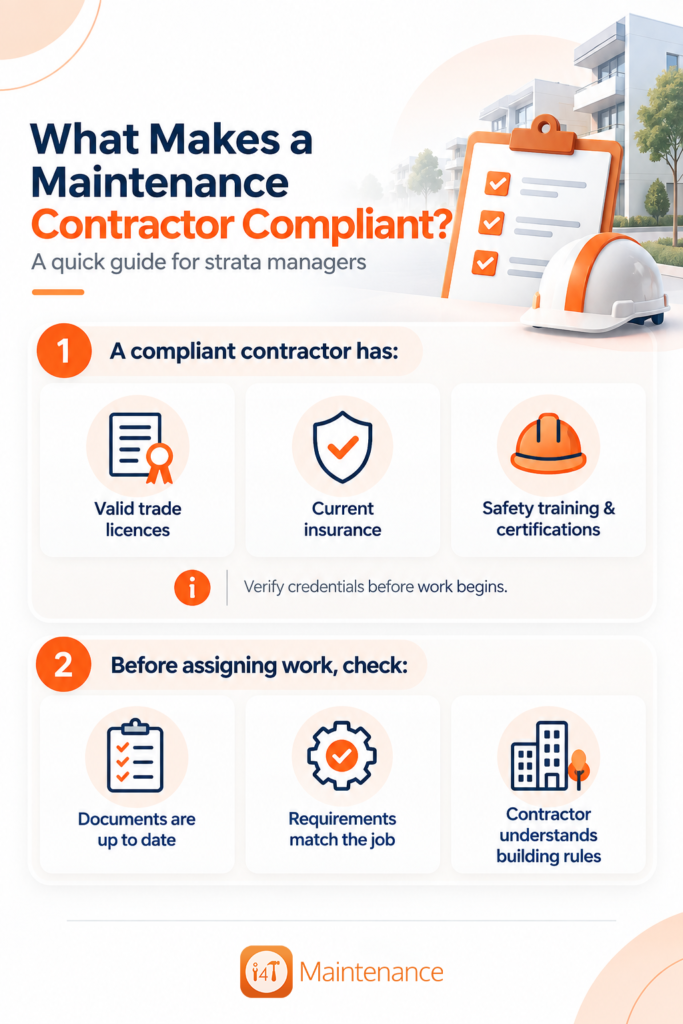
A compliant maintenance contractor is one who meets all legal, safety, and industry standards required for strata projects. This includes holding valid trade licences, up-to-date insurance policies, and relevant safety training certifications. It’s crucial to verify these credentials before any work commences. Whether you are new to strata or have been in the industry for years, you’ll know that a compliant contractor is a reliable partner in maintaining your building’s safety and compliance standards.
What Should I Check Before Assigning Maintenance Work?
Before assigning any maintenance work, you need to ensure that the contractor’s documents are up-to-date. This involves checking trade licences, insurance certificates, and relevant safety training records. It’s also vital to confirm that these documents align with the job requirements. By doing so, you can ensure that your chosen contractors are well-equipped to handle the tasks without putting your building at risk.
You can find a detailed checklist in our 2026 Contractor Compliance Checklist.
Additionally, ensure that the contractor understands your building’s specific needs and regulations. This preparatory step helps to avoid any misunderstandings or compliance issues during the job.
Why Should Compliance Checks Match the Risk of the Job?
Not all jobs carry the same level of risk, and your compliance checks should reflect this. Higher-risk jobs require more stringent checks and documentation, like Safe Work Method Statements (SWMS) and detailed site-specific inductions. For lower-risk tasks, a basic licence and insurance check may suffice.
Tailoring your compliance checks based on job risk ensures that all necessary precautions are taken without overburdening the process. This approach not only optimises safety but also streamlines the compliance workflow, saving time and resources.
How Can I Avoid Expired or Missing Contractor Documents?
Expired or missing documents can stall projects and increase liability. To avoid this, implement a system that tracks document expirations and sends alerts before they become an issue. A centralised digital platform can store all contractor documents and alert you when a renewal is due. This system reduces the risk of oversight and keeps your records organised and accessible at all times.
Using technology to manage these records ensures that you’re always prepared for compliance audits and can maintain a high level of operational efficiency.
How Can I Make Contractor Compliance Part of Every Maintenance Job?
Integrating contractor compliance into every maintenance job involves setting clear expectations and consistently enforcing them. Begin by embedding compliance requirements into contracts and work orders. Regularly verify compliance throughout the project’s lifecycle, not just at the beginning.
Encourage a culture of compliance by communicating the importance of safety and regulations to all stakeholders involved. By maintaining an ongoing dialogue with contractors, you can ensure that compliance remains a priority from start to finish.
How Can Software Help Reduce Contractor Compliance Risk?
Software solutions play a pivotal role in reducing contractor compliance risk. By automating the tracking of licences, insurance, and other compliance documents, software ensures that you never miss an expiration date. Platforms like i4T Maintenance offer features that centralise documents and automate alerts, thus streamlining the compliance process.
These tools also provide real-time updates and compliance audits, allowing you to focus on strategic decisions rather than administrative tasks.
For more insights, explore our guide on managing maintenance costs.
Build a Safer, More Consistent Maintenance Process
Incorporating contractor compliance into your maintenance process is essential for reducing risk and ensuring safety. By working with compliant contractors, tailoring compliance checks to the job’s risk, and leveraging software, you can streamline operations and maintain high standards of safety and reliability. Don’t leave compliance to chance; make it a central part of your maintenance strategy.
To experience how i4T Maintenance can enhance your compliance process, schedule a demo today and take the first step towards a safer, more efficient building management experience.
Frequently Asked Questions
Contractor compliance ensures that all maintenance contractors meet legal and safety standards, reducing risks and protecting the property’s integrity.
Software can automate the tracking of licences and insurance, provide real-time alerts, and centralise compliance documents, making the management process more efficient.
Different jobs have different risk levels. Tailoring compliance checks ensures appropriate safety measures are in place without overburdening the process.
A compliance checklist should include checking trade licences, insurance certificates, and relevant safety training records, ensuring all documents align with job requirements.
While compliance significantly reduces risks, it cannot eliminate all potential issues. It is an essential part of risk management but not a guaranteed safeguard.