

Key Takeaways
Establishing clear expectations can prevent many delays in strata maintenance.
Utilising SLAs provides a measurable standard for contractor performance.
Tracking and reviewing supplier performance fosters long-term accountability.
Key Answer
To stop strata contractors from delaying jobs, establish clear expectations, use maintenance SLAs, spot job stalls early, and assess supplier performance. These strategies ensure timely completion of tasks.
When managing a strata property in Australia, one of the most common headaches is dealing with contractors who take too long to complete jobs. It’s a significant issue that affects not only the timelines but also the satisfaction of residents.
So, how do you effectively manage contractor performance to prevent delays?
This guide will walk you through practical steps to ensure your maintenance jobs are completed promptly, leveraging key practices like maintenance SLA tracking and detailed supplier performance analysis.
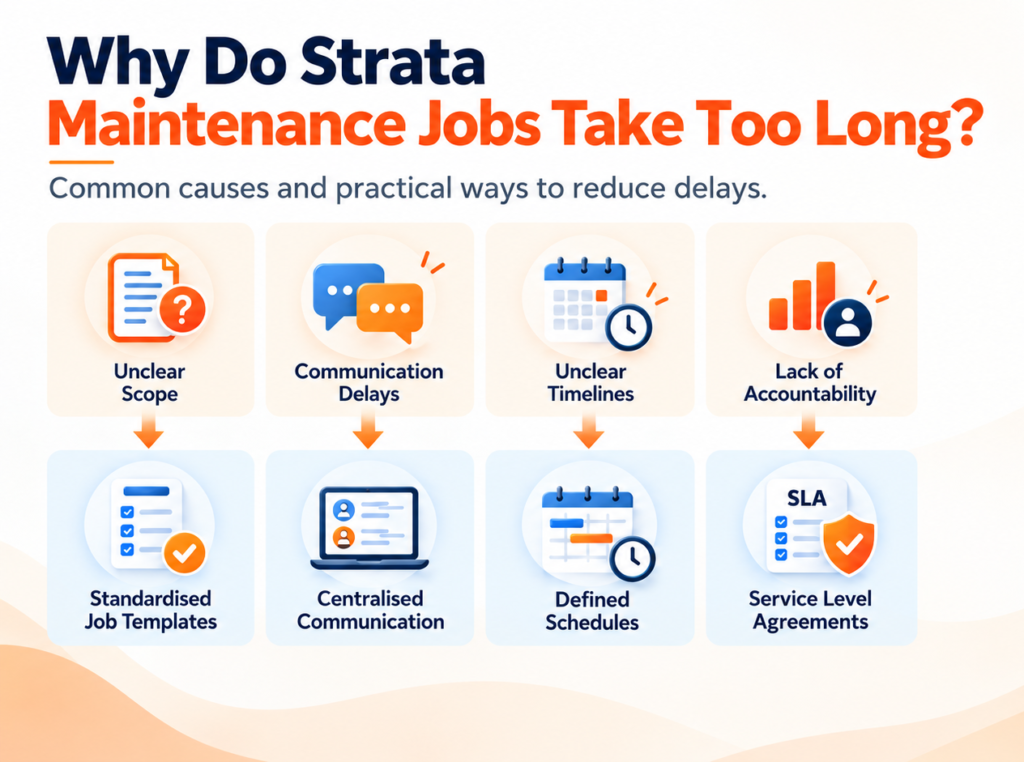
Why Do Strata Maintenance Jobs Take Too Long?
Strata maintenance jobs often face delays due to several key factors. Primarily, miscommunication between strata managers and contractors can lead to unclear instructions and expectations. Without clear guidance, contractors might prioritise other jobs, assuming less urgency on your end. Furthermore, bureaucratic processes, such as obtaining committee approvals or coordinating access to different areas, can also slow things down.
A common issue is poor scheduling or overbooking by contractors themselves. Contractors might not have the necessary resources available at the agreed time, leading to delays. Additionally, waiting for materials or necessary equipment can stall progress.
Recognising these potential bottlenecks is the first step in improving contractor performance management.
Set Clear Expectations Before Work Begins
Before any work commences, it’s crucial to establish clear expectations. This involves setting out what needs to be done, who will do it, and when it should be completed. Clearly outline all tasks and deliverables in the work order. It’s vital to provide detailed instructions about the timelines and any specific requirements for each task.
Make sure your contractors understand the importance of communication. Encourage them to provide updates at critical stages of the project. Not only does this keep everyone informed, but it also builds a solid foundation of trust, which is essential for successful supplier performance.
Use Maintenance SLAs to Define What "On Time" Means
Implementing a Service Level Agreement (SLA) is a strategic approach to clarify expectations. An SLA defines the terms of service delivery, including response times, attendance, and completion deadlines. This helps both parties understand what “on time” means and sets a clear benchmark for performance.
In strata management, SLAs should include specific timelines: response time (how quickly a contractor acknowledges a job), attendance time (when they arrive), and completion time (when the job is done). This structure ensures that both managers and contractors are on the same page, reducing the risk of miscommunication.
Explore more about SLA structures and their benefits in our vendor scorecard guide.
Spot Stalled Maintenance Jobs Before Someone Complains
Waiting for residents to complain about stalled jobs can lead to frustration and negative sentiment in the community. Instead, use proactive methods to identify delays early. Regularly review work orders and keep an eye on timelines. A work order management system can be invaluable here as it centralises requests and updates, making it easier to track progress.
By spotting issues early, you can take corrective action, whether that means reallocating resources or providing contractors with the information they need to proceed. Proactive management not only improves contractor accountability but also enhances your reputation as an efficient manager. Consider integrating systems that offer real-time updates and tracking.
Find Out Where the Delay Is Actually Happening
Understanding the root cause of a delay is critical for addressing it effectively. Delays can be caused by various factors, such as contractor availability, material shortages, or access issues. Start by reviewing all aspects of the job to identify where things might be stalled. Are there administrative hold-ups? Is there a lack of necessary materials? Or perhaps the contractor is facing unforeseen obstacles?
Communication plays a key role here. Open a dialogue with your contractors to understand their challenges and offer support. This collaborative approach not only resolves current issues but also builds a stronger working relationship for future projects.
For more insights, check out our guide on enhancing vendor relationships.
Measure Supplier Performance Across Multiple Jobs
To ensure continued improvement and accountability, it’s essential to track contractor performance across various projects. Use a contractor performance management system to record key metrics such as on-time delivery, quality of work, and responsiveness. These metrics can provide a clear picture of a contractor’s reliability and help you make informed decisions when selecting suppliers.
Regular performance reviews also offer a platform to provide feedback and discuss areas for improvement. Encouraging open dialogue fosters a more cooperative and productive relationship.
Learn more about measuring supplier performance through our strata maintenance tips.
Reduce Contractor Chasing With Better Visibility
One of the most effective ways to stop constantly chasing contractors is by improving visibility across all jobs. By centralising work orders and using a comprehensive management platform, you can easily monitor the status of each task and its compliance with established SLAs. This way, you always know where things stand without having to chase contractors for updates.
Such systems allow for automated reminders and alerts, ensuring that no deadline slips through the cracks. This reduces stress on both managers and contractors and allows more time to focus on strategic initiatives rather than administrative follow-ups. If you’re tired of endless phone calls and emails, it’s time to explore a more streamlined approach.
Better Visibility Creates Better Contractor Accountability
In conclusion, addressing delays in strata maintenance is not just about keeping contractors in check, but also about creating a transparent and efficient workflow. By setting clear expectations, using SLAs, and ensuring visibility, you enhance contractor performance management and reduce unnecessary hold-ups.
Ultimately, these strategies help you maintain a well-functioning community where everyone, from residents to committee members, is satisfied.
To experience these benefits firsthand, book a demo of i4T Maintenance and discover how it can transform your strata management practices.
Frequently Asked Questions
SLAs clearly define expectations and timelines for contractors, which helps in tracking performance and ensures tasks are completed on time.
Technology, such as work order management systems, can centralise tasks and provide visibility, helping to track job progress and contractor performance efficiently.
It ensures that contractors meet their deadlines and maintain quality standards, reducing delays and dissatisfaction among residents.
Delays are often caused by miscommunication, scheduling conflicts, material shortages, and access issues.
Establishing regular updates and open dialogues with contractors can improve understanding and performance, reducing potential delays.