
Share this article

Table of Contents

How to Stop Managing Strata Contractor Compliance Manually

How to Stop Managing Strata Contractor Compliance Manually

Table of Contents

Key Takeaways

  • Manual contractor compliance is cumbersome and prone to errors as supplier networks grow.

  • Centralising compliance records streamlines access and management.

  • Automation provides proactive alerts for expiring documents, reducing compliance risks.

  • Letting contractors update their own records enhances accuracy and accountability.

Key Answer

Transition from manual to automated contractor compliance management to streamline processes, reduce errors, and focus on strategic oversight. Discover how software solutions centralise records and automate tasks in Australian strata management.

Managing contractor compliance manually can quickly become a nightmare, especially in the bustling world of Australian strata management. With the increasing complexity of supplier networks, relying on spreadsheets, emails, and calendar reminders is not only cumbersome but also prone to errors.

It’s time to explore how to stop managing strata contractor compliance manually and embrace a more efficient solution.

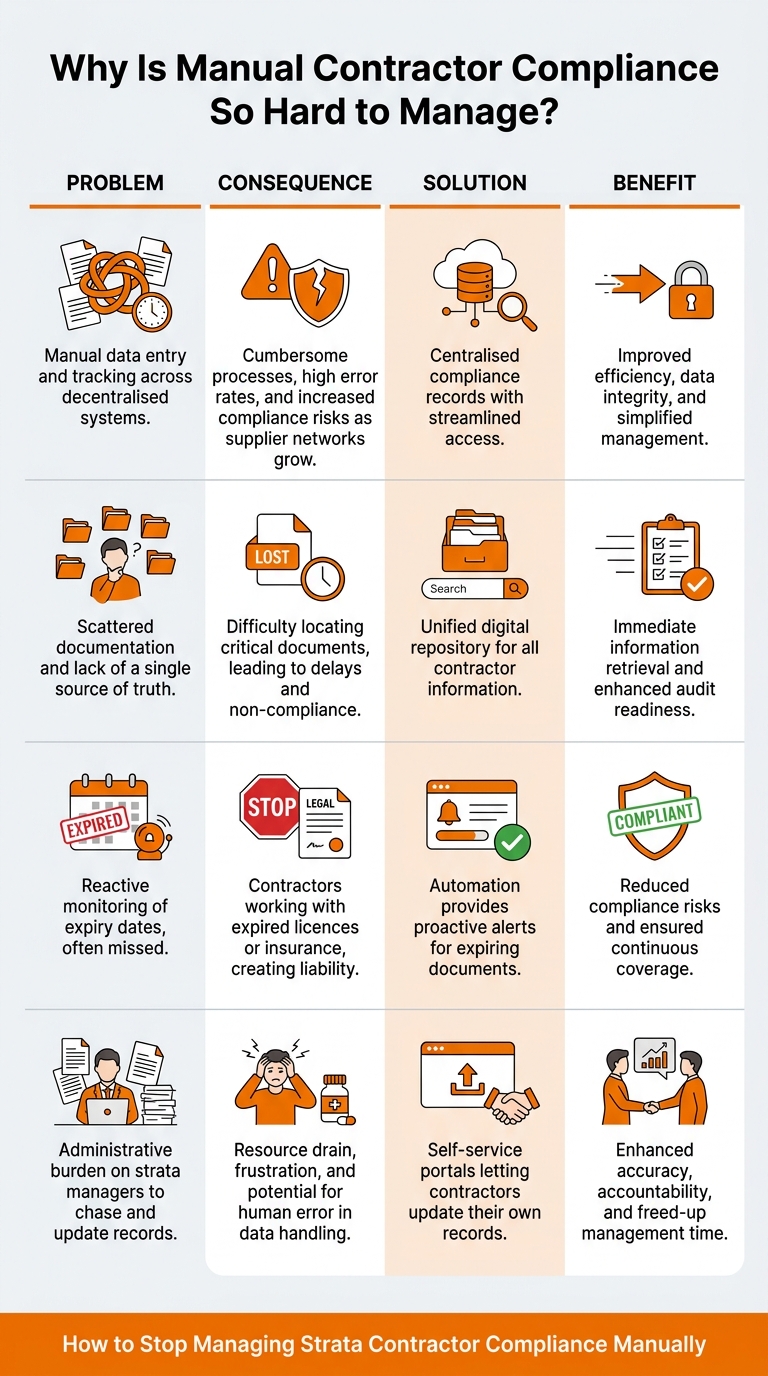
Why Is Manual Contractor Compliance So Hard to Manage?

In the ever-evolving landscape of strata management, the manual handling of contractor compliance has become a Herculean task. As supplier networks expand, keeping track of every contractor’s licenses, insurance, and qualifications using traditional methods like spreadsheets and emails becomes unwieldy. The risk of errors increases as you juggle multiple documents and expiry dates, leading to potential legal and operational headaches.

These antiquated methods demand constant vigilance and are highly time-consuming. It’s no surprise that many strata managers find themselves overwhelmed by the sheer volume of paperwork and digital clutter. As supplier compliance requirements grow, so does the difficulty of maintaining accuracy and ensuring all information is up-to-date.

To avoid slipping through the cracks, a more modern approach is essential. This is where contractor compliance software steps in, offering a streamlined solution to centralise and automate the process.
infographic_VOxvwm2C1g.jpg

Keep Every Contractor Compliance Record in One Place

Centralising contractor compliance records is a game-changer for strata managers. By using a dedicated contractor compliance software, you can store all necessary documents, such as licenses, insurance certificates, and qualifications–in one easily accessible digital hub. This not only reduces the clutter but also ensures that everything you need is just a few clicks away.

Having a single source of truth for all compliance records eliminates the risk of lost or misfiled documents. You no longer need to wade through endless emails or folders to find a contractor’s latest insurance certificate. Instead, everything is neatly organised and can be accessed by authorised personnel whenever needed.

Stop Manually Tracking Documents and Expiry Dates

One of the greatest challenges in manual compliance management is keeping track of document expiry dates. Whether it’s a licence, insurance, or certification, expired documents can lead to non-compliance issues that could have serious repercussions.

With compliance automation, you can set up alerts and reminders that notify you before documents expire. This proactive approach not only saves time but also ensures you stay ahead of potential compliance breaches. Automated tracking reduces the likelihood of human error, providing peace of mind that your strata management responsibilities are covered.

Let Contractors Keep Their Information Up to Date

Empowering contractors to maintain their own compliance records can significantly reduce the administrative load on strata managers. With contractor compliance software, contractors can update their own details, ensuring that all information is current and accurate.

This approach fosters a sense of accountability among contractors, as they are directly responsible for maintaining their compliance status. It also minimises the need for constant back-and-forth communication between managers and contractors, streamlining the compliance management process.

Make Missing and Expired Requirements Easy to See

Visibility is key when managing contractor compliance. Automated systems highlight missing or expired documents, making it easy to identify and rectify compliance gaps. This immediate visibility ensures that no requirement slips through the cracks, reducing the risk of non-compliance.

By having a dashboard that provides an overview of all contractor compliance statuses, strata managers can quickly identify which contractors are fully compliant and which require follow-up. This enables more efficient and informed decision-making, maintaining the integrity and safety of the strata scheme.

Connect Contractor Compliance to Supplier Selection

Effective contractor compliance management should integrate directly with supplier selection and maintenance work. This connection ensures that only qualified and compliant contractors are engaged for work, safeguarding the strata’s interests.

Automation allows for seamless integration, where compliance information is readily available during the contractor selection process. This not only streamlines operations but also aligns compliance management with strategic decision-making, ensuring projects are executed smoothly and safely.

How Compliance Automation Reduces Admin Without Removing Oversight

While automation significantly reduces administrative tasks, it doesn’t eliminate the need for human oversight. Compliance automation systems are designed to support, not replace, the critical judgment and decision-making skills of strata managers.

By automating routine tasks, strata managers can focus on more strategic aspects of compliance management, such as evaluating contractor performance and making informed decisions based on data insights. This balance between automation and oversight ensures that compliance management is both efficient and effective.

Manage Contractor Compliance by Exception, Not Spreadsheet

In the digital age, continuing to manage contractor compliance manually is an outdated approach that can hinder your strata management effectiveness. By embracing contractor compliance software, you can streamline your processes, reduce errors, and focus on strategic oversight rather than mundane admin tasks.

Now is the time to transition from spreadsheets to automated systems that provide real-time insights and alerts. Make contractor compliance management a seamless part of your operations and ensure your strata scheme remains compliant and safe.

Book a demo of i4T Maintenance to see firsthand how compliance automation can transform your strata management practice.

Frequently Asked Questions

Contractor compliance management involves ensuring that all contractors meet necessary legal and safety standards, including holding valid licences, insurance, and qualifications, before working on strata properties.

Compliance automation reduces the manual workload by centralising documents, providing expiry alerts, and allowing contractors to update their information, thus improving accuracy and saving time.

By integrating compliance information with supplier selection, the software ensures only qualified and compliant contractors are engaged, enhancing the safety and efficiency of strata projects.

No, while automation aids in routine tasks, human oversight is essential for making strategic decisions and evaluating contractor performance in compliance management.

Start by evaluating current compliance challenges, choose a reliable software, migrate existing records, and train your team to effectively use the system for enhanced compliance management. Book a demo of systems like i4T Maintenance to understand the transition process better.

Scroll to Top
i4T Maintenance  Australia
Privacy Overview

This website uses cookies so that we can provide you with the best user experience possible. Cookie information is stored in your browser and performs functions such as recognising you when you return to our website and helping our team to understand which sections of the website you find most interesting and useful.