

Key Takeaways
Always verify contractor licences, insurance, and qualifications before starting work.
Different maintenance tasks may require specific compliance checks tailored to the job type.
Use contractor compliance software to streamline compliance management and reduce errors.
Automate reminders for licence and insurance renewals to avoid lapses in compliance.
Key Answer
To check if a strata maintenance contractor is compliant, verify their licences, insurance, qualifications, and safety documentation. This process ensures that all work is legal, safe, and meets industry standards.
In the fast-paced world of strata management, ensuring that your contractors are compliant is non-negotiable. So, how do you check if a strata maintenance contractor is compliant? This process involves verifying licences, insurance, qualifications, and safety documentation, all of which can vary depending on the job.
Let’s explore what you need to know to ensure your contractors meet the necessary standards.
What Does Contractor Compliance Mean in Strata Maintenance?
In the context of strata maintenance, contractor compliance refers to the process of ensuring that any contractor you engage is legally qualified, properly insured, and capable of safely executing the work required. This process safeguards against potential legal issues, safety risks, and project delays, ensuring that your property remains in top shape without any hitches.
Compliance means verifying that contractors have up-to-date trade licences, adequate public liability insurance, and necessary workplace health and safety (WHS) qualifications. These are essential for protecting your building and its residents from potential risks and liabilities.
What Should I Check Before a Contractor Starts Work?
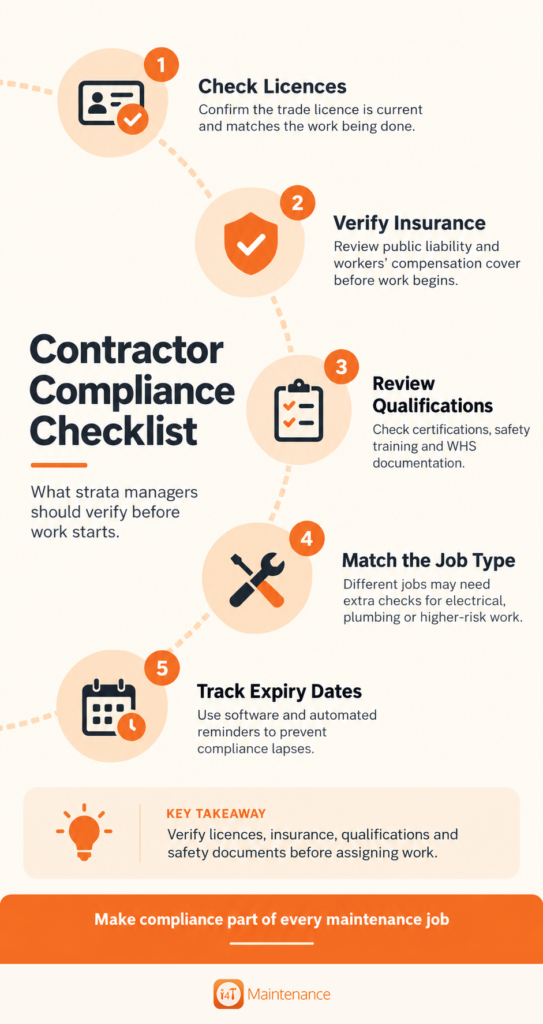
Before a contractor steps foot on your property, there are several critical checks to perform. Firstly, confirm their trade licence is current and matches the scope of the work they will be doing. Each state in Australia may have different licensing requirements, so it’s important to ensure compliance with local regulations.
Next, check their insurance policies. A contractor should have adequate public liability insurance and workers’ compensation insurance to cover any potential accidents or injuries that could occur on site. Also, review their qualifications and any relevant safety training certificates to ensure they can perform the work safely and to standard.
How Do I Check That Contractor Licences and Insurance Are Current?
Checking the currency of a contractor’s licences and insurance is crucial. Start by asking the contractor to provide copies of their certificates of currency for both their licence and insurance. Verify the details by contacting the issuing authority or using online resources provided by organisations like Service NSW for licence checks.
For insurance, ensure the policy has not expired and check the coverage limits to make sure they are adequate for the type of work being performed. Regular checks should be part of your maintenance workflow to prevent any lapses in compliance.
Do Different Maintenance Jobs Need Different Compliance Checks?
Yes, different maintenance tasks often require different compliance checks. For instance, electrical work might need specific licences and safety certifications related to working with live electricity, while plumbing might require checks on water safety certifications.
Understanding these nuances is crucial to ensuring each job is performed legally and safely. It’s essential to categorise maintenance tasks by risk and compliance requirements, making it easier to manage and ensure that all necessary checks are completed before work begins.
What Happens When a Contractor's Compliance Documents Expire?
Expired compliance documents can pose significant risks. If a contractor’s licence or insurance has expired, they are effectively unqualified to perform the work. This can lead to unsafe work practices, legal liabilities, and financial penalties.
To avoid this, it’s vital to implement a system that tracks the expiry dates of all contractor documents. Automated reminders can be invaluable here, ensuring you stay on top of renewals and avoid any compliance gaps. Keeping a digital log of expiry dates helps you take action well before any lapses occur.
How Can I Check Compliance Before Assigning Maintenance Work?
Integrating compliance checks into your maintenance workflow is key. Before assigning any work, use a compliance checklist to verify the necessary documents. This checklist should include items such as licences, insurance, and safety qualifications.
Consult our comprehensive compliance checklist for detailed guidance. By making these checks a standard part of your job assignment process, you can ensure that all contractors are compliant before they start work.
How Can Contractor Compliance Software Make Compliance Easier?
Contractor compliance software can greatly simplify the management of compliance documentation. Such tools can automate the tracking of expiry dates, send reminders for renewals, and store all relevant documents in a centralised location.
This software can also integrate with your existing property management systems, streamlining your workflow and reducing the risk of human error. Tools like i4T Maintenance offer features that enhance efficiency and ensure that compliance checks are completed promptly and accurately.
Make Contractor Compliance Part of Every Maintenance Job
Incorporating contractor compliance into every maintenance job is crucial for protecting your property, your reputation, and your peace of mind. By following the steps outlined above, you can ensure that each contractor you engage is fully compliant, reducing the risk of issues down the line.
Utilising a connected system like i4T Maintenance not only simplifies the process of managing compliance records but also improves the overall workflow efficiency.
Book a demo today to see how i4T Maintenance can help you streamline contractor compliance and keep your strata management running smoothly.
Frequently Asked Questions
Contractor compliance ensures that all maintenance work is legal, safe, and up to industry standards, protecting both the property and its residents.
A compliance checklist should include verification of licences, insurance, safety qualifications, and any relevant WHS documentation.
Compliance should be reviewed before work starts and periodically throughout the project to ensure ongoing adherence to standards.
Software automates tracking, reminders for document renewals, and centralises storage of compliance records, simplifying the compliance management process.
A non-compliant contractor can lead to legal issues, unsafe work conditions, and potentially costly project delays.