

Share this article

Table of Contents

Creating Compliance Rules for High-Risk and Low-Risk Strata Maintenance Jobs

Table of Contents

Key Takeaways

  • Customising compliance rules based on job risk levels ensures safety and efficiency.

  • Using a RAG model helps strata managers classify and address risk appropriately.

  • Automated compliance management software enhances process efficiency and reduces errors.

Key Answer

Learn to differentiate and apply compliance rules for high-risk and low-risk maintenance jobs effectively. Utilise compliance management software to streamline processes and ensure safety in strata management.

In the realm of strata management in Australia, understanding how to create different compliance rules for high-risk and low-risk maintenance jobs is crucial. Tailoring compliance protocols to suit the specific demands of each job type not only enhances safety but also optimises operational efficiency.

With compliance management software, you can streamline these processes, ensuring that every maintenance job meets necessary supplier compliance requirements and adheres to risk-based contractor compliance standards.

As you navigate the complexities of maintenance work, distinguishing between high-risk maintenance work and more routine tasks is essential. This differentiation allows you to apply appropriate compliance checks that align with the job’s risk profile. Through strategic implementation of compliance workflows, strata managers can ensure that both safety and efficiency are maintained without unnecessary administrative burdens.

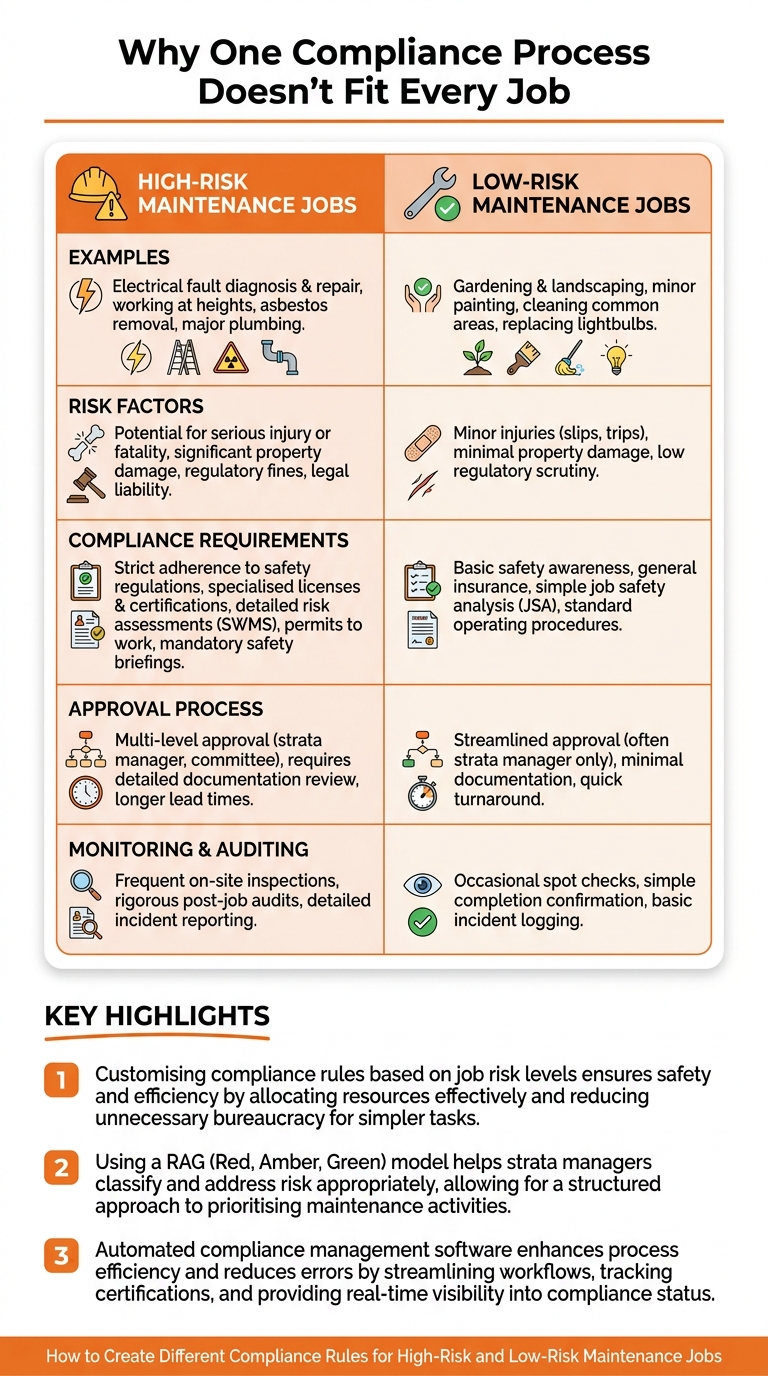
Why One Compliance Process Doesn't Fit Every Job

In strata management, assuming a one-size-fits-all approach to compliance is a recipe for inefficiency and potential hazards. Different maintenance tasks pose varying levels of risk, from minor electrical repairs to extensive high-rise building works. Each type requires a tailored compliance strategy to address specific safety and operational challenges.

High-risk maintenance work, such as major plant repairs or electrical works, inherently carries more potential for danger. In contrast, low-risk jobs like routine gardening or painting may require fewer compliance checks. By customising compliance workflows to suit the job’s risk level, you can mitigate potential hazards effectively.
infographic_uZ5d5csAxr.jpg

Classify Maintenance Jobs by Risk Level

To create effective compliance rules, you first need to categorise maintenance jobs by their risk levels. A common method is using a simple RAG (Red, Amber, Green) model. High-risk (Red) jobs may include tasks like working at heights or handling hazardous materials. Moderate-risk (Amber) jobs might involve roof inspections or minor plumbing work. Low-risk (Green) jobs typically encompass routine maintenance like cleaning or landscaping.

Using this model, strata managers can better allocate resources and focus compliance efforts where they are most needed. According to Vendor Compliance: Why It Matters and How to Achieve It, understanding the risk profile of each task is critical in developing effective compliance strategies.

Set Baseline Supplier Compliance Requirements

Baseline supplier compliance requirements are vital for ensuring all vendors adhere to necessary safety standards. These requirements typically include verification of licences, insurance coverage, and adherence to site-specific safety protocols. By establishing these baseline criteria, you can ensure a consistent standard of safety across all maintenance jobs.

This foundational step forms the backbone of any effective compliance strategy. It ensures that all suppliers meet the basic requirements before commencing work, thereby reducing the risk of incidents due to non-compliance.

Use the Compliance Management Guide in Australia to help implement these supplier requirements effectively.

Add Extra Controls for High-Risk Maintenance Work

When dealing with high-risk maintenance work, additional compliance controls become imperative. This might include detailed Safe Work Method Statements (SWMS), mandatory personal protective equipment (PPE), and more rigorous permitting processes. Enhanced oversight through regular audits and real-time monitoring can further ensure compliance.

Such controls are not just bureaucratic necessities but critical for safeguarding all personnel involved. The goal is to mitigate risk effectively while maintaining operational flow. These measures ensure that high-risk tasks are completed safely, reducing potential liabilities and enhancing worker protection.

A proactive approach is crucial in managing these complex job types.

Build a Risk-Based Compliance Workflow

Developing a risk-based compliance workflow enables you to tailor processes to the specific needs of each job. Start by integrating risk assessments into your job planning stages. Use compliance management software to automate these workflows, assigning tasks, and ensuring that appropriate checks are in place before, during, and after each job.

These workflows help streamline operations, reducing administrative overhead while maintaining a high standard of safety. By using a risk-based approach, you can focus efforts on high-priority tasks, while still maintaining oversight of lower-risk activities.

Verify Contractor Compliance Before Every Job

Before any work begins, verifying contractor compliance is essential. Ensure that all necessary documentation, such as trade licences and insurance, is up-to-date. Regular checks can prevent delays and ensure that all contractors meet your organisation’s compliance standards.

Verifying compliance protects both the strata and its residents, reducing the risk of mishaps and ensuring smooth operations. A Schedule Compliance Calculator can help with maintaining high compliance rates and is key to operational efficiency.

Keep Compliance Records and Evidence Organised

Organised compliance records are invaluable for both operational and legal purposes. Keeping thorough documentation of all maintenance activities ensures that you have proof of compliance and can quickly address any issues that arise.

Using digital tools to manage these records can simplify the process. Ensure all records are easily accessible and securely stored, making them available for audits and inspections. This not only helps in maintaining transparency but also builds trust with all stakeholders involved.

How Compliance Management Software Automates Risk-Based Compliance

Compliance management software plays a pivotal role in automating risk-based compliance processes. Such software can streamline the administration of compliance checks, ensuring that all tasks are logged and tracked efficiently.

By automating these processes, you can reduce human error and save time, allowing you to focus on strategic decision-making. Software solutions offer tools for real-time monitoring, automated reminders for document renewals, and detailed reporting capabilities, enhancing overall compliance management.

Consider exploring these technologies to enhance your strata management operations. You can learn more about how to integrate these solutions effectively by booking a demo of 9 Ways to Reduce Vendor Risk Without Slowing Down Job Turnaround.

Book a demo of i4T Maintenance today, to see how automating supplier compliance helps.

Frequently Asked Questions

Different maintenance jobs have varying risk levels, which require tailored compliance checks to ensure both efficiency and safety.

Compliance management software automates processes, reduces human error, and saves time by managing compliance checks efficiently.

Examples include major plant repairs, electrical work, and tasks involving hazardous materials.

Ensure all contractor documentation is current, including trade licences and insurance. Regular checks can prevent delays and ensure standards are met.

They provide evidence of compliance, facilitate audits, and ensure transparency and trust with stakeholders.

Scroll to Top
i4T Maintenance  Australia
Privacy Overview

This website uses cookies so that we can provide you with the best user experience possible. Cookie information is stored in your browser and performs functions such as recognising you when you return to our website and helping our team to understand which sections of the website you find most interesting and useful.