Share this article

Table of Contents

Contractor Compliance Gaps Strata Managers Should Check Before Assigning Work Orders

Contractor Compliance Gaps Strata Managers Should Check Before Assigning Work Orders

Table of Contents

Key Takeaways

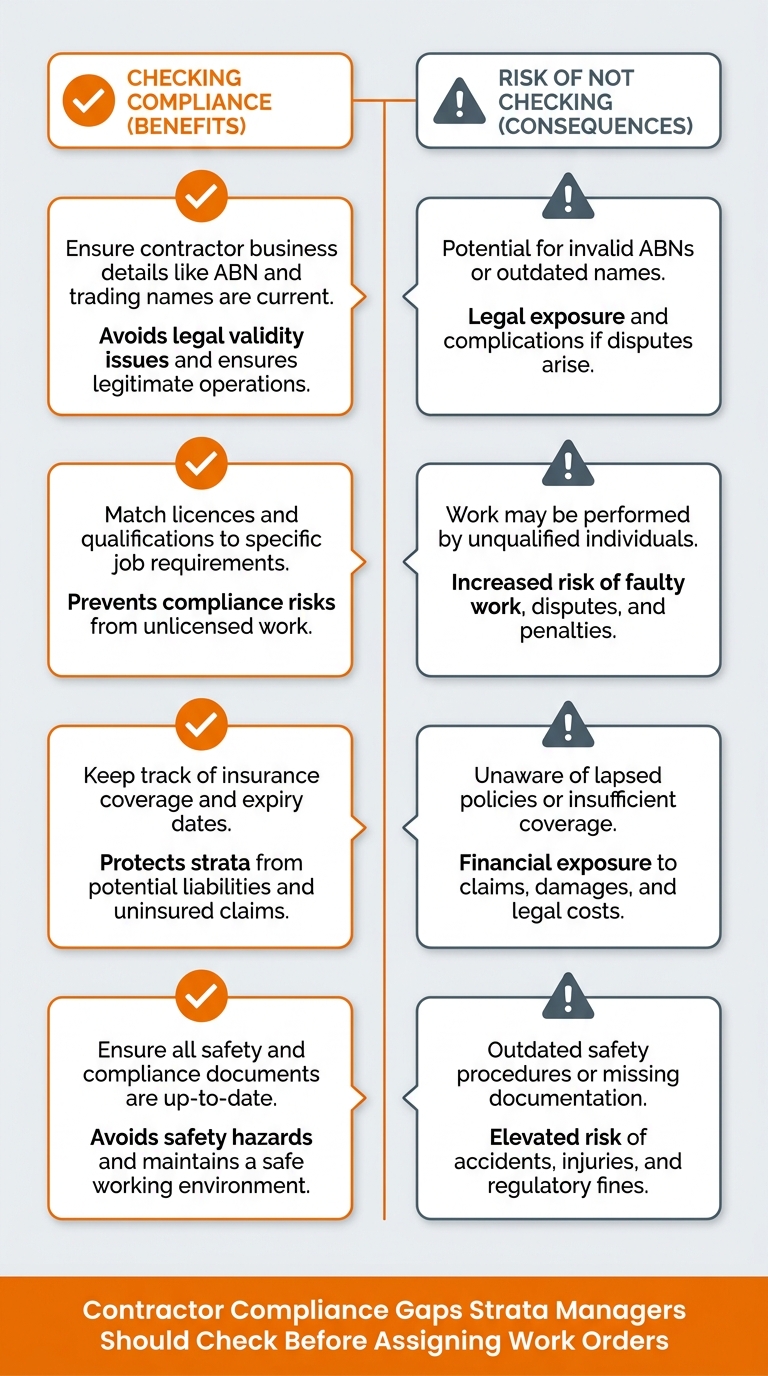
  • Ensure contractor business details like ABN and trading names are current to avoid legal issues.

  • Match licences and qualifications to specific job requirements to prevent compliance risks.

  • Keep track of insurance coverage and expiry dates to protect your strata from potential liabilities.

  • Ensure all safety and compliance documents are up-to-date to avoid safety hazards.

Key Answer

Learn how to close contractor compliance gaps before assigning work orders in strata management, ensuring safety, legality, and efficiency in every project.

In the fast-paced world of strata management, knowing the contractor compliance gaps that strata managers should check before assigning work orders can save you from headaches, delays, and potential financial pitfalls. Strata contractor compliance is not just about ticking boxes; it’s about ensuring that every job is carried out safely, legally, and professionally.

Whether you’re dealing with plumbing issues, electrical fittings, or remedial work, identifying these gaps early can make all the difference.

Why Check Contractor Compliance Before Assigning Work?

Before you assign a work order, checking contractor compliance is crucial for several reasons. First, it protects your strata from legal risks. If a contractor is found to be non-compliant, your strata scheme could face hefty fines, not to mention the potential for voided insurance claims and reputational damage.

Secondly, it ensures the safety of residents and the structural integrity of the building. Non-compliant work can lead to accidents, structural faults, or even emergency evacuations, putting everyone at risk. Contractor compliance is vital for strata asset and tenant safety, proper compliance checks can significantly reduce these risks.
infographic_O3KSxpmkcy.jpg

Check Contractor Business Details Are Current

When reviewing contractor compliance, start by verifying the contractor’s business details. This includes ensuring their Australian Business Number (ABN) and trading names are up-to-date. Incorrect or outdated information can cause issues down the line, particularly if legal actions or disputes arise.

You should also verify contact details, GST registration status, and any changes in business operations. Keeping these details current not only facilitates smoother communication but also helps ensure you are dealing with a legitimate business entity.

Learn more in this Beginner’s Guide to Contractor Compliance for Strata Managers for further insights into maintaining up-to-date records.

Match Licences and Qualifications to the Job

Licences and qualifications are the backbone of contractor compliance. It’s not sufficient for a contractor to simply hold a licence; that licence must match the specific work they are engaged for. Different trades have different requirements, and these can vary across Australian states.

For example, an electrician working on your property must hold a valid electrical licence that is current and specific to the tasks involved. Make sure these licences are not only up-to-date but also validated through the appropriate state or territory registers. This prevents any unforeseen legal or safety issues from arising later.

Check Insurance and Important Expiry Dates

Insurance plays a critical role in protecting both your strata scheme and the contractor. Public liability insurance and workers’ compensation are must-haves. Always check that the insurance covers the full duration of the work and that the coverage amount is adequate for your property’s risk profile.

Remember that insurance policies have expiry dates. Establishing a system for tracking these dates will help avoid lapses in coverage that could leave your strata exposed to risks. Keep a digital record of certificates of currency and set reminders for renewals to ensure continuous coverage.

Look for Missing Safety and Compliance Documents

Safety and compliance documents like Safe Work Method Statements (SWMS) are essential, especially for high-risk tasks. These documents detail how a job should be safely executed, outlining potential hazards and controls. Missing or outdated documents can lead to non-compliance and increased risk of accidents.

Each job may have specific documentation requirements, so it’s vital to identify what is needed before any work begins. Keeping these documents organised and readily accessible will ensure that all parties understand the safety protocols and compliance requirements.

Check Job-Specific Requirements Before Assignment

Certain jobs will have unique requirements that need to be addressed in your compliance checks. This might include specific permits for work on heritage buildings or additional environmental compliance for green spaces.

Before assigning work, ensure that you’ve identified all job-specific requirements and that the contractor can meet them. This proactive approach not only supports compliance but also helps prevent delays and cost overruns.

Build Contractor Compliance Into the Maintenance Workflow

Integrating contractor compliance into your maintenance workflow ensures that it becomes a natural part of the process rather than an afterthought. Use digital tools to manage compliance documents, track expiry dates, and automate reminders. This not only saves time but also reduces the risk of oversight.

By embedding compliance checks into the workflow, you streamline the approval process and ensure that all compliance-related tasks are completed before work begins.

Check out these 15 Compliance Red Flags When Hiring Trades, to learn the approach that minimises surprises and boosts efficiency.

Check Compliance Before You Assign the Work

Ensuring contractor compliance is a proactive step that protects your strata scheme from legal, financial, and safety risks. By addressing compliance gaps before assigning work orders, you foster a safer, more efficient environment for everyone involved. Don’t leave compliance to chance.

To see how you can streamline this process and keep all your compliance checks in order, organise a demo of i4T Maintenance today.

Frequently Asked Questions

Contractor compliance is essential to protect against legal, financial, and safety risks, ensuring that all work is performed to the required standards and within the law.

Ensure licences match the specific tasks contractors are hired for, such as electrical or plumbing work, and verify through state or territory registers.

Digital tools can streamline compliance by managing documents, tracking expiry dates, and automating reminders, reducing the risk of oversight.

SWMS are documents that outline how to safely execute a job, detailing potential hazards and control measures, especially important for high-risk tasks.

Compliance should be checked at the start of each new job and regularly updated to accommodate any changes in regulations or contractor details.

Scroll to Top
i4T Maintenance  Australia
Privacy Overview

This website uses cookies so that we can provide you with the best user experience possible. Cookie information is stored in your browser and performs functions such as recognising you when you return to our website and helping our team to understand which sections of the website you find most interesting and useful.