

Key Takeaways
Centralise your contractor compliance records digitally to ensure quick access and better organisation.
Automate expiry reminders to avoid lapses in compliance and maintain seamless operations.
Use software solutions to track and update compliance documents efficiently, saving time and reducing errors.
Key Answer
To keep contractor licences, insurance, and compliance documents up to date, centralise records digitally, automate renewal reminders, and ensure regular follow-ups with contractors. This approach streamlines the management process and helps avoid lapses.
As a strata manager in Australia, keeping contractor licences, insurance, and compliance documents up to date can feel like juggling flaming torches. With various contractors and diverse work types, ensuring all your Contractor Compliance Records are current is crucial. But fear not, because we’re here to offer practical strategies to manage these records efficiently, without drowning in spreadsheets or manual reminders.
What Contractor Compliance Records Should Strata Managers Keep?
Strata managers must maintain a detailed archive of key Contractor Compliance Records to ensure smooth operations. Essential records include licences for specific trades such as electrical and plumbing, current public liability insurance certificates, and safety certifications like Workplace Health & Safety (WHS) compliance. Each of these documents plays a critical role in protecting the building, its residents, and your reputation as a manager.
Maintaining these records helps mitigate risks, such as defective work or legal penalties, that could arise from working with unqualified or uninsured contractors. Beyond the basics, consider maintaining environmental compliance records, especially if your contractors deal with hazardous materials. With everything in one place, you can quickly verify compliance before assigning any work.
Why Do Contractor Compliance Records Become Out of Date?
One of the biggest challenges for strata managers is ensuring that Contractor Compliance Records remain current. Documents often become outdated due to contractors failing to notify you of changes or renewals. It’s easy for things to slip through the cracks when relying on manual tracking.
Changing regulations and requirements also contribute to records becoming outdated. With each new project or regulatory update, you need to reassess and update records accordingly. Hence, keeping abreast of industry changes is vital. Inconsistent follow-ups can further exacerbate the problem, leaving you in a lurch when you least expect it.
How Often Should I Review Contractor Licences and Insurance?
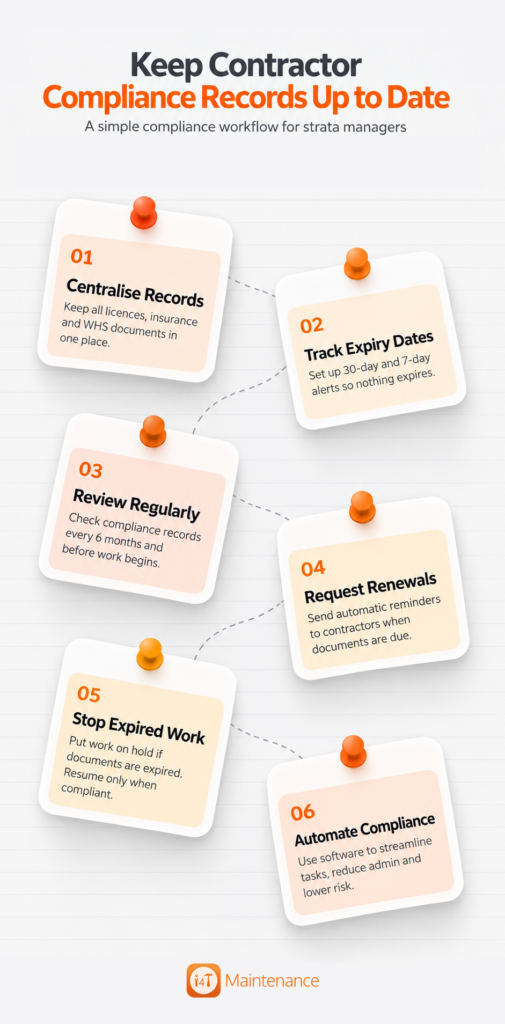
To stay ahead, set a schedule for regular review of your Contractor Compliance Records. A thorough review every six months can help you catch any discrepancies or expired documents. However, some critical documents might need more frequent checks, especially before new work commences or when contracts are renewed.
Implementing a pre-emptive review system allows you to address potential issues before they escalate. Consider using compliance checklists tailored to your specific needs for streamlined audits. This proactive approach not only maintains compliance but also enhances operational efficiency.
How Can I Track Contractor Document Expiry Dates?
Tracking expiry dates is crucial to maintain up-to-date records and avoid lapses. The days of manually sifting through paper files or endless email chains are over. Instead, use digital tools that offer a centralised document hub where all contractor documents are stored securely and are easily accessible.
Software like i4T Maintenance can automate this process by sending timely reminders when a document is nearing its expiry. Automating reminders ensures you have ample time to get updated documents from your contractors, thus keeping the compliance wheels turning smoothly.
Ensure that your software or system is set to remind you at critical intervals, such as 30 days and 7 days before expiry. This will give you a heads-up to coordinate with contractors, allowing for seamless renewals without breaking a sweat.
How Can I Get Contractors to Provide Updated Documents on Time?
Securing updated documents from contractors often requires a proactive approach. Start by setting clear expectations during your initial engagement with them. Let contractors know that providing up-to-date compliance records is a condition of their ongoing work.
Utilise automated systems to issue reminders to contractors as deadlines approach. Consider incorporating a clause in your contracts that ties payment to the receipt of current compliance documents. This will incentivise contractors to stay on top of their paperwork, ensuring your records remain accurate and up to date.
Communication is key. Frequent check-ins and a clear line of communication can significantly reduce delays in document submissions. Consider establishing a compliance policy that outlines all necessary procedures for maintaining updated records.
What Should Happen When a Contractor Compliance Document Expires?
When a compliance document expires, it’s crucial to act swiftly. Immediately suspend any work being conducted by the contractor until the documentation is updated. It’s a tough stance, but necessary to ensure the safety and legal compliance of the property.
Notify the contractor promptly and request the updated document. Make it clear that no further work will proceed until compliance is re-established. This approach not only safeguards your building but also reinforces the importance of maintaining up-to-date records in your contractors’ minds.
If there’s ever uncertainty on what documents are necessary, refer to a supplier compliance checklist to avoid missing crucial compliance elements. This proactive management can help prevent unnecessary project delays or legal complications.
How Can Software Keep Contractor Compliance Records Up to Date?
Leveraging software to maintain your Contractor Compliance Records is an absolute game-changer. With real-time updates and alerts, you can automate much of the compliance management process. Software solutions like i4T Maintenance allow you to store all documents digitally, making them accessible at any time from anywhere.
Automation reduces the chances of human error and ensures that you’re alerted well in advance of any expiries. Moreover, digital platforms offer analytics and reporting features that provide insights into compliance trends and potential problem areas.
Integration with existing systems further streamlines operations, ensuring compliance without additional workload. This approach not only saves time but also enhances the precision of your compliance tracking efforts.
Keep Contractor Compliance Records Current With Less Admin
In conclusion, keeping your Contractor Compliance Records up to date is achievable with the right strategies and tools. Centralising records, tracking expiry dates, and automating renewals are pivotal steps in managing contractor compliance efficiently.
By embracing digital solutions, you can reduce administrative burdens and minimise the risk of lapses. This not only protects the building and its residents but also boosts your professional standing as a strata manager.
Ready to streamline your compliance process? Schedule a demo of i4T Maintenance today and see how easy compliance management can be. With automated systems and centralised data, you’ll be one step closer to stress-free contractor management.
Frequently Asked Questions
Implement automated reminder systems and clearly communicate that up-to-date documents are a condition for continuing work.
Suspend their work immediately and request updated documents. Maintain a zero-tolerance policy for expired compliance records.
Centralising records reduces administrative tasks, ensures easy access to documents, and helps track expiry dates effectively.
Yes, software can automate alerts, centralise document storage, and provide analytics, making compliance management more efficient.
Review compliance records at least every six months, and before starting new projects or renewing contracts.