

Energy costs have a sneaky way of becoming everyone’s problem in strata. One month it’s “Why is the common power bill up again?”, the next it’s “The hallway is freezing,” and somewhere in the middle you’re trying to explain to a committee that no, you didn’t personally leave the carpark lights on for three days straight.
The challenge is that energy conversations often jump straight to big-ticket upgrades, including solar, major plant replacement, and full building retrofits. Sometimes those are the right moves, but they’re rarely the move you can execute quickly.
What is doable fast is energy efficiency maintenance: small operational fixes, smart servicing, better scheduling, and tighter follow-through. Done well, it results in fewer complaints, lower bills, and lifts building performance without turning your next committee meeting into a three-hour debate.
This is a 90-day plan designed for busy strata managers: realistic, repeatable, and focused on wins you can show.
How the 90-Day Plan Works
Think of this as a sprint with a clear finish line. You’re not trying to make the building “perfect”. You’re trying to make it noticeably better and prove it.
In most schemes, the biggest energy waste isn’t caused by residents doing the wrong thing. It’s caused by systems quietly running longer than needed, controls drifting over time, or maintenance happening without anyone checking settings afterwards. That’s why sustainability and cost savings can come from maintenance alone, because you’re fixing the “set and forget” creep.
Your 90-day rhythm:
- Establish a baseline you can defend
- Identify the most common waste patterns
- Execute quick wins in the right order
Measure and report so the gains stick
Week 1: Set a Baseline for Building Performance

Before you change anything, you need a simple “before” snapshot. Not a consultant-grade report. Just a clean, basic baseline so you can confidently say: “Here’s where we started, and here’s what improved.”
This matters because committees don’t just want action; they want proof. And if you can show that your 90-day push improved building performance, you’ll get more support for the next round of improvements too.
A baseline can be as simple as the last one to three bills and a quick note on what systems are likely driving common power: lifts, corridor lighting, basement ventilation, pool plant, and central HVAC.
Quick baseline checklist:
- Pull the last 3–12 months of common power bills
- Note the total kWh and total cost for the latest period
- Write down obvious “big users” (lifts, carparks, ventilation, pool/HVAC)
- If you have a meter portal, grab a simple usage view (weekly/daily trend)
Weeks 1–2: Build an Energy Saving Maintenance Checklist

Here’s where a lot of buildings go wrong: they do an “audit” that turns into a long document nobody acts on. Your job isn’t to create more paperwork. It’s to create an energy-saving maintenance checklist that strata managers can translate directly into work orders.
The easiest way is a targeted walkthrough with one lens: where is energy being wasted right now? Ask “what is running unnecessarily, running too hard, or running at the wrong time.”
You’ll usually find issues like timers that have drifted, sensors that are poorly positioned, a plant that’s overdue for cleaning, and systems that were adjusted for the time being months ago and never reset.
What to look for during a quick walkthrough:
- Lights on when they shouldn’t be
- Fans running constantly
- HVAC setpoints that are too aggressive for comfort and cost
- Door seals/closers cause drafts and comfort complaints
Weeks 2–4: Fix Common-Area Lighting First

Lighting is the best early win because it’s visible and usually straightforward. Residents notice it, committees understand it, and it often doesn’t require big approvals (depending on scope).
A lot of energy waste comes from lighting schedules that don’t match real usage. Carparks lit up like a stadium at midday. Corridor sensors that trigger constantly. Timer drift that slowly creeps from “reasonable” to “basically all night.”
This is classic energy efficiency maintenance, improving outcomes by correcting settings, improving reliability, and reducing unnecessary run time.
Quick actions that usually pay off:
- Reset timers and confirm they match actual building activity
- Check daylight sensors and motion sensors
- Replace failed globes with efficient equivalents where compatible
- Remove “temporary” overrides that became permanent
Weeks 3–6: Tune HVAC and Ventilation
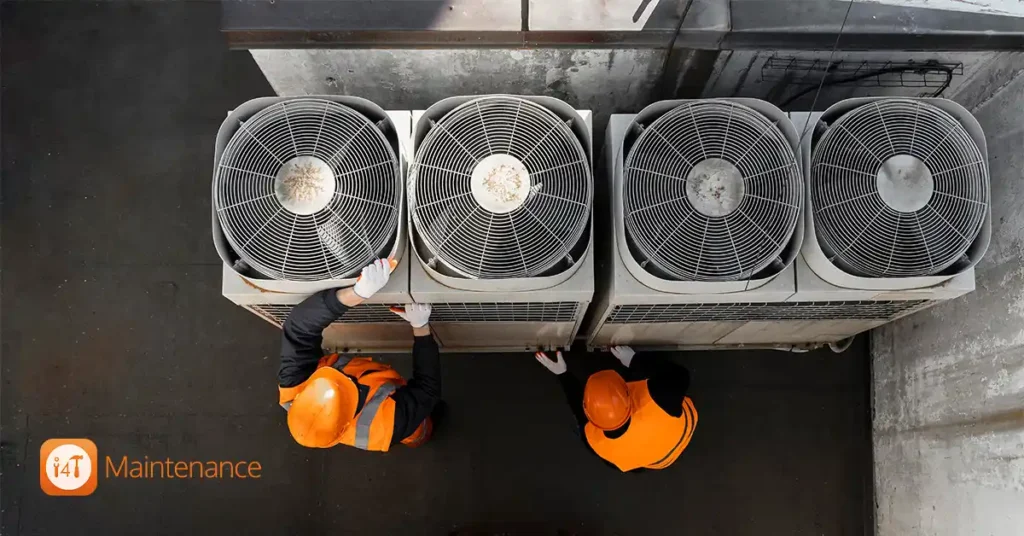
If lighting is the easy win, HVAC and ventilation are the high-impact win. It’s also where you can reduce complaints and improve building performance at the same time.
The key thing to remember is this: most HVAC inefficiency is operational. Filters get clogged. Coils get dirty. Sensors drift. Schedules don’t get reviewed. And then the system works harder to deliver the same comfort, which residents still complain about.
Good energy efficiency maintenance here looks like tuning, cleaning, calibrating, and scheduling, not rushing to replace equipment.
What to prioritise:
- Filters/coils cleaning and service timing
- Setpoints that are practical, not extreme
- Operating schedules that match real occupancy and building use
- Faulty sensors causing overcooling or overheating
Weeks 3–6: Pools, Pumps, and Plant Schedules
Pools and pump systems often run on habits rather than need. A schedule set for summer can stay in place through mild weather. A pump can run longer because filters are clogged or there’s a minor leak. Heating can stay higher than necessary because nobody wants complaints, but then the bill lands, and everyone complains anyway.
The good news is that small schedule and maintenance adjustments can deliver quick savings without residents feeling like you’ve taken something away.
This is a great section to position sustainability as “smarter operations,” not sacrifice.
Practical quick wins:
- Adjust pump/heating schedules to match season and usage
- Service filters and pumps to prevent overrun
- Fix minor leaks quickly (they drive hidden extra runtime)
- Confirm settings after servicing (so they don’t revert)
Weeks 4–7: Seal Drafts and “Invisible Leaks”
If residents say, “It’s always freezing in the hallway” or “The foyer is boiling,” sometimes it’s not the HVAC at all; it’s the building losing conditioned air through gaps, doors not closing properly, or seals that are worn out.
These are the sorts of fixes that don’t look exciting in a report, but residents feel them immediately. They also reduce the load on HVAC systems, which supports building performance improvements over time.
It’s also a very tangible way to demonstrate sustainability without any big spend.
Common fixes that help fast:
- Adjust/replace door closers so doors actually latch
- Replace worn seals on common doors
- Address garage entry gaps and draft points
- Re-check works after completion (these issues creep back)
Weeks 4–8: Lifts and Essential Services
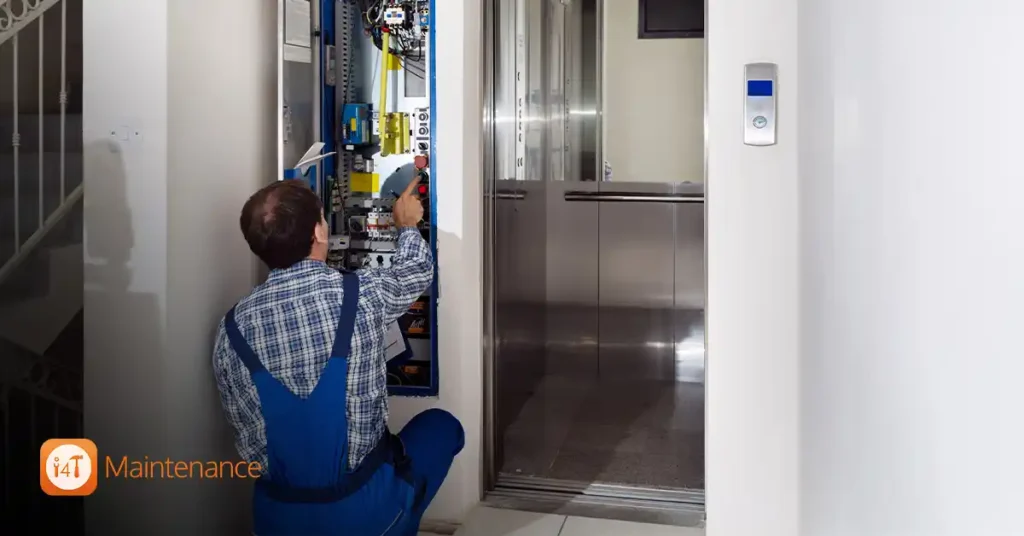
Lifts and essential plants aren’t always your biggest energy users, but they run for long hours, and that’s what makes them worth reviewing. A small inefficiency multiplied across a 24/7 operation becomes real money over a quarter.
This is another energy efficiency maintenance opportunity: build “efficiency checks” into existing service visits, rather than adding complexity.
You’re not trying to change anything that affects safety or compliance. You’re simply making sure the building isn’t running unnecessary loads by default.
Ask contractors to check and report on:
- Lights/fans that run constantly
- Plant room conditions that reduce system efficiency
- Pumps are cycling abnormally due to controls or leaks
Weeks 5–8: Standardise Supplier Expectations
A big reason energy gains disappear is inconsistency. One contractor tunes settings. The next visit, someone resets to “factory default.” Or a system is serviced, but nobody checks the run schedules afterwards. That’s how energy waste quietly comes back.
The fix isn’t more meetings. It’s a simple standard you apply across suppliers: every service includes quick checks that support building performance.
This is where your energy-saving maintenance strata checklist becomes a repeatable operating system.
Include these requirements in service scopes:
- Confirm current setpoints and schedules
- Flag abnormal runtime or overrides
- Document changes made
- Suggest next steps ranked by impact and effort
Weeks 6–10: Communicate Changes To Avoid Complaints
Even when you improve things, residents can feel unsettled if change arrives without context. A tuned ventilation schedule can prompt: “Why does it feel or look different?” even when it’s still compliant and safe.
Clear communication helps you avoid unnecessary noise while you fine-tune settings. It also supports sustainability messaging without sounding preachy.
Keep it short, calm, and practical: you’re improving comfort and controlling common costs.
Simple comms that work:
- Explain the “why” behind comfort or cost control changes
- Flag what might change
- Provide a clear channel to report issues
Weeks 10–13: Prove the Wins
This is the part that turns effort into credibility. Without a results summary, your work can feel like “maintenance as usual.” With a results pack, it becomes: “We ran a 90-day program, improved building performance, and here’s the evidence.”
Keep the report committee-friendly. Avoid drowning it in technical detail. Focus on what changed, why it matters, and what you recommend next.
Even a basic before/after comparison of bills can be powerful. Pair that with a clear list of completed work orders, and you’ve got a story people trust.
What to include in your Day 90 summary:
- Baseline snapshot (kWh/$) + notes on major drivers
- Work completed by category, such as lighting, HVAC, pumps, sealing, and controls
- Observed outcomes like usage trend, fewer complaints, comfort improvements
- Next 90-day priorities, ranked by impact
90 Days to Better Sustainability and Lower Costs
You don’t need to wait for a perfect capital works plan to make meaningful progress.
With focused energy efficiency maintenance, you can reduce waste, lift comfort, and improve building performance within 90 days, and you can show it clearly to committees and owners.
The best part is that these wins aren’t one-offs. When you standardise the checklist, the supplier expectations, and the reporting rhythm, sustainability becomes part of normal operations.
Make these wins easier to deliver with i4T Maintenance
If you want this 90-day plan to run smoothly across multiple buildings, i4T Maintenance helps strata teams manage the full workflow end-to-end, from request intake and triage to supplier allocation, job tracking, resident updates, supplier compliance, and invoices.
That means your energy efficiency maintenance tasks don’t fall into email chains or spreadsheet limbo, and your results are easier to deliver, measure, and report.
Book a demo today!
FAQs
The fastest win is usually fixing common-area lighting schedules and sensors as part of energy efficiency maintenance. Timers, motion sensors, and daylight sensors often drift, which keeps lights on longer than needed. Correcting runtimes can improve building performance within days and is easy to validate during site checks and on the next bill.
No, you can start without a formal audit by using an energy saving maintenance checklist that strata managers can action through routine work orders. A simple baseline (recent bills + top energy systems like lighting, HVAC, ventilation, pumps) plus a focused walkthrough often uncovers quick fixes. A professional audit can be added later if the committee wants larger sustainability upgrades or capex planning.
Compare the latest billing period to your baseline and link the change to completed energy efficiency maintenance work orders. Even a simple “before vs after” (kWh and cost) is useful when paired with a list of what changed (lighting schedules, HVAC tuning, pump runtimes, sealing). This creates a clear, committee-friendly story of improved building performance in the 90-day window.
HVAC/ventilation tuning and draft sealing often deliver the biggest comfort gains while supporting building performance. Dirty filters, incorrect setpoints, and excessive runtimes can cause hot/cold complaints and higher energy use. Fixing door closers and seals helps conditioned air stay inside, which supports sustainability without major upgrades.
Sustainability reduces complaints when it’s implemented through reliability-focused energy efficiency maintenance, fewer breakdowns, fewer hot/cold spots, and more consistent lighting and ventilation. Residents typically complain about comfort and recurring faults, not “energy” itself. When you tune systems and communicate changes clearly, you improve daily living conditions while lowering common-area costs.