

If you’re a strata manager juggling multiple properties, maintenance forecasting can sometimes feel like navigating uncharted waters. But here’s the good news: AI in property maintenance is changing the game entirely. From predicting potential issues before they get ugly, to streamlining upkeep tasks across a portfolio, artificial intelligence offers powerful tools that make managing property maintenance way more manageable.
In this article, we’ll take a deep dive into exactly how AI is improving maintenance forecasting for property portfolios, focusing on what strata managers in Australia need to know. Whether you’re new to the role or have years of experience under your belt, this guide will help you harness the latest tech to keep your buildings running smoothly and residents happy.
Understanding AI in Property Maintenance
AI might sound like futuristic jargon, but at its core, AI in property maintenance simply means using advanced data analysis and machine learning to predict when maintenance is needed. Instead of relying on fixed schedules or reactive fixes, AI studies patterns in equipment use, wear and tear, and environmental factors to forecast potential problems before they escalate.
This shift from reactive to predictive maintenance is not just about smarter technology; it’s about saving time, money, and stress for strata managers and residents alike.
How Predictive Maintenance Software Works with AI
Predictive maintenance software is the backbone of AI-driven maintenance. These systems collect data from sensors and maintenance records across your portfolio and use AI algorithms to identify patterns and detect anomalies.
Imagine your building’s HVAC system showing subtle signs of strain; normally, these wouldn’t be obvious until failure. But with predictive maintenance software, AI spots early warning signs based on vibration, temperature changes, or energy consumption and alerts you ahead of time.
- Reduces unexpected breakdowns by predicting faults early
- Schedules maintenance only when necessary, not just on fixed timelines
- Optimises maintenance resources and contractor scheduling
The Rise of Smart Building Maintenance
Smart building maintenance refers to integrating AI with IoT (Internet of Things) devices embedded in buildings. Sensors placed on everything from elevators to plumbing can constantly feed live data to maintenance systems.
This real-time monitoring enables strata managers to track building health continuously and respond immediately to issues. Smart building maintenance also supports energy efficiency initiatives, helping you manage utilities better while preventing equipment failures.
- Live dashboards for instant insight into all building systems
- Automated alerts and reminders tailored to property needs
- Supports sustainability goals with better resource use
Benefits of AI for Property Maintenance in Strata Management
AI offers a wide range of benefits that directly impact your role as a strata manager. It enhances maintenance forecasting accuracy, allowing you to budget and plan confidently. By preventing breakdowns, it boosts tenant satisfaction and reduces emergency repair costs.
Additionally, AI-driven analytics inform better strategic decisions about asset management and capital works, helping you maintain and grow property value.
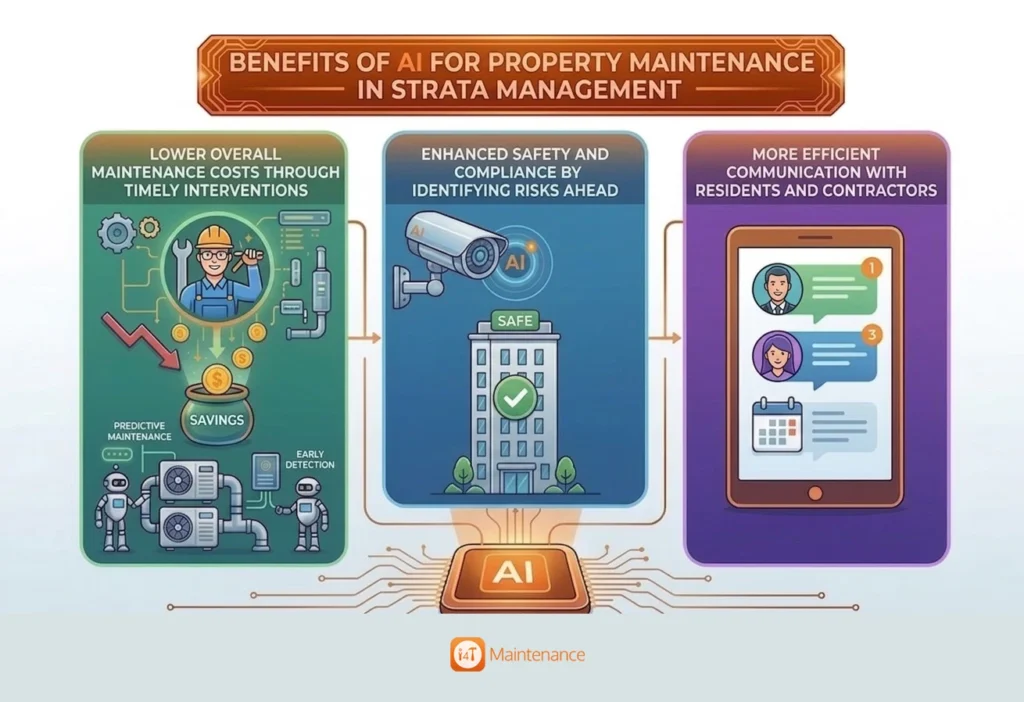
- Lower overall maintenance costs through timely interventions
- Enhanced safety and compliance by identifying risks ahead
- More efficient communication with residents and contractors
AI Maintenance Forecasting Guide for Strata Managers
Getting started with AI maintenance forecasting doesn’t have to be complicated. Start by assessing your portfolio’s maintenance history and identifying high-priority areas such as critical equipment or recurring issues.
Next, invest in predictive maintenance software that integrates smoothly with your existing systems and provides intuitive reports. Finally, train your team and contractors to use these insights effectively, building AI into your everyday workflows.
- Evaluate current maintenance practices and data quality
- Choose user-friendly predictive maintenance software
- Implement pilot projects on key assets before full rollout
How AI Improves Maintenance Forecasting Accuracy
AI’s ability to sift through vast amounts of data far outstrips manual analysis. It evaluates historical maintenance trends alongside real-time asset performance, weather conditions, occupancy levels, and even supplier lead times to produce precise maintenance forecasts.
This holistic approach limits unexpected asset failures and reduces the guesswork that traditionally plagues maintenance scheduling.
Best AI Tools for Property Maintenance
While there are numerous tools available, the best AI solutions for strata management focus on simplicity, customisation, and integration capabilities. Look for platforms that offer:
Easy sensor data integration for smart building maintenance, clear dashboards tailored for strata managers, and comprehensive reporting features that support budgeting and compliance.
- Prioritise solutions with Australian-based support for local compliance needs
- Choose platforms that allow easy scalability from small to large property portfolios
- Consider software that offers mobile access for on-the-go management
Practical AI Tips for Maintenance Forecasting Success
Maximise the impact of AI by combining it with your local knowledge and on-the-ground experience. Use AI insights as a guide, not a replacement, for hands-on management.
Regularly update your data inputs and encourage open communication with residents and contractors for better feedback loops. Collaborate closely with your maintenance suppliers to act promptly on AI-generated alerts.
- Keep maintenance data clean and up to date for the best AI results
- Review AI alerts weekly to plan proactive actions
- Use AI forecasts to communicate transparently with committees and residents
Future Outlook: The Growing Role of AI in Property Maintenance
The future looks bright for AI in property maintenance. As more strata managers adopt these technologies, integration with other digital systems such as compliance registries, financial forecasting, and resident communication platforms will become standard.
AI will increasingly support sustainable building practices, reduce carbon footprints, and enhance occupant comfort. Staying ahead of this curve will give strata managers a powerful advantage in efficiently managing complex property portfolios.
Frequently Asked Questions
It’s the use of artificial intelligence to analyse data and predict when property maintenance will be needed, helping avoid costly failures.
It forecasts maintenance needs accurately, reduces unexpected breakdowns, and helps schedule repairs more efficiently.
Costs vary, but many solutions scale with your portfolio size and quickly pay for themselves through reduced repairs and energy savings.
AI supports and enhances decision-making but doesn’t replace the local knowledge and judgement of experienced strata managers.
Yes, legal and compliance requirements differ, so confirm specific obligations locally to stay on the right side of regulations.