

TL;DR
Most strata maintenance complaints come from uncertainty, not the repair itself.
Reduce follow-ups by using consistent, friendly templates that always explain:
- What’s happening
- What’s next
- When it’ll happen
- The impact, and
- What residents need to do
Send updates at the key points in every job: logged, scheduled, delayed, and completed.
Keep communications privacy-safe by avoiding personal details in building-wide updates.
i4T Maintenance helps you do this with structured work orders, logged messages, and repeatable update templates so everyone stays in the loop.
Strata maintenance rarely becomes stressful because of one big issue. Most of the time, it’s the small unknowns that create extra noise: who’s organising it, when someone will attend, whether access is needed, and what happens if the job is delayed. When people aren’t sure what’s happening, they naturally check in more often, and that’s when follow-ups start stacking up.
The good news is you don’t need to reinvent your writing style. You just need a consistent update rhythm with effective communication and a handful of simple templates that answer the questions residents and committees ask most.
This article shares practical strata maintenance communication templates you can use across email, SMS and notices. The goal is straightforward: reduce resident complaints with maintenance messages by removing uncertainty, setting expectations, and keeping everyone updated without big promises. It also includes a reusable work order update email template sthat trata teams can copy and paste.
A simple update format that cuts down follow-ups
If you want fewer follow-ups for addressing issues regarding regular inspections or regular maintenance, aim to include the same key details every time. Keep it short, factual, and easy to scan so residents know what to expect.
- What it is: a one-line summary of the issue or work
- What happens next: the next step and who’s doing it
- When: date and time window, plus what could change it
- Impact: noise, shutdowns, access, safety, or no impact
- What you need from residents: access, moving cars, pets, and so on
- Where updates live: one source of truth, such as the work order reference number
- How to contact you: one channel, one contact, one clear instruction
That’s the core. If one of those details is missing, you’ll usually get more questions. So its better to get your questions answered first.
What should I send immediately after a resident reports an issue?
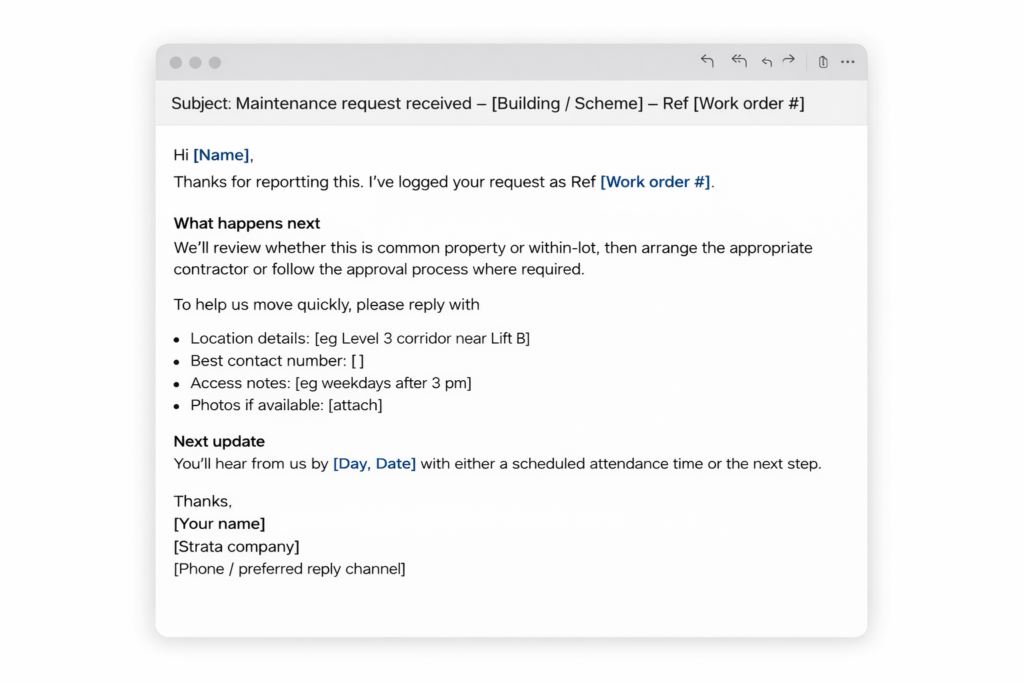
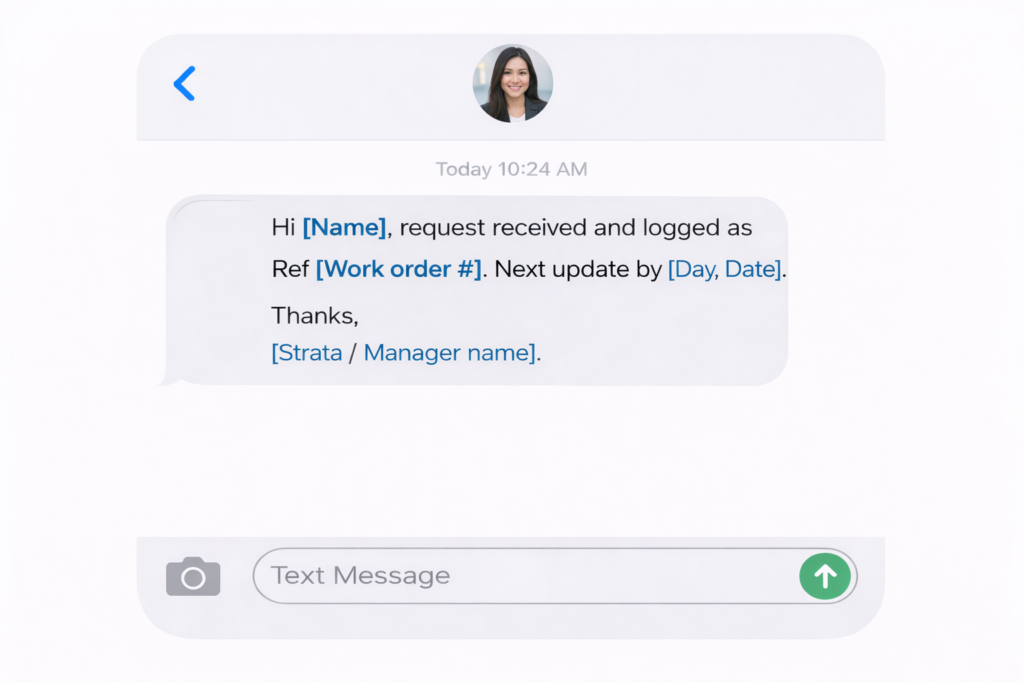
The first reply does two things. It confirms you received the request, and it sets expectations about what happens next. This is one of the easiest ways to prevent the early follow-up messages.
It’s also worth collecting the right details up front when handling complaints regarding property maintenance, so you don’t lose time to back-and-forth. NSW guidance notes that owners generally raise common property repairs through the strata manager or committee, while tenants usually go through their landlord or agent.
Template: Acknowledgement email
Template: Acknowledgement SMS
How do I explain lot vs common property responsibility without causing tension?
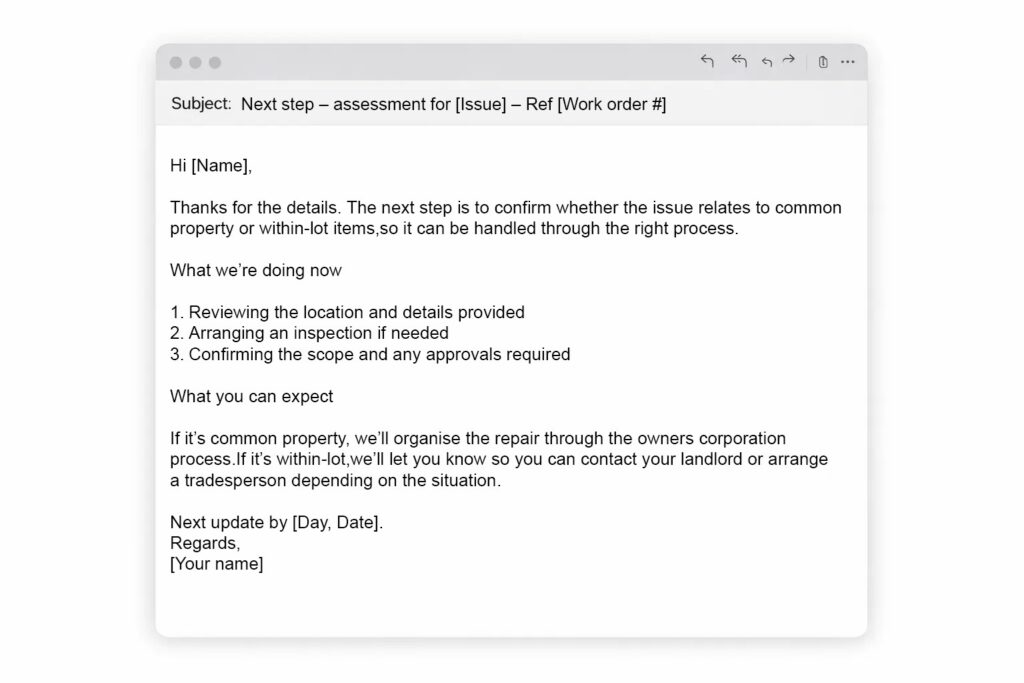
Responsibility messages can easily come across the wrong way, even when you’re being reasonable. The best approach is to keep it neutral and process-based. You’re simply confirming what needs to be checked so the right party can organise and pay for the repair.
Template: Triage and responsibility message
What’s the best way to request access so people respond quickly?
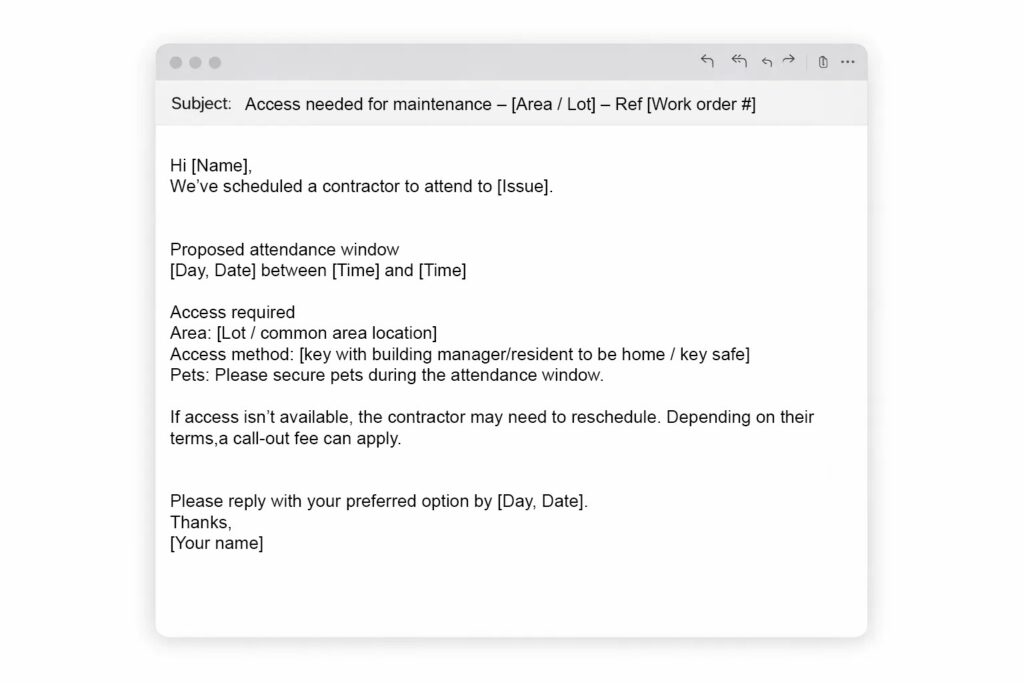
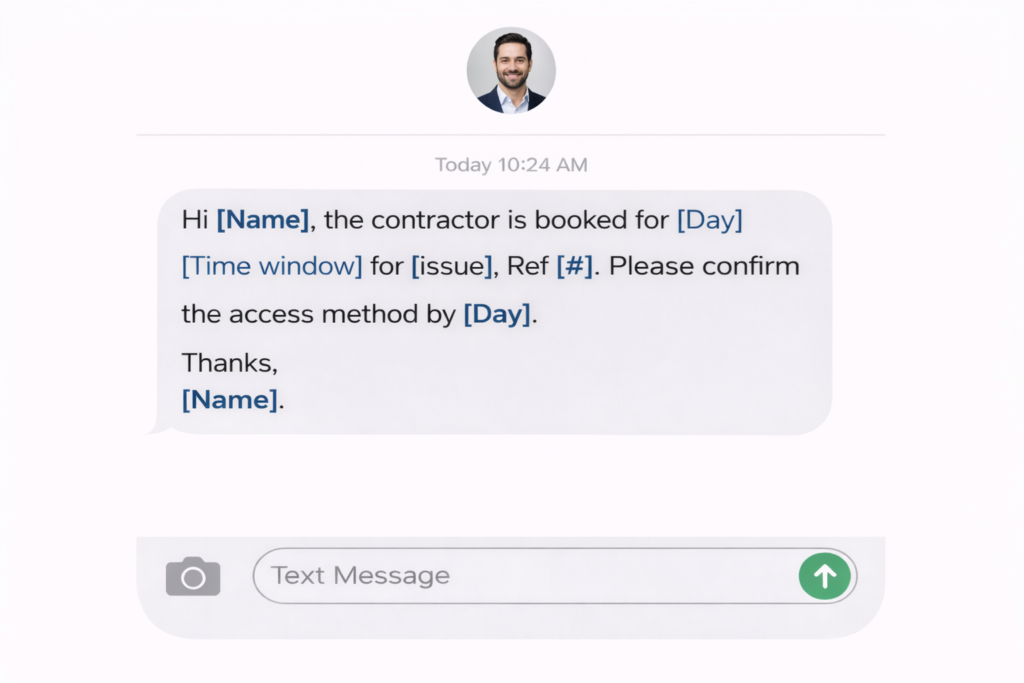
Access requests work best when they’re specific. If you include the date, time window, access method, and what happens if no one can provide access, you’ll usually get a quicker response.
It’s also worth keeping privacy in mind. Avoid sharing personal details beyond what’s needed to arrange access, and don’t identify who lodged the original request in a building-wide message. OAIC guidance covers how personal information should be used or disclosed.
Template: Access request email
Template: Access SMS
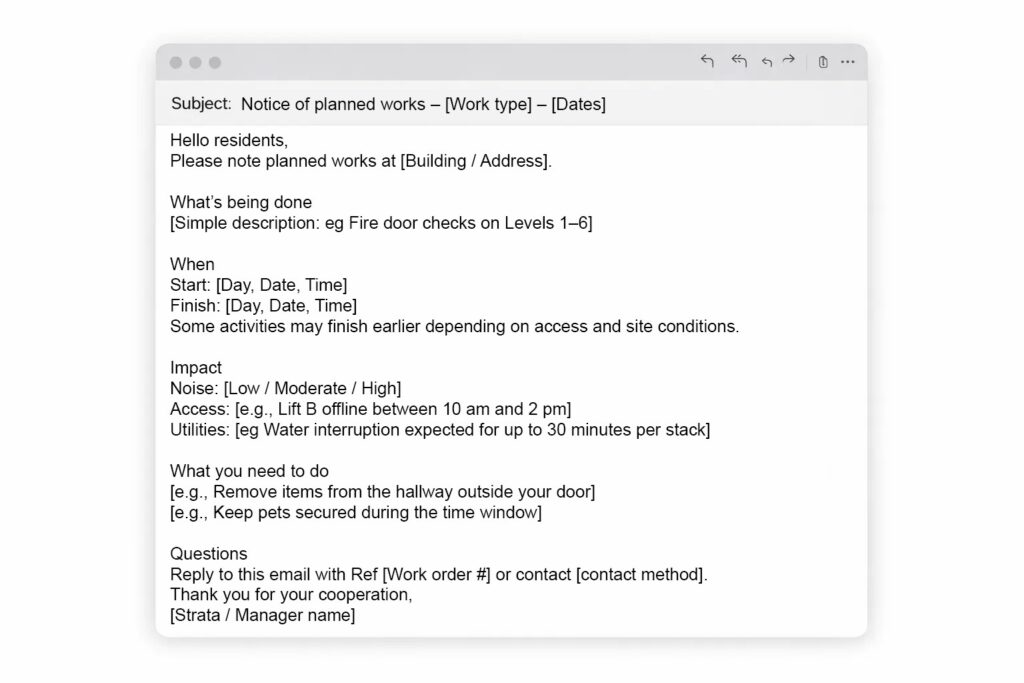
What should a planned works notice include to prevent complaints?
Planned works complaints usually come from surprises. Residents are far more relaxed when they know what’s happening, what the impact will be, and how long it will last.
Consumer Affairs Victoria notes that a lack of maintenance can lead to serious damage and safety hazards, which is why planned works and clear notices matter.
Template: Planned works notice
How often should I send updates, and what should they say?
Residents don’t need constant updates. They do appreciate predictable updates at key points, especially when there’s a change to timing.
A practical baseline is:
- Acknowledgement within one business day
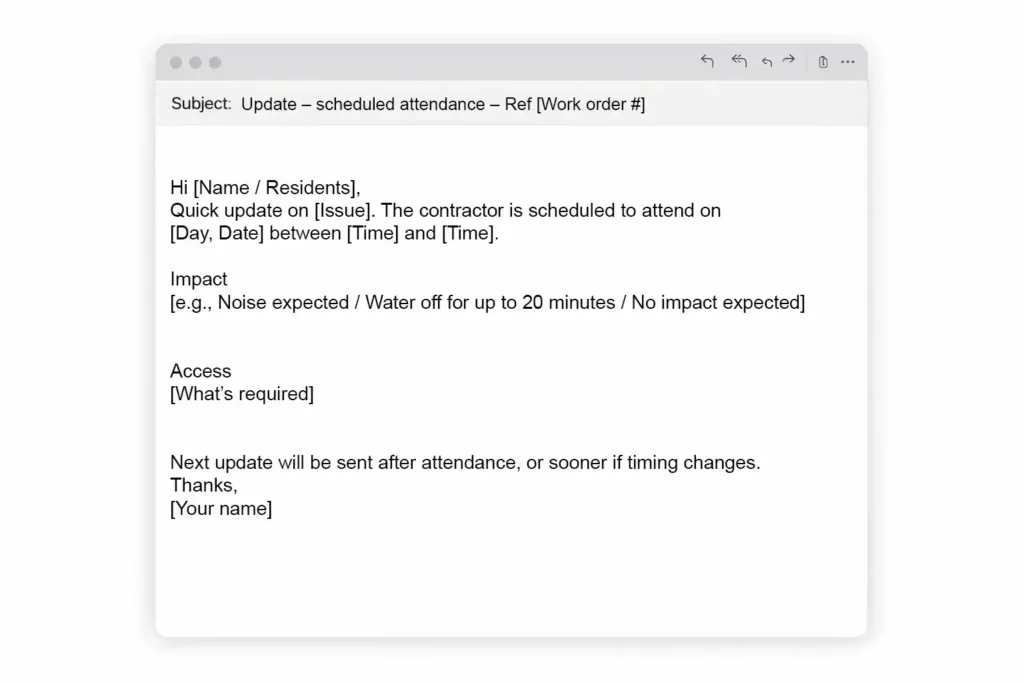
- Scheduled update once booked
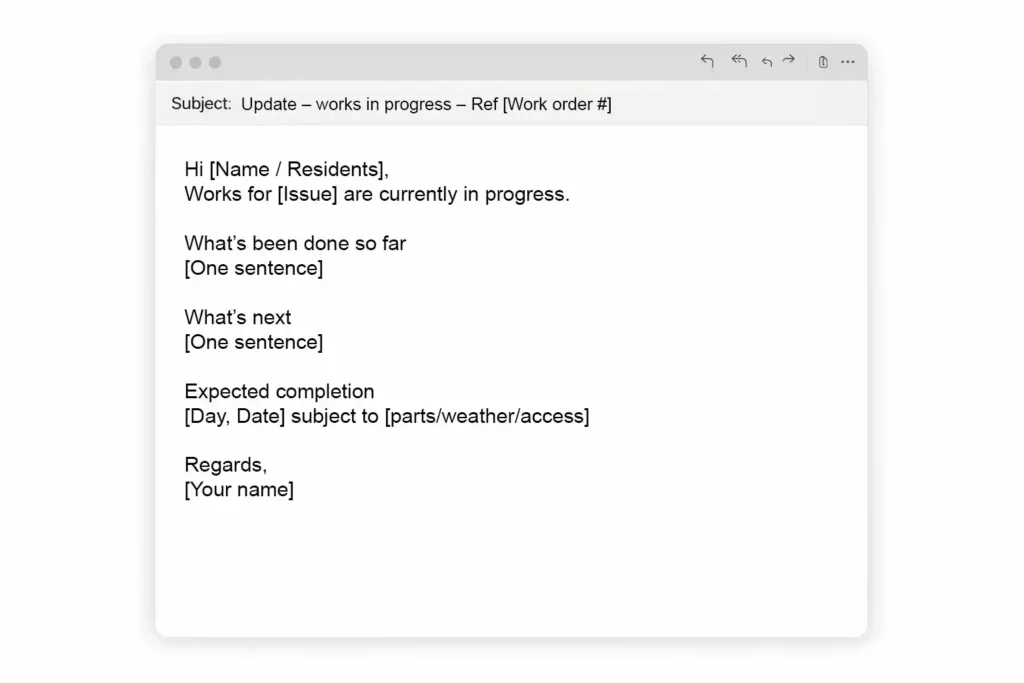
- In-progress update if works span more than a day
- Delay update whenever the expected date changes
- Completion update when finished, with a simple next step if it persists
Below is a reusable work order update email template strata teams can use.
Template: Scheduled update
Template: In progress update
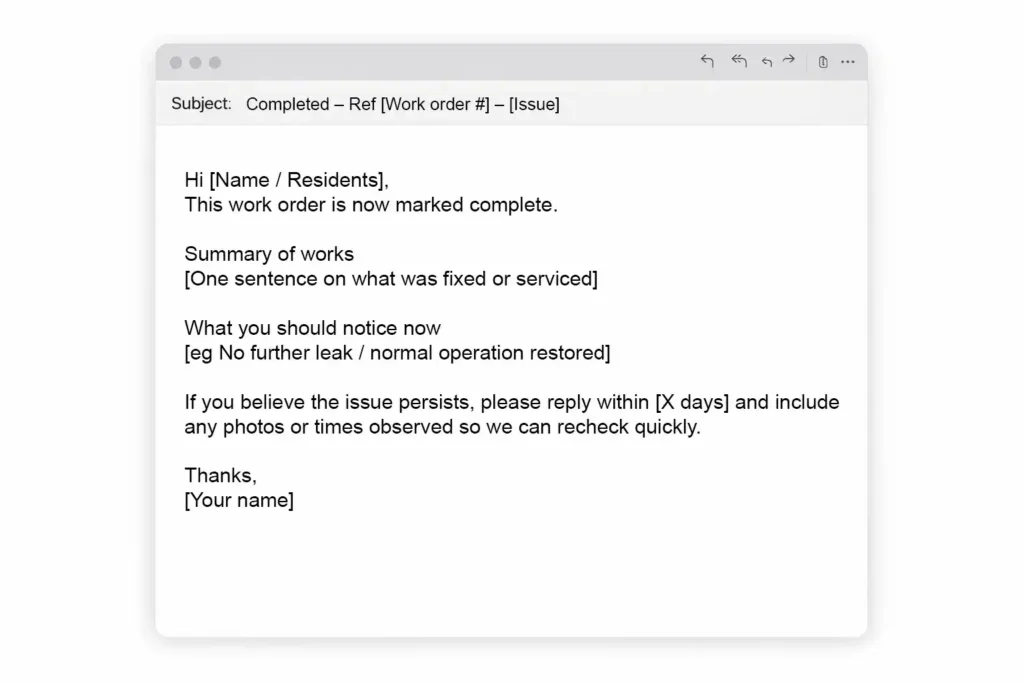
Template: Completion update
What do I say when there’s a delay without frustrating residents?
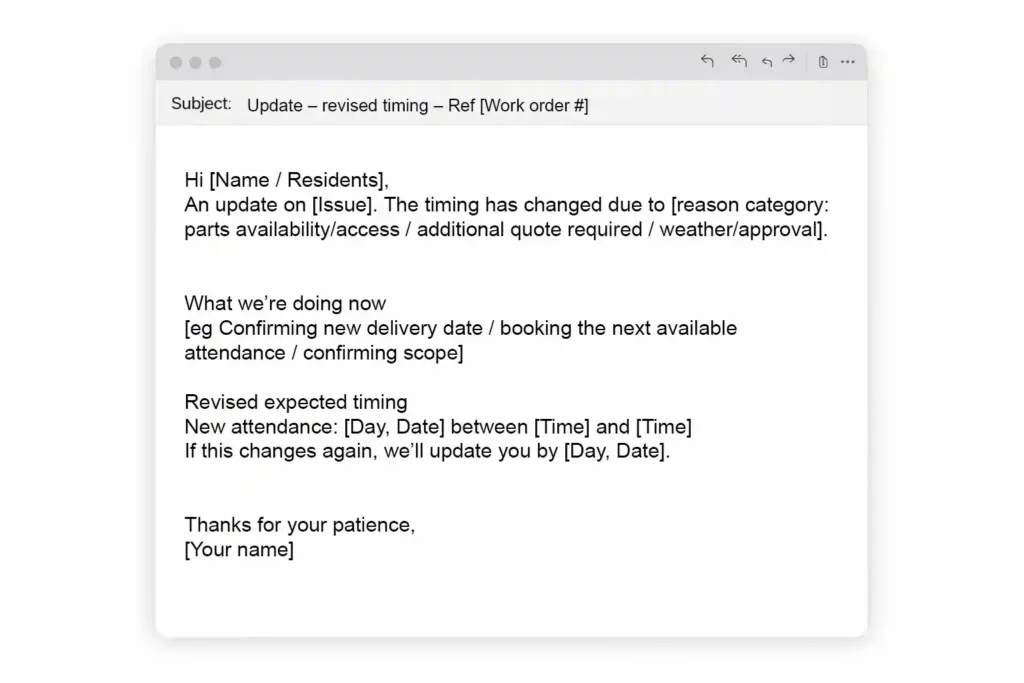
Delays happen. The key is to avoid vague language and give a clear reason category, plus a revised timeframe. Even a date range is better than soon.
NSW guidance also notes there are situations where common property repairs shouldn’t be delayed, particularly when delays affect access or safety.
Template: Delay update
What’s the best message for urgent or emergency repairs?
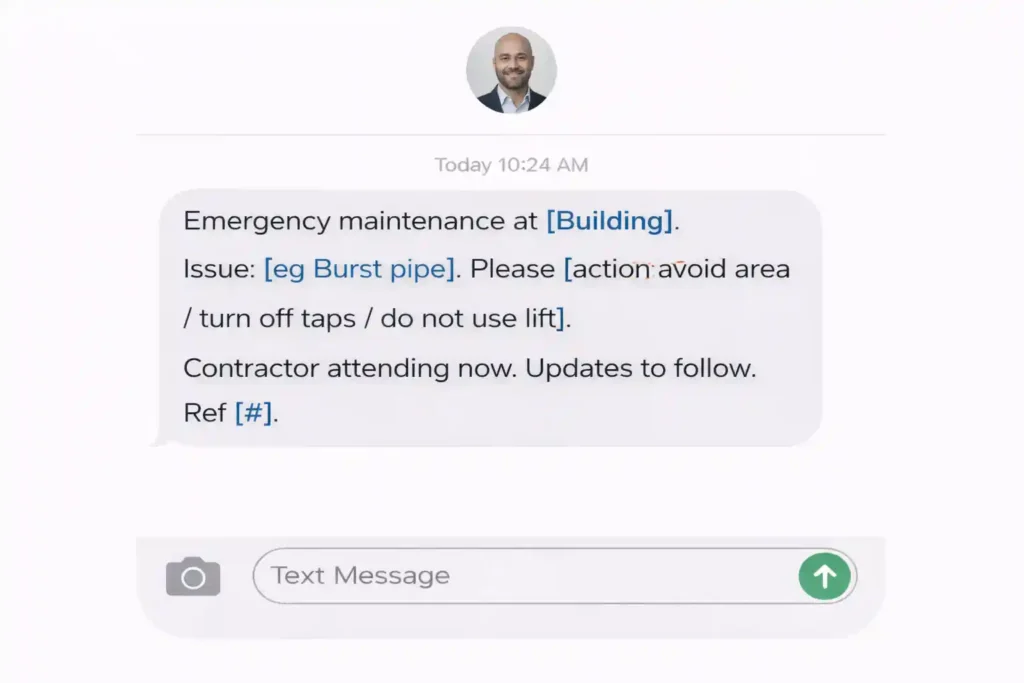
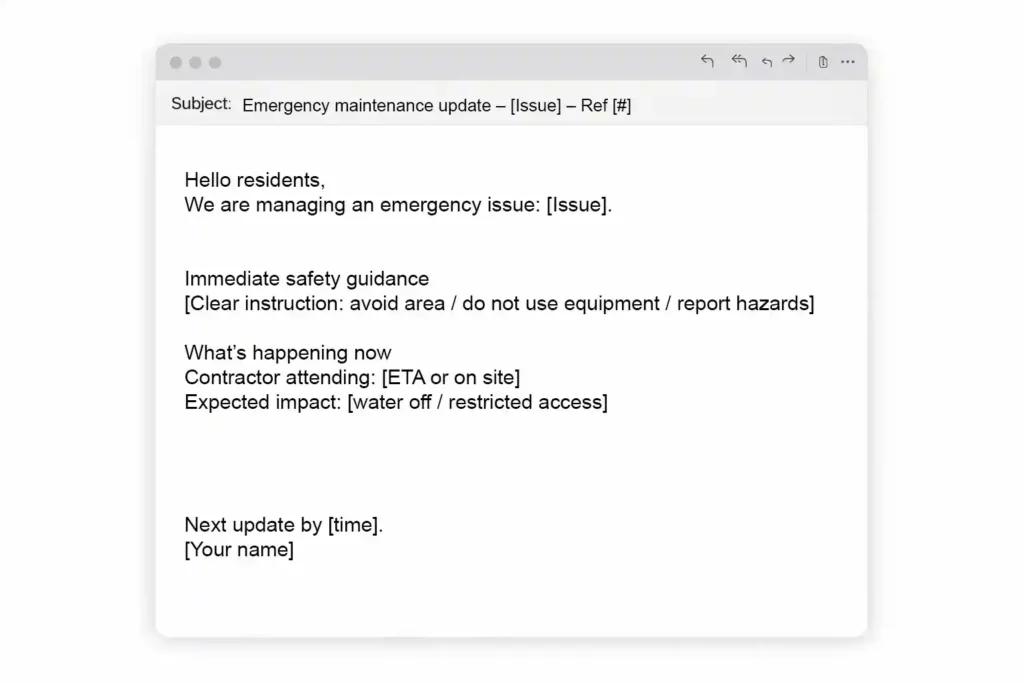
For emergencies, keep messages short, safety-first, and focused on what people need to do. You can always follow up with more detail once the immediate risk is under control.
Consumer Affairs Victoria describes emergency corrective maintenance as work that needs to happen immediately for health, safety, or security reasons, and gives examples such as repairs after storm damage.
Template: Emergency SMS
Template: Emergency follow-up email
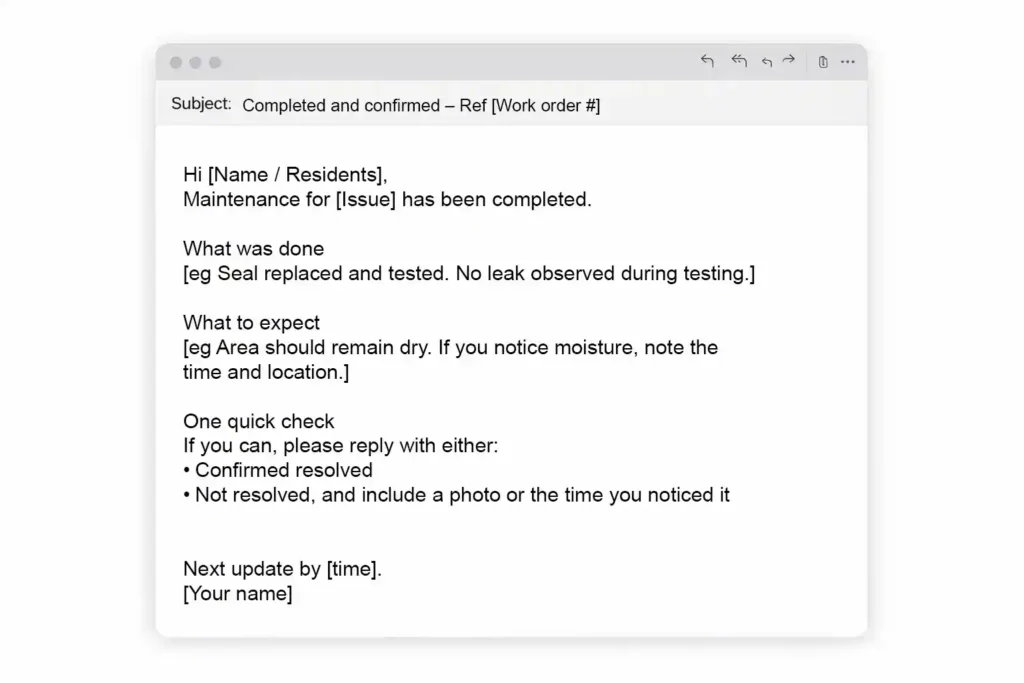
How do I close out a job so it doesn’t come back as another complaint?
Close-out messages are a great chance to reduce repeat emails. Instead of just saying completed, explain what was done, what residents should notice now, and what to do if the issue pops up again.
Template: Completion plus confirmation
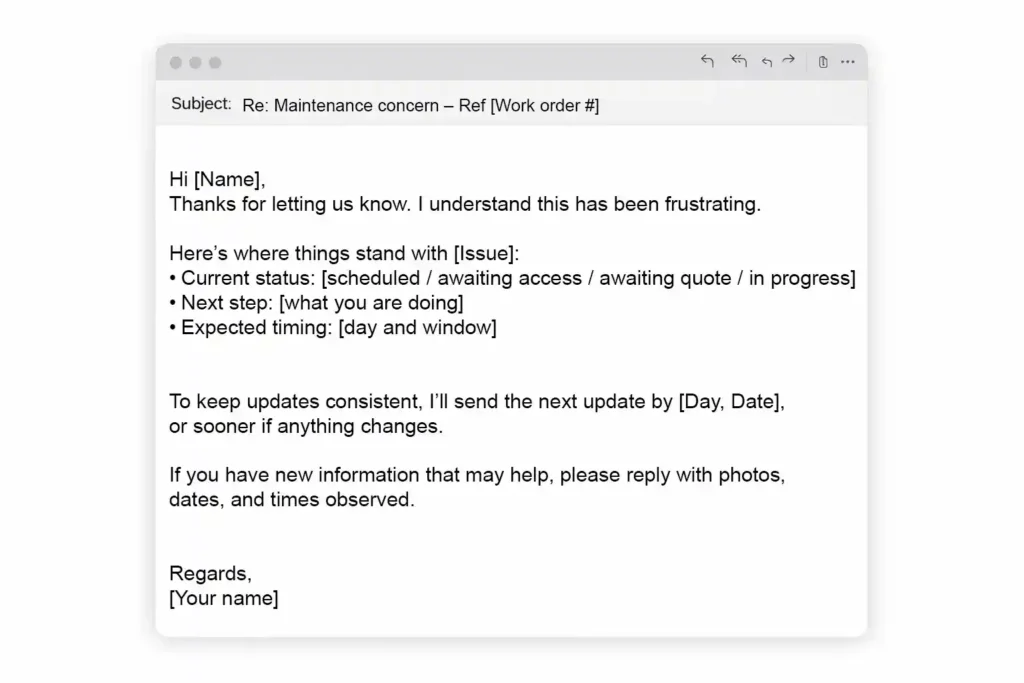
How do I respond to a complaint without escalating the tone?
With complaints, it helps to avoid back-and-forth and focus on the next clear step. You can acknowledge the frustration, then quickly move to status, next action, and timing.
Template: Complaint response
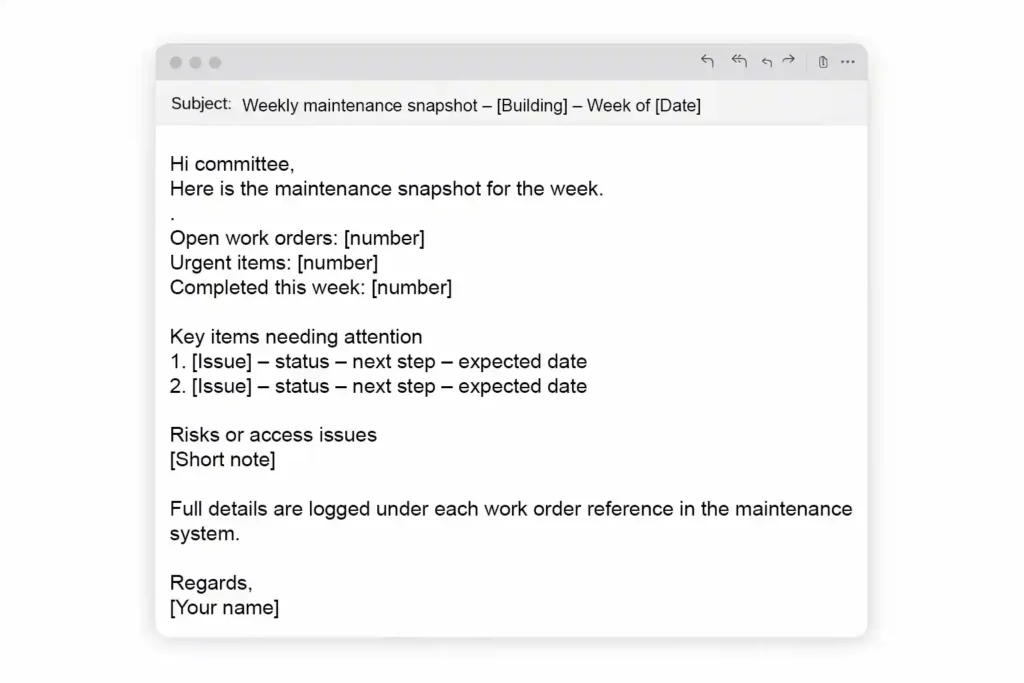
What records should I keep, and how do I avoid privacy slip-ups?
It’s worth keeping a clear record of what was reported, what was done, and what updates were sent. This helps with committee reporting and any disputes that pop up later.
For privacy, two practical habits go a long way:
- Don’t name the resident who reported the issue in building-wide updates
- Don’t share personal details unless they’re needed to complete the work
Template: Committee update that keeps it tidy
Putting it into practice: make templates the default
One of the easiest ways to reduce follow-ups is to send updates at consistent points in the job. Residents start to trust the process because they can see the pattern.
If you want a simple starting point, standardise these three first:
- Acknowledgement message with a clear next update date
- Scheduled attendance update
- Delay update with a revised timeframe and reason category
Once those are routine, add completion confirmations and planned works notices, and you’ll notice the overall noise level drop.
Clear, consistent maintenance updates are one of the most practical wins in strata management. They help residents feel informed, reduce complaints, and keep your work order records clean and easy to track. With the templates above, you can keep messages friendly and firm, while still giving people the detail they actually need.
If you want to make this even simpler, i4T Maintenance – Maintenance Management Software helps you keep tenants and owners in the loop with structured work orders, logged communications, and repeatable update templates. That way, everyone can see what’s happening, and you don’t have to keep answering the same questions by email.
FAQs
A clear summary, the next step, the timeframe, the expected impact, and what residents need to do.
At key moments: when it’s logged, when it’s scheduled, if it’s delayed, and when it’s completed.
Share the reason category (parts, access, approvals) and a revised date or time window straight away.
Give a specific time window, the access method, and what happens if access isn’t available.
Don’t name who reported the issue, and don’t share personal details unless they’re needed to complete the work safely.