


Key Takeaways
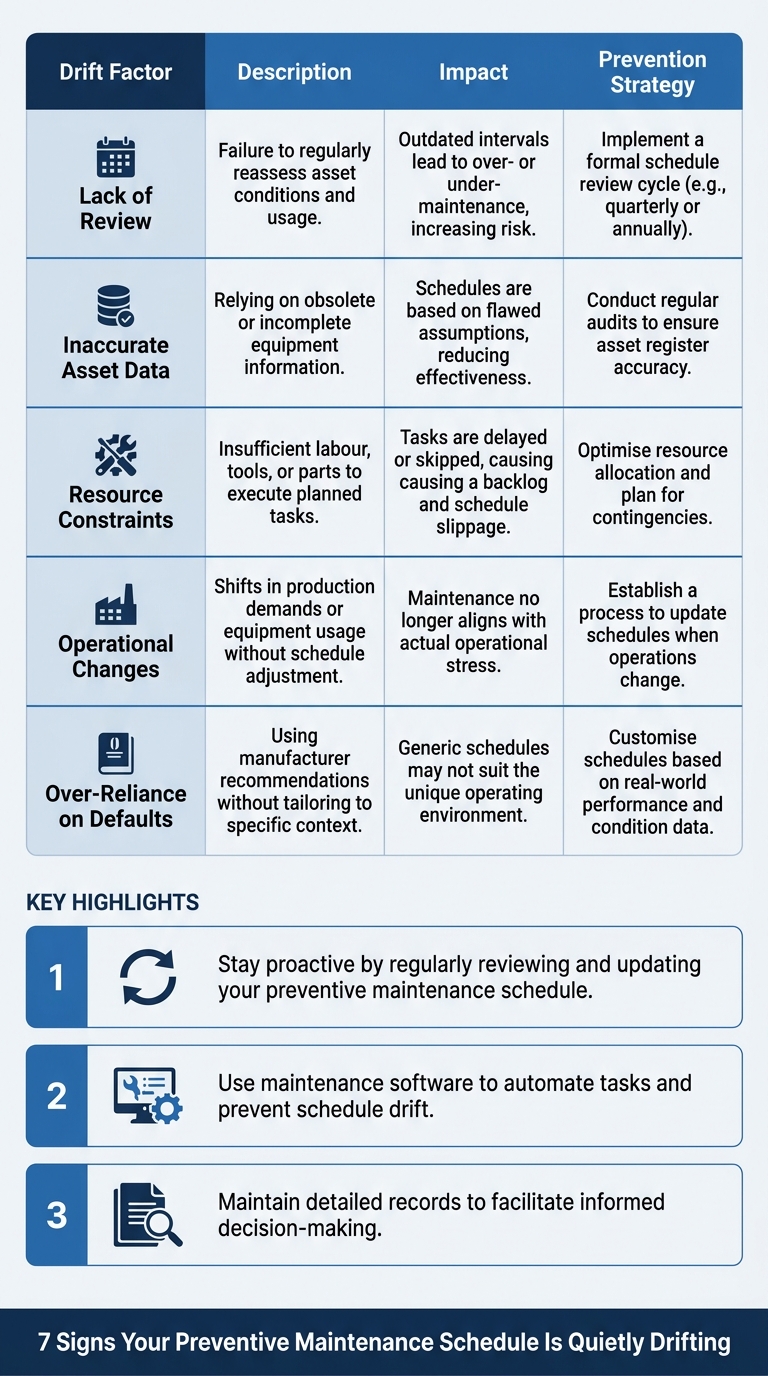
Stay proactive by regularly reviewing and updating your preventive maintenance schedule.
Use maintenance software to automate tasks and prevent schedule drift.
Maintain detailed records to facilitate informed decision-making.
Key Answer
Learn the 7 signs your preventive maintenance schedule is drifting and how preventive maintenance software can keep your operations efficient and compliant.
In the hustle and bustle of maintaining strata properties, it’s easy for a preventive maintenance schedule to start drifting quietly. This drift can stealthily lead to increased costs, compliance risks, and inefficient asset management. But how can you identify the warning signs before it’s too late?
This guide dives into the 7 signs that your preventive maintenance schedule might be slipping, and how leveraging advanced preventive maintenance software can help you stay on track.
Why Preventive Maintenance Schedules Quietly Drift
Preventive maintenance schedules might drift due to a variety of factors. Often, it’s because of the overwhelming number of tasks strata managers juggle daily. When preventive tasks get rescheduled or delayed, it becomes a breeding ground for future complications. Missed maintenance tasks can escalate costs, leading to expensive emergency repairs and affecting compliance with safety standards. By regularly reviewing maintenance scheduling software and planned maintenance software, you can maintain a firm grip on your schedule.
Sign 1: Maintenance Tasks Keep Becoming Overdue
When maintenance tasks are consistently overdue, it indicates that your schedule might be veering off track. These delays can result in assets underperforming, leading to more frequent breakdowns and higher repair costs. With planned maintenance software, you can automate task reminders and ensure your team adheres to timelines, preventing overdue tasks from becoming a costly issue.
Implementing a robust system that alerts you before tasks become overdue can significantly improve asset reliability. Such tools help avoid backlog buildup, keeping your strata property in optimal condition.
Sign 2: Recurring Work Orders Are Missing or Delayed
Recurring work orders are vital for maintaining regular service intervals, yet they often slip through the cracks due to oversight or scheduling conflicts. Missing or delayed work orders mean that routine inspections and minor repairs aren’t performed on time, which can lead to bigger issues down the line.
Utilising preventive maintenance software that automatically generates recurring work orders ensures no task is overlooked. This reduces the risk of asset failure and extends the lifespan of your property assets by maintaining them regularly.
Sign 3: The Same Assets Keep Breaking Down
Repeated breakdowns of the same assets are a clear signal that your preventive maintenance schedule may be ineffective. This often results from neglecting root cause analysis in favour of quick fixes. Without addressing underlying issues, you’ll face continuous disruptions and increased repair costs.
To tackle this, regularly review asset maintenance records to identify patterns and potential chronic issues. This data-driven approach enables targeted interventions, preventing future failures and ensuring smoother operations.
Sign 4: Planned Maintenance Keeps Being Rescheduled
When planned maintenance tasks are frequently rescheduled, it disrupts the rhythm of preventive maintenance and creates gaps that can lead to unexpected failures. Rescheduling is often due to staffing constraints or lack of prioritisation.
Effective use of maintenance scheduling software can help prioritise tasks based on urgency and available resources, ensuring planned maintenance occurs on time. By sticking to your schedule, you minimise disruptions and maintain asset integrity.
Sign 5: Maintenance Records Are Incomplete
Incomplete maintenance records obscure your view of asset health and maintenance history. This can result in poor decision-making and unexpected budget blowouts.
Keeping detailed and accurate records using preventive maintenance software allows for comprehensive tracking of all maintenance activities. It empowers strata managers with insights to make informed decisions and schedule future maintenance effectively.
Sign 6: Your Schedule No Longer Matches Asset Needs
As assets age or building conditions change, maintenance needs evolve. If your preventive maintenance schedule doesn’t adapt accordingly, you risk under-maintaining vital components.
Conduct regular reviews of your maintenance schedule against current asset conditions. By utilising advanced features in preventive maintenance software, you can tailor your schedule to meet the specific needs of your building, ensuring continuous compliance and efficiency.
Sign 7: Reactive Maintenance Is Taking Over
When reactive maintenance becomes the norm, it’s a glaring indicator that your preventive maintenance strategy needs re-evaluation. A cycle of reacting to failures increases costs and stress for all involved, while also jeopardising compliance with essential service regulations.
Shifting your focus back to preventive measures can be supported by employing comprehensive maintenance scheduling software to anticipate and address issues before they become emergencies. This proactive approach ensures smoother operations and a more predictable budget.
It’s time to start automating preventive maintenance using i4T Maintenance – Book a demo today!
Frequently Asked Questions
Schedules drift due to task rescheduling, lack of resources, and failure to update maintenance plans as asset conditions change.
It automates task scheduling, provides reminders, and allows for data analysis to tailor maintenance activities to current needs.
These are automatically scheduled tasks that recur at regular intervals to ensure consistent maintenance of assets.
Reactive maintenance is often more expensive because it involves unplanned, urgent repairs that disrupt operations and lead to higher costs.
Schedules should be reviewed quarterly or whenever significant changes to asset conditions or usage patterns occur.