
Key Takeaways
A compliance register is essential for tracking assets, documents, and deadlines in strata schemes.
Property maintenance management software automates compliance tasks, reducing human error.
Common mistakes in compliance management include outdated records and lack of automated reminders.
Maintaining comprehensive contractor records is crucial for regulatory compliance.
Key Answer
A compliance register is vital for property managers to track assets, documents, contractor details, and compliance deadlines effectively. Utilising property maintenance management software streamlines this process, ensuring all regulatory requirements are met efficiently.
In the fast-paced realm of property management, particularly within Australia’s unique strata systems, maintaining compliance isn’t just a necessity; it’s a strategic imperative. Every professional property manager understands the crucial role a detailed compliance register plays in navigating the myriad of regulatory requirements. If you’re asking, “What should property managers track in a compliance register?”, you’re in the right place. This comprehensive guide delves into the essential elements of an effective compliance register, how it intertwines with property maintenance management software, and ultimately, how it can safeguard your strata scheme from potential pitfalls.
Why Every Strata Scheme Needs a Compliance Register
Strata schemes in Australia are governed by a complex web of regulations aimed at ensuring the safety and efficiency of residential buildings. A compliance register acts as the central repository for all compliance-related information, streamlining property management. By implementing a well-structured compliance register, you can centralise all data related to building assets, contractor information, inspection schedules, and renewal dates.
Without a compliance register, property managers risk non-compliance with statutory requirements, potentially leading to hefty fines or legal actions. Furthermore, the absence of a structured compliance system could result in missed maintenance tasks, ultimately affecting the longevity and safety of the property. In essence, a compliance register provides a blueprint for managing and mitigating risks associated with property management.
Building Assets That Require Compliance Tracking
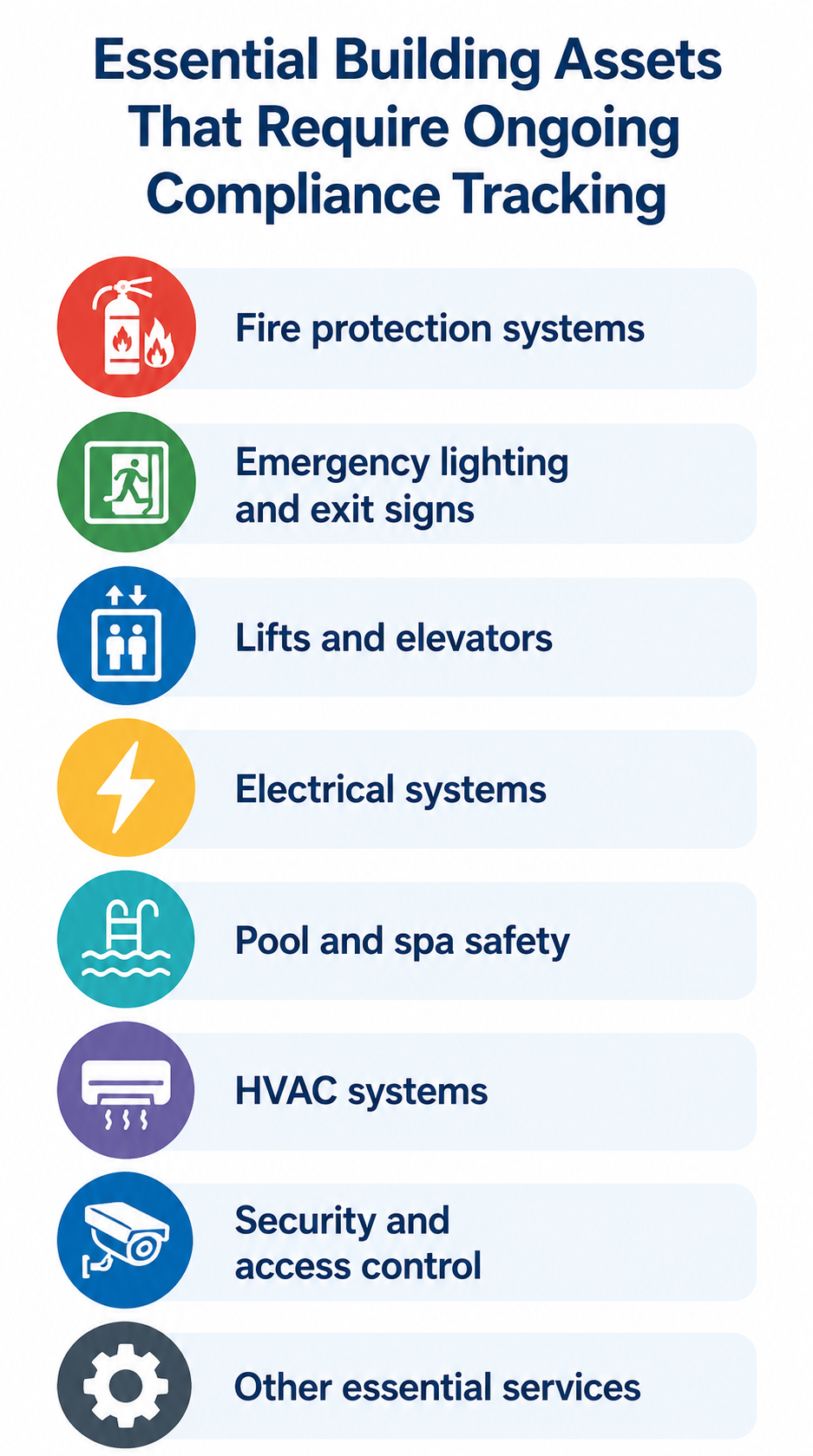
A crucial aspect of compliance management involves meticulously tracking various building assets. In the context of Australian strata properties, this includes smoke alarms, lifts, HVAC systems, and electrical installations. Each of these components has its own set of compliance requirements that must be regularly updated and maintained.
For instance, smoke alarms need to be checked and certified annually to ensure they are functional and meet safety standards. Similarly, lifts require regular inspections and certifications to comply with safety regulations and prevent unexpected breakdowns. By using property maintenance management software, you can automate reminders for these inspections, ensuring nothing falls through the cracks.
Documents Every Property Manager Should Record
In addition to physical assets, documenting compliance-related documents is imperative. These include inspection reports, safety certificates, and maintenance logs. Keeping a detailed record of these documents not only ensures compliance but also provides a paper trail in the event of an audit.
Furthermore, a robust compliance register should include strata plans, occupancy certificates, and any building modifications. By maintaining these records within a digital platform, you simplify retrieval and can easily share them with relevant stakeholders. This streamlined access is especially beneficial during inspections or legal proceedings, where documentation is crucial.
Critical Dates and Renewal Deadlines
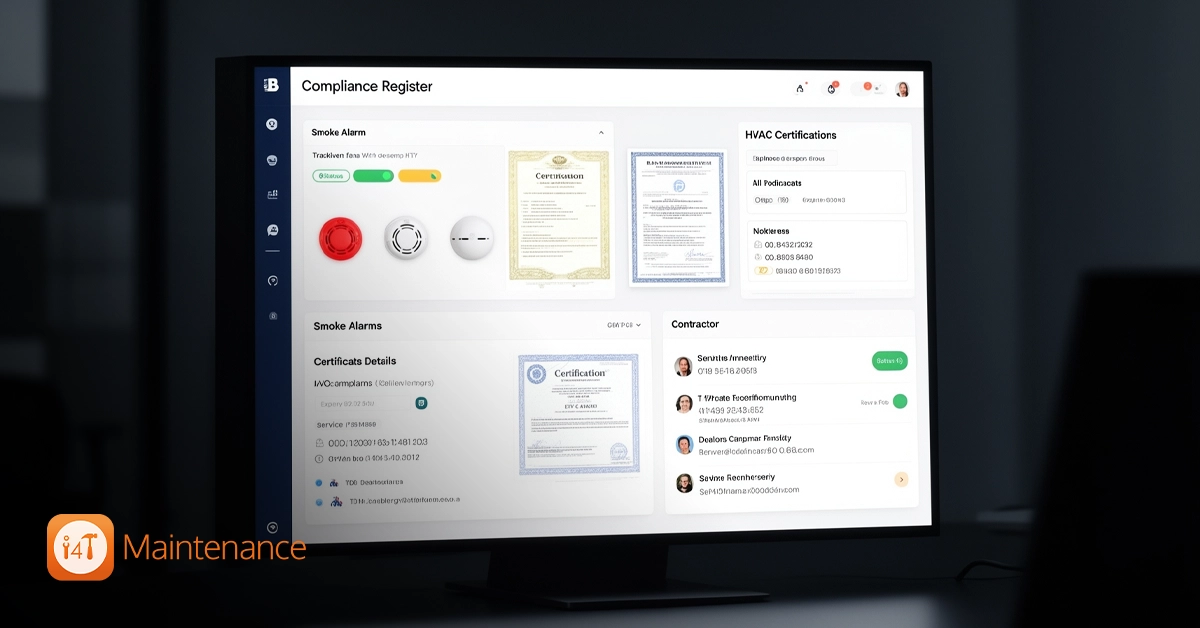
Tracking critical dates and renewal deadlines is another cornerstone of an effective compliance register. Whether it’s renewing a building certification or scheduling a routine inspection, missing a critical date can lead to non-compliance issues. A well-maintained compliance register should include all pertinent dates, such as ‘Last Inspected’, ‘Next Due Date’, and renewal deadlines for various certifications.
Property maintenance management software can play a pivotal role in this process by providing automated reminders. These reminders ensure that you never miss a deadline, thereby reducing the risk of incurring penalties or compromising safety standards. By keeping abreast of all deadlines, you maintain a smooth operational flow within your strata scheme.
Contractor and Supplier Compliance Records
Another vital component of compliance management is maintaining comprehensive records of your contractors and suppliers. These records should detail each contractor’s licence, insurance coverage, and compliance history. Keeping accurate contractor records ensures that all work performed meets regulatory standards and provides a safeguard against potential liabilities.
Integrating this information within your compliance register allows for easy access and auditing. By using advanced property maintenance management software, you can track these records efficiently, facilitating better coordination and communication with your service providers.
Compliance Reporting and Audit Trails
A compliance register is not only about tracking assets and documentation; it also involves creating thorough compliance reports and audit trails. These reports are essential for demonstrating that all compliance-related activities are being performed according to regulatory standards.
Audit trails provide a historical record of compliance activities, showcasing the chronological order of inspections, certifications, and maintenance tasks. By utilising property maintenance management software, these records can be automatically generated and maintained, ensuring they are accurate and up-to-date. This not only simplifies the audit process but also provides a legal safety net should any disputes arise.
Common Compliance Register Mistakes
Even seasoned property managers can fall into common pitfalls when managing compliance registers. One frequent mistake is failing to update compliance records promptly, which can lead to outdated or incomplete information. Additionally, not setting automated reminders for inspection dates and renewals can result in missed deadlines.
Another common error is inadequate training for staff responsible for maintaining the compliance register. It’s crucial to ensure that all team members understand the system and the importance of each compliance requirement. Implementing property maintenance management software can alleviate many of these issues by automating processes and providing training modules.
How Property Maintenance Management Software Simplifies Compliance
Incorporating property maintenance management software like i4T Maintenance into your compliance strategy can significantly enhance efficiency and accuracy. This software not only streamlines the tracking of compliance tasks but also provides a centralised platform for all compliance-related information.
By utilising digital tools, you can automate reminders for inspections and renewals, track contractor compliance, and maintain comprehensive audit trails. This holistic approach reduces the risk of human error and ensures that all compliance activities are documented and accessible. Moreover, digital systems offer the flexibility of accessing compliance information from anywhere, providing convenience and peace of mind for property managers.
Frequently Asked Questions
A compliance register should include detailed records of building assets, inspection schedules, contractor compliance information, and critical deadlines for renewals.
It streamlines compliance by automating reminders for inspections and renewals, managing contractor records, and maintaining comprehensive audit trails.
It centralises all compliance-related information, ensuring adherence to regulatory standards and mitigating the risk of fines and legal issues.
Common mistakes include failing to update records promptly, not setting automated reminders, and inadequate staff training.
Compliance registers should be updated regularly, ideally after each inspection or maintenance activity, to ensure all information remains current.