

Key Takeaways
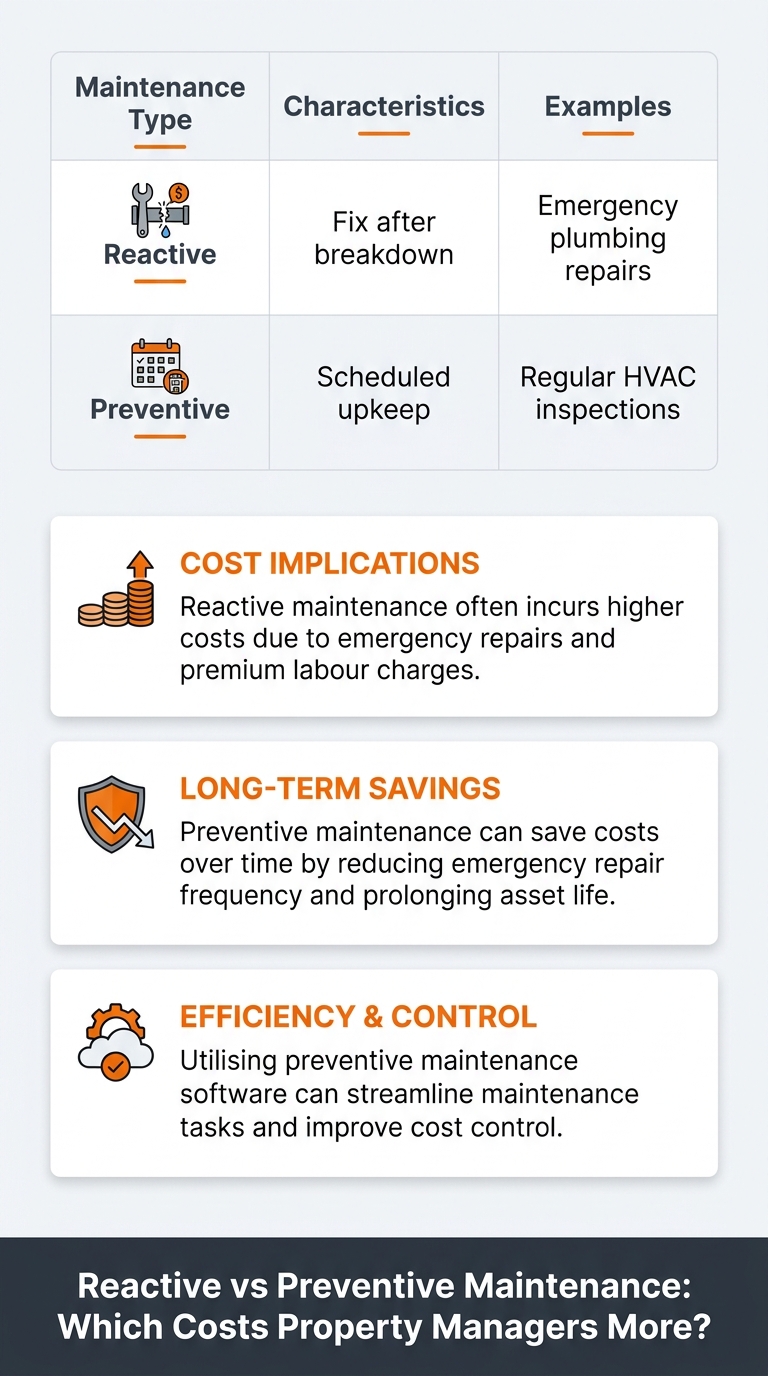
Reactive maintenance often incurs higher costs due to emergency repairs and premium labour charges.
Preventive maintenance can save costs over time by reducing emergency repair frequency and prolonging asset life.
Utilising preventive maintenance software can streamline maintenance tasks and improve cost control.
Key Answer
Reactive maintenance often incurs higher costs due to emergency repairs, while preventive maintenance spreads costs over time and reduces unplanned expenses.
Navigating the world of strata management in Australia involves juggling numerous responsibilities, with maintenance at the forefront. As a property manager, understanding whether reactive or preventive maintenance costs more is essential. This decision directly impacts your budget, tenant satisfaction, and property value.
Reactive maintenance involves fixing things as they break, often requiring emergency repairs. In contrast, preventive maintenance is all about proactive upkeep to avoid future issues. Both approaches have their pros and cons, but which is truly more cost-effective for strata managers? Let’s delve into the specifics.
Reactive vs Preventive Maintenance: What's the Difference?
Understanding the distinction between reactive and preventive maintenance is crucial for effective property management. Reactive maintenance is a fix-as-you-go approach. It involves attending to issues only after they become apparent, often requiring quick fixes that can disrupt operations and inflate costs.
Preventive maintenance, on the other hand, involves regular, scheduled upkeep designed to prevent problems before they occur. This proactive strategy can include inspections, routine service, and parts replacements to maintain the property’s condition and safety.
In essence, reactive maintenance can be likened to firefighting, often unpredictable and costly. Meanwhile, preventive maintenance acts as a regular check-up, aiming to save you money by catching issues early.
The Hidden Costs of Reactive Maintenance for Strata Managers
For many strata managers, reactive maintenance can seem like a logical choice; deal with problems as they arise. However, this method often leads to significant hidden costs that can affect your bottom line.
Emergency repairs typically command premium labour charges and rush pricing for parts. Additionally, the disruptions caused by unscheduled repairs can lead to tenant dissatisfaction, increased turnover, and ultimately impact the building’s reputation.
Moreover, repeated emergency repairs without addressing underlying issues can escalate insurance premiums. According to i4T Maintenance, ignoring these soft costs can turn reactive maintenance into an unexpectedly expensive strategy.
Is Preventive Maintenance Cheaper? A Real-World Cost Comparison
Let’s break down the costs to see if preventive maintenance offers savings in the long run. A typical emergency repair, such as a burst pipe, can cost upwards of AUD 2,000 when factoring in urgent labour and parts. Compare this with a preventive maintenance plan that includes regular inspections, costing about AUD 500 annually.
In this scenario, preventive maintenance not only reduces the frequency of costly emergency repairs but also extends the life of property assets. By avoiding significant disruptions and prolonging the asset’s lifespan, preventive maintenance can lead to substantial savings over time.
Scenario | Reactive Cost | Preventive Cost |
|---|---|---|
Burst Pipe Emergency | AUD 2,000+ | AUD 500/year |
Which Strata Maintenance Tasks Should Be Planned or Reactive?
Not every maintenance task can be planned, and some reactive measures are inevitable. Here’s a quick guide to help you determine which tasks should be scheduled or left for reactive handling.
Routine inspections, HVAC servicing, and pest control are well-suited for preventive maintenance. These tasks help catch minor issues before they escalate.
Meanwhile, certain unforeseen events, like storm damage or unexpected equipment failures, require a reactive approach. The key is to balance between these two, ensuring that your preventive measures cover as many foreseeable issues as possible.
Task Type | Recommended Approach |
|---|---|
Routine Inspections | Preventive |
HVAC Servicing | Preventive |
Storm Damage Repair | Reactive |
How to Build an Effective Preventive Maintenance Plan
Building an effective preventive maintenance plan begins with understanding your property’s unique needs. Start by conducting a thorough asset audit to identify potential risks and necessary maintenance tasks. Prioritise tasks based on urgency and importance to the property’s operational efficiency.
Next, schedule regular inspections and servicing based on manufacturer recommendations and local regulations. Incorporate seasonal tasks to address climate-specific issues prevalent in Australia.
Utilising preventive maintenance software can enhance your ability to manage tasks effectively, keeping track of service schedules, budgets, and contractor performance in one place.
How to Measure Maintenance Performance and Identify Cost Savings
Measuring the performance of your maintenance strategy involves tracking key performance indicators (KPIs) such as repair frequency, repeat issues, response times, and budget variance. Consistently monitoring these KPIs allows you to identify patterns and make data-driven decisions to optimise your maintenance approach.
For example, a high frequency of emergency repairs indicates a need for improved preventive measures. By evaluating these metrics, you can adjust your strategy to reduce long-term costs.
Incorporating maintenance management software into your operations helps track these KPIs effectively, providing insights into where your maintenance dollars are going and how to save them.
How Preventive Maintenance Software Supports Better Cost Control
Incorporating preventive maintenance software into your operations can significantly enhance cost control. This software provides a centralised platform for scheduling, tracking, and managing maintenance tasks, ensuring nothing is overlooked.
With features like automated reminders for inspections and repairs, as well as detailed reports, you can anticipate needs and allocate resources more efficiently. This not only helps in mitigating unexpected expenses but also ensures compliance with regulations and enhances tenant satisfaction.
Furthermore, the software aids in maintaining comprehensive records of maintenance activities, which can be invaluable during audits and when dealing with insurance claims.
Reduce Maintenance Costs With Smarter Planning
Smart maintenance planning involves striking a balance between reactive and preventive approaches. By investing in preventive maintenance, you’re not only safeguarding your property’s assets but also ensuring operational efficiency and tenant satisfaction.
As you consider how to effectively manage maintenance within your strata, leveraging technology like i4T Maintenance can help streamline tasks and provide valuable insights.
Book a Demo to see how i4T Maintenance can support your needs and reduce costs through smarter planning.
Frequently Asked Questions
The main advantage is cost savings over time, as preventive maintenance reduces the frequency of emergency repairs and extends the lifespan of assets.
Reactive maintenance can disrupt tenant life due to unexpected repairs, leading to dissatisfaction and potentially higher tenant turnover.
Yes, it provides a centralised system for tracking, scheduling, and managing maintenance tasks, which helps in reducing unplanned expenses.
Emergency repairs often involve premium labour rates and rush parts pricing, leading to higher overall costs.
Routine inspections, HVAC servicing, and pest control are well-suited for preventive maintenance as they help catch minor issues early.