
Share this article

Table of Contents

Why Scattered Contractor Compliance Records Create Risk for Strata Teams

Why Scattered Contractor Compliance Records Create Risk for Strata Teams

Table of Contents

Key Takeaways

  • Scattered contractor records increase compliance risks by making it difficult to track document currency and validity.

  • Centralising compliance records helps ensure all documents are current, reducing the risk of lapses.

  • An effective compliance management system should integrate with maintenance workflows for seamless operations.

Key Answer

Scattered contractor compliance records are more than an administrative issue. They pose risks to strata teams by making it difficult to track current documents, spot expired information, and manage staff changes efficiently.

In the world of strata management, keeping on top of contractor compliance is essential. However, when documents are scattered across emails, shared folders, and spreadsheets, it becomes more than just an admin headache; it’s a significant risk. Understanding why scattered contractor compliance records create risk for strata teams is crucial in maintaining smooth and safe operations.

In this article, we’ll delve into the importance of effective contractor document management, highlighting how scattered records can lead to compliance issues and the benefits of maintaining a centralised compliance record management system.

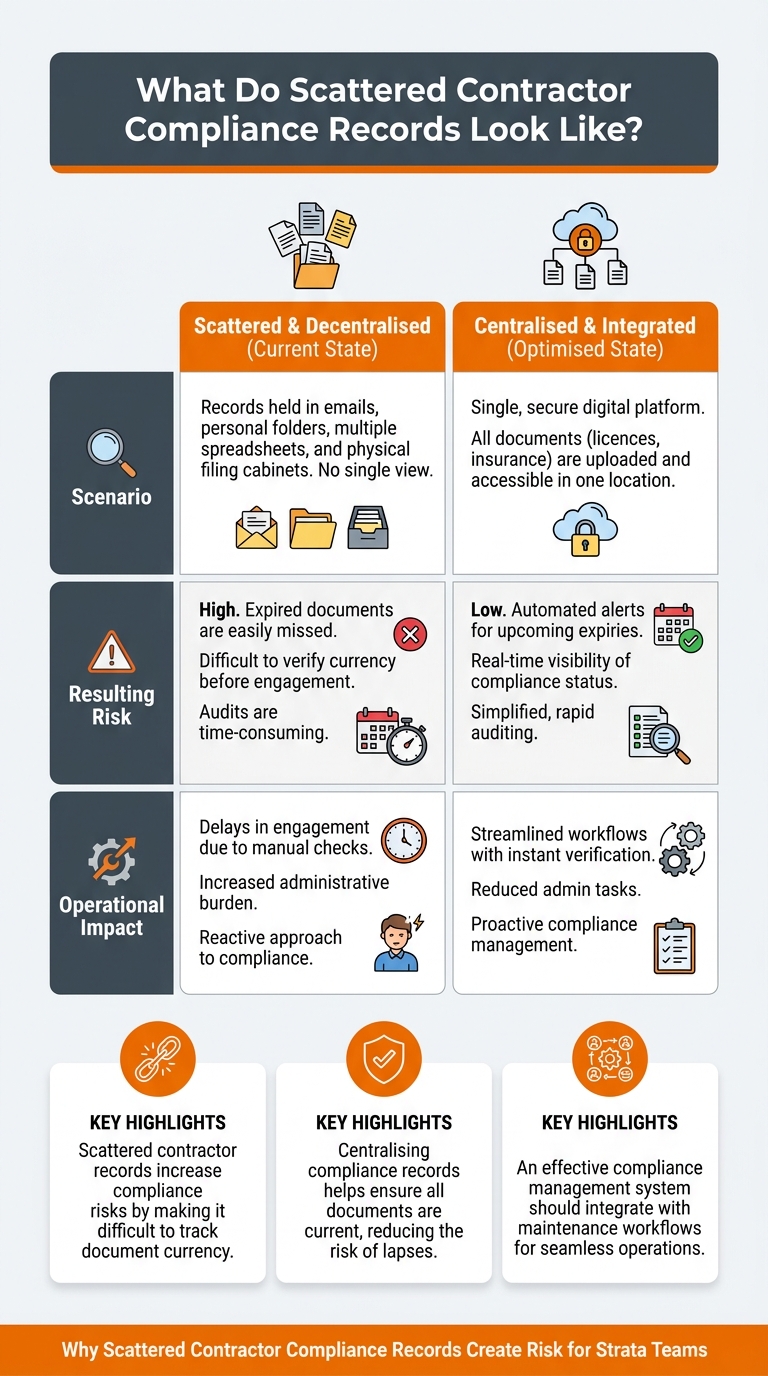
What Do Scattered Contractor Compliance Records Look Like?

Scattered contractor compliance records manifest in a variety of formats and locations. Picture this: documents are stored in individual emails, tucked away in shared folders, or jotted down in spreadsheets. Each team member might have their own way of organising these records, leading to a chaotic, fragmented system. This decentralisation makes it hard to ensure that each document is accurate and up-to-date, which is vital for maintaining compliance.

Such a hodgepodge approach turns what should be a straightforward task into a logistical nightmare, exposing the strata to unnecessary risks. Without a unified system, tracking down a specific document or verifying compliance becomes a drawn-out process, costing time and increasing the chance of errors.
infographic_rjXpAPZ8ga.jpg

The Risk of Not Knowing Which Record Is Current

One of the critical issues with scattered compliance records is the uncertainty surrounding document currency. When you don’t know which records are current, you risk operating with outdated or incorrect information. This could lead to engaging contractors who might not meet the latest legal requirements or safety standards.

Having up-to-date compliance records is not just about avoiding fines or legal troubles; it’s about ensuring the safety and integrity of your building and its occupants. Imagine the chaos if an outdated document leads to a compliance lapse during a critical maintenance task.

This is why maintaining a centralised and easily accessible compliance record management system is paramount.

Why Scattered Records Make Pre-Work Checks Harder

Before any work begins on your strata property, pre-work checks are crucial to ensure everything is in place and compliant. However, scattered records severely hinder this process. When compliance documents are split across various locations, confirming that all safety checks, certifications, and approvals are valid becomes a task fraught with potential oversights.

Without a streamlined approach, you might miss a critical insurance document or an expired safety certification, leading to delays and increased risk. A centralised system simplifies pre-work checks by providing a single point of truth, ensuring that all necessary documents are up-to-date and readily available before work commences.

What Happens When Staff or Portfolios Change?

Staff turnover is a common occurrence in any industry, but in strata management, it can lead to significant disruptions if compliance records are scattered. When a team member leaves or portfolios shift, continuity becomes a challenge. Important documents might be stored in personal emails or local drives, inaccessible to others who need them.

Such disarray can result in critical compliance tasks falling through the cracks, potentially leading to significant operational setbacks. By implementing a unified document management system, you can ensure smooth transitions, as every team member has access to the same up-to-date information.

Why Document and Expiry Tracking Becomes Unreliable

Managing the expiry dates of compliance documents is crucial to prevent lapses in legal and safety requirements. Scattered records make this task unreliable. When documents are dispersed, it’s easy to miss a renewal deadline, leaving your strata exposed to compliance breaches.

A robust compliance record management system helps you track expiry dates efficiently, with automated alerts and reminders to ensure that all documents remain valid and current. This proactive approach minimises the risk of non-compliance and its associated penalties.

Why a Shared Folder Alone Does Not Solve the Problem

While a shared folder might seem like a solution, it falls short when it comes to effective compliance record management. A shared folder merely centralises storage, but does not offer the necessary tools for verifying document authenticity, tracking expiries, or ensuring completeness.

Effective contractor document management requires more than just storage; it demands a system that supports document verification, connects relevant information to supplier selection and work orders, and facilitates seamless communication across the strata team. A shared folder lacks these capabilities, making it an insufficient solution on its own.

Connect Contractor Records to the Maintenance Workflow

To truly optimise compliance record management, you need to integrate contractor records with the overall maintenance workflow. This integration ensures that relevant compliance information directly influences supplier selection and work orders, promoting a more seamless and informed operational process.

By connecting compliance records to maintenance activities, you ensure that every contractor engaged is verified and compliant, reducing risk and enhancing the efficiency of strata management. This connection is key to transforming compliance from a reactive task into a proactive strategy, ensuring ongoing safety and operational continuity.

Keep One Reliable Contractor Record

Ultimately, the key to successful contractor compliance is maintaining a single, reliable record. By centralising all compliance documents into one accessible system, you simplify management, improve accuracy, and minimise risk.

Implementing an effective compliance record management system not only saves time and reduces administrative burden but also ensures that your strata operations are compliant with all necessary legal and safety standards.

If you’re ready to streamline your compliance processes, book a demo of i4T Maintenance to see how it can make a difference for your strata team.

Frequently Asked Questions

Centralised compliance records ensure that all documents are current and valid, reducing the risk of legal and safety compliance breaches in strata management.

Scattered records can lead to outdated or missing documents, increasing the risk of non-compliance, legal penalties, and safety hazards in strata operations.

A shared folder centralises storage but lacks tools for verifying document authenticity, tracking expiries, and ensuring completeness, which are critical for effective compliance management.

By linking contractor compliance records directly to maintenance activities, ensuring that every contractor is verified and compliant before work orders are issued.

i4T Maintenance provides a centralised platform for tracking compliance records, automating expiry alerts, and integrating with maintenance workflows, enhancing compliance efficiency and reducing risk.

Scroll to Top
i4T Maintenance  Australia
Privacy Overview

This website uses cookies so that we can provide you with the best user experience possible. Cookie information is stored in your browser and performs functions such as recognising you when you return to our website and helping our team to understand which sections of the website you find most interesting and useful.