


Share this article

Table of Contents

Supplier Compliance Checklist: What Property Managers Should Verify Before Assigning Work

Supplier Compliance Checklist: What Property Managers Should Verify Before Assigning Work

Table of Contents

Key Takeaways

  • Supplier compliance management is crucial for risk mitigation and maintaining legal standards.

  • Verifying licences and insurance ensures contractors are qualified and covered for potential liabilities.

  • A standardised compliance checklist streamlines verification processes, enhancing efficiency.

  • Compliance management software automates document tracking, reducing administrative burdens.

Key Answer

Ensure seamless project execution by verifying supplier compliance before assigning work, focusing on licences, insurance, WHS documentation, and performance metrics.

In the ever-evolving world of real estate, ensuring that your contractors comply with all legal and safety requirements is not just a box-ticking exercise; it’s a critical component of effective supplier compliance management. For Australian strata managers, verifying contractor compliance before assigning work is vital to safeguard properties, maintain legal standards, and protect residents. This Supplier Compliance Checklist: What Property Managers Should Verify Before Assigning Work guides you through the essentials.

Why Supplier Compliance Management Matters

Supplier compliance management is the backbone of risk mitigation and operational efficiency in property management. When you implement a robust compliance strategy, you reduce potential legal liabilities and enhance your building’s safety standards. In Australia, where legal regulations are stringent, non-compliance can lead to severe consequences, including financial penalties and reputational damage.

Having a comprehensive supplier compliance checklist ensures that every contractor meets necessary legal requirements, reducing the risk of project delays and safety incidents. This proactive approach not only protects your property but also assures residents of a secure living environment.

Verify Licences Before Assigning Work

Checking contractor licences is the first step in ensuring compliance. As a property manager, you need to verify that every contractor holds valid licences specific to the tasks they are undertaking. In Australia, this includes checking for appropriate state and territory licences, as these can vary significantly across regions.

By confirming that licences are current and valid, you can avoid unqualified contractors who might not comply with industry regulations. This verification process protects you from potential legal issues and ensures that the work carried out is up to standard.

Confirm Insurance Is Current

Insurance verification is crucial in managing risk. Contractors should possess adequate public liability and workers’ compensation insurance. This ensures that any incidents that occur on site are covered, shielding your organisation from potential financial liability.

In the event of an accident or damage, having current insurance means that claims can be efficiently managed without impacting your budget or operational capabilities. Always check the expiry dates of insurance policies and ensure they cover the scope of work required.

Review WHS and Safety Documentation

Workplace Health and Safety (WHS) is a non-negotiable priority in property management. Your suppliers must provide comprehensive WHS documentation, including risk assessments and safety plans, to demonstrate their commitment to safe work practices.

By reviewing these documents, you ensure that contractors are prepared to manage potential risks and emergencies effectively. A solid WHS compliance ensures that any work undertaken is carried out safely, protecting both property and personnel.

Check Qualifications and Certifications

Beyond licences, verifying qualifications and certifications is essential. This includes checking that contractors have undergone relevant training and possess the necessary skills to perform their tasks safely and effectively.

Properly qualified contractors are more likely to deliver high-quality work, reducing the likelihood of rework or project failures. This step is crucial to maintaining the integrity of your property and ensuring that all operations adhere to industry standards.

Assess Supplier Reliability and Performance

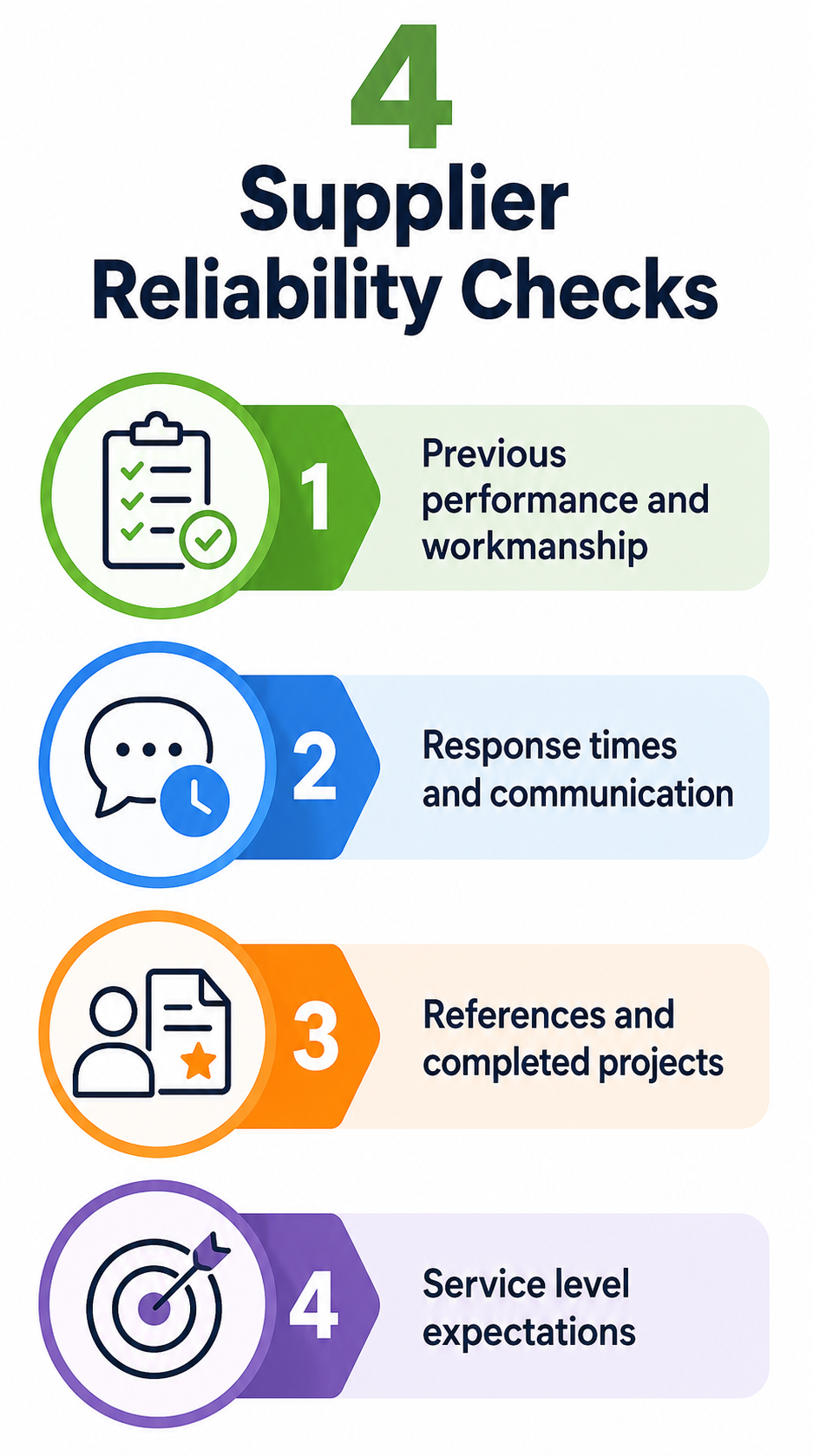
Supplier management goes beyond compliance; it involves evaluating the reliability and performance of your contractors. Look at past projects, references, and any feedback from previous clients to gauge their reliability.

Consistent performance indicates that a supplier is trustworthy and capable of meeting deadlines and quality standards. This reliability is crucial for maintaining uninterrupted operations and avoiding costly delays or defects in property management projects.
rxJ5W8c6zfIY8Ys5rWY61k89fTvtYgObjyLKouza.png

Build a Standard Supplier Compliance Checklist

Building a standardised supplier compliance checklist is key to streamlining your compliance process. Your checklist should include all the verification steps outlined above, ensuring nothing is overlooked.

This comprehensive approach allows you to systematically evaluate each contractor, reducing risks and ensuring a high standard of work. A checklist not only simplifies your workflow but also provides a clear audit trail for all compliance checks.

How Supplier Compliance Management Software Simplifies Compliance

Managing supplier compliance can be complex, but using software solutions simplifies the process. Compliance management software provides an automated platform to track licences, insurance, WHS documentation, and other compliance requirements in real-time.

These tools improve accuracy and efficiency, reducing administrative burdens and the likelihood of errors. By integrating a digital solution, you ensure that all compliance tasks are completed promptly, protecting your property from potential risks.

Schedule a Demo of i4T Maintenance – Strata Maintenance Management Software to see how it can transform your compliance process, automating document tracking and contractor approvals with ease.

Frequently Asked Questions

Supplier compliance management involves ensuring that all contractors meet legal, safety, and professional standards before commencing work. It is crucial for risk mitigation and operational efficiency.

Verifying licences ensures that contractors are qualified to perform the tasks required, complying with regional legal standards and avoiding unqualified or illegal work.

Compliance management software automates and simplifies the tracking of licences, insurance, and other compliance documents, ensuring efficient and accurate management.

A supplier compliance checklist should include steps to verify licences, insurance, WHS documentation, qualifications, and performance reliability.

Ensuring supplier compliance helps maintain high safety standards, protecting both the property and its residents from potential hazards associated with non-compliant work.

Scroll to Top
i4T Maintenance  Australia
Privacy Overview

This website uses cookies so that we can provide you with the best user experience possible. Cookie information is stored in your browser and performs functions such as recognising you when you return to our website and helping our team to understand which sections of the website you find most interesting and useful.