
Key Takeaways
Not every after-hours request is an emergency; clear criteria help prioritize.
Implementing a triage process ensures efficient handling of maintenance tasks.
Clear communication and planning reduce reactive maintenance and improve satisfaction.
Technology plays a crucial role in modern maintenance management, improving decision-making.
Key Answer
Learn how to prioritise after-hours maintenance requests effectively. Distinguish true emergencies from routine issues using a structured triage process, reduce unnecessary call-outs, and optimise communication with residents. Transform your after-hours strategy today.
In the bustling world of strata management, knowing how to prioritise after-hours maintenance requests without escalating every job is crucial. Every call that comes through in the wee hours isn’t necessarily an emergency, but differentiating genuine issues from those that can wait until morning requires a structured approach. This guide will help you establish an efficient maintenance triage process, enhancing decision-making, reducing costs, and ensuring resident satisfaction.
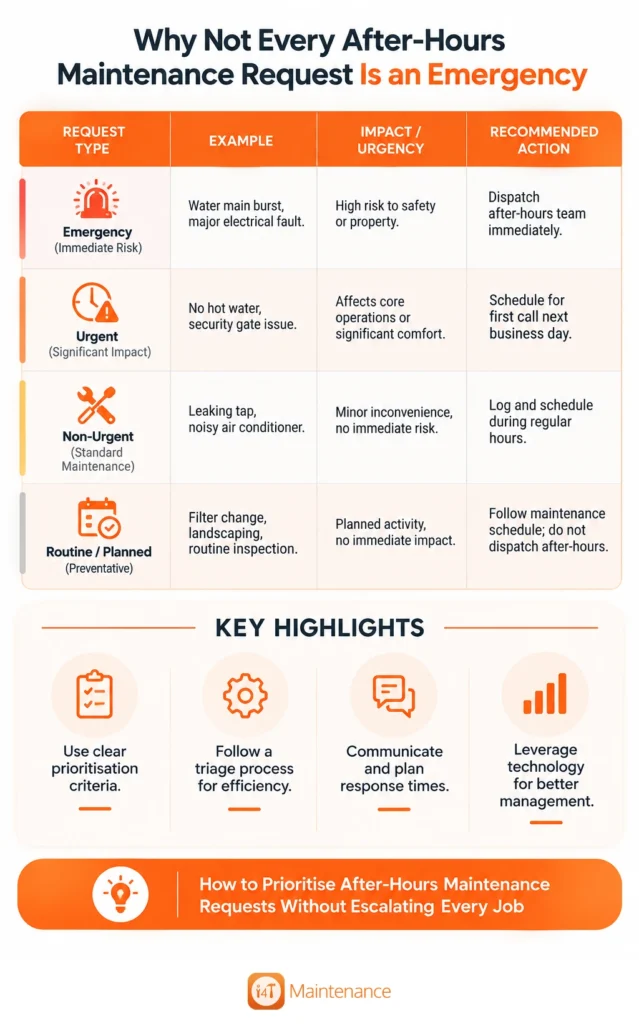
Why Not Every After-Hours Maintenance Request Is an Emergency
Strata managers often face the challenge of receiving various maintenance requests at all hours. Not every situation warrants immediate attention, though. Recognising this is the first step in reducing strain on your resources and budget. By setting clear definitions of what constitutes an emergency, you can manage expectations and allocate resources more effectively.
For instance, a burst water pipe or electrical fault poses immediate risks and should be prioritised. In contrast, a faulty light bulb or a dripping tap can typically wait until regular business hours. Understanding these distinctions ensures that your team is not overwhelmed by calls that don’t require immediate action.
What Qualifies as Emergency Maintenance?
Emergency maintenance involves issues that pose immediate threats to safety, cause severe damage, or disrupt essential services. Examples include gas leaks, flooding from burst pipes, and complete power outages. These situations demand rapid response to prevent property damage and ensure resident safety.
By categorising maintenance requests into levels of urgency, strata managers can quickly identify which issues need immediate attention. This approach not only keeps operations smooth but also helps in maintaining a balanced workload among maintenance staff. A predefined list of emergency scenarios can serve as a quick reference during after-hours calls.
A Simple Maintenance Triage Process That Works
Developing a straightforward maintenance triage process can greatly enhance your ability to handle after-hours requests efficiently. Start by training your team to categorise requests into emergency, urgent, and routine. This ensures that genuine emergencies are addressed promptly, while non-urgent issues are scheduled appropriately.
Incorporate a decision tree that helps on-call staff determine the priority level of each request. For example, a leaking tap might be classified as routine, while a burst pipe would be an emergency. Utilising a work order management system can streamline this process by logging and updating every job in real-time.
You can learn more about effective processes from our guide on Prioritise Maintenance Activities with Work Order Management Software.
How to Build an Effective Emergency Maintenance Process
Creating an effective emergency maintenance process is crucial for addressing critical issues promptly and preventing them from escalating. Start by listing potential emergencies and the appropriate responses. Ensure your team is well-versed in these procedures and has access to all necessary tools and information.
Regular training sessions and drills can prepare your team for real-life emergencies. Furthermore, integrating a robust communication system enables quick coordination between on-site staff and external service providers, ensuring a swift response. Consistent monitoring and updating of your emergency plans will keep your process efficient and reliable.
Communicating Clearly During After-Hours Incidents
Clear communication is vital when dealing with after-hours maintenance. Keeping residents informed about the status of their requests and the expected response time is crucial to maintaining trust and satisfaction. Use templates and scripts for common scenarios to ensure consistency and professionalism in your responses.
Technology can be a valuable ally here. Implementing tenant request apps can enhance transparency and keep everyone updated in real-time. Regular updates and open lines of communication prevent misunderstandings and reassure residents that their concerns are being handled efficiently.
Reducing Reactive Maintenance Through Better Planning
Proactive maintenance planning can significantly reduce the number of after-hours requests. By regularly scheduling inspections and upkeep, you can identify potential issues before they escalate. This not only helps in maintaining the property but also minimises unexpected disruptions for residents.
Leveraging historical data and predictive analytics can assist in developing a maintenance schedule that addresses high-risk areas. Furthermore, involving your team in the planning process can help identify blind spots and optimise the workflow. Effective planning leads to fewer emergencies and a smoother operation overall.
How Technology Improves After-Hours Maintenance Decisions
Modern technology has transformed how we manage after-hours maintenance. Tools like work order management systems and AI-driven platforms can significantly enhance decision-making processes. These technologies offer a centralised platform to track, prioritise, and monitor maintenance tasks efficiently.
By automating routine tasks and providing real-time updates, these systems reduce human error and improve response times. This streamlined approach ensures that critical tasks are handled first, making your after-hours maintenance management more effective. Explore more ways to enhance your operations with our insights on prioritising maintenance requests effectively.
Common After-Hours Maintenance Mistakes to Avoid
Avoiding common pitfalls in after-hours maintenance can save time and resources. One frequent mistake is escalating non-emergencies to urgent status, which can strain your team and budget. Miscommunication with residents about the nature and timing of repairs can also lead to dissatisfaction.
To prevent these issues, ensure your staff is well-trained in distinguishing between different types of maintenance requests and managing resident expectations. Regularly reviewing and updating your processes will help avoid unnecessary escalations and enhance overall efficiency.
Consider using a maintenance management software like i4T Maintenance. Schedule your demo now!
Frequently Asked Questions
Establish a clear triage process, train your team to recognise genuine emergencies, and communicate effectively with residents about non-urgent issues.
Utilising work order management systems and tenant request apps can enhance transparency, reduce errors, and improve decision-making.
By scheduling regular inspections and maintenance, potential issues can be identified early, reducing the likelihood of emergencies.
Clear communication ensures residents are informed about the status of their requests and helps manage their expectations effectively.
Escalating non-emergencies unnecessarily and miscommunicating with residents are common errors. Regular training and process reviews can help prevent these.