

Key Takeaways
A structured prioritisation framework is crucial for effective strata management.
Utilising a work order management system enhances tracking and execution of maintenance tasks.
Regular KPI monitoring leads to improved service delivery and reduced maintenance backlogs.
Key Answer
Learn how to effectively prioritise maintenance requests in strata management, ensuring lower-risk jobs aren’t forgotten, by using a work order management system.
As a strata manager in Australia, you face the complex challenge of balancing various maintenance requests ranging from urgent repairs to low-priority fixes. Understanding how to prioritise these requests effectively is crucial to maintaining resident satisfaction, ensuring compliance, and optimising operational efficiency. This article offers you a comprehensive guide on how to prioritise maintenance requests without losing track of lower-risk jobs, focusing on utilising a robust work order management system.
Why Maintenance Prioritisation Matters in Strata
In strata management, maintenance prioritisation is key to maintaining building safety and resident comfort. Without it, high-risk repairs might be delayed, potentially leading to safety hazards or increased repair costs. A structured approach to prioritising maintenance tasks ensures that the most critical issues are addressed promptly while still keeping track of less urgent tasks. This not only helps in resource allocation but also enhances overall efficiency within your organisation.
Categorise Maintenance Requests by Priority
To effectively manage maintenance in strata properties, categorising requests by priority is vital. Typically, you can break these down into four main categories:
Emergency: These are high-impact issues that pose immediate risk to safety or property, such as burst pipes or electrical faults. They demand immediate attention and resource allocation.
High Priority: These issues can develop into emergencies if not addressed soon, like minor leaks or faulty locks. While not urgent, they should be scheduled promptly.
Medium Priority: These involve routine maintenance tasks that need to be resolved to prevent potential discomfort or inconvenience, such as minor plumbing issues or window repairs.
Low Priority: These are non-urgent maintenance tasks that don’t significantly impact day-to-day living or property safety, such as repainting or minor landscaping. Although they can be deferred, they should never be forgotten.
Expert Perspective
Strata Management Specialist
In my years of working within strata management, I’ve seen the transformative power of a well-implemented work order management system. It not only optimises efficiency but also significantly enhances the quality of service delivered to residents.
Create a Consistent Priority Framework
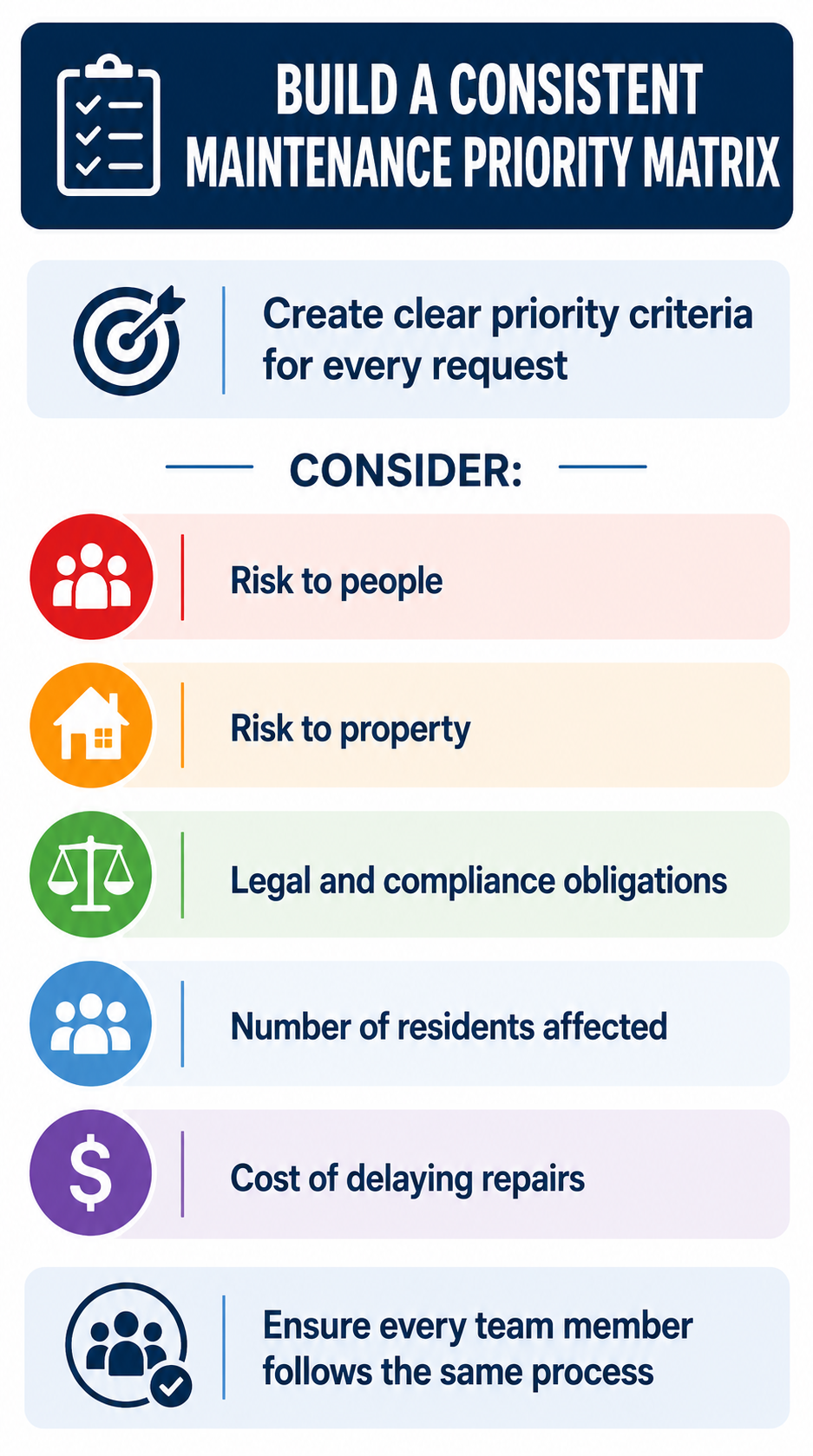
Consistency in prioritising maintenance requests is crucial for smooth operations. Establish a priority framework that all team members can easily follow. This framework should align with your organisational goals and be informed by both past data and projected needs. Begin by assessing the potential risks and impacts of each request, then allocate resources accordingly. Leveraging a work order management system can streamline this process, ensuring that every task is logged, prioritised, and monitored effectively.
Prevent Lower-Priority Jobs from Being Forgotten
While urgent tasks naturally draw more attention, it’s critical to ensure that lower-priority jobs are not overlooked. You can achieve this by integrating a ‘Maintenance Backlog Lifecycle’ into your operations. This approach focuses on regularly reviewing and updating the status of all pending tasks, regardless of priority. A work order management system offers features such as automated reminders and progress tracking to help ensure that no job gets left behind.
Use a Work Order Management System to Track Every Job
Implementing a work order management system is a game-changer in keeping track of all maintenance activities. Such systems offer a centralised platform where all requests are logged and updated in real-time. They provide visibility over every job’s status, who is responsible, and the expected completion timeline. With features like automated reminders and mobile access, you can ensure that every task, from emergency repairs to routine maintenance, is systematically managed and executed.
Automate Scheduling and Workflows
Automation in scheduling and workflows can significantly boost efficiency and accuracy in maintenance management. Utilising your work order management system, you can set up automated schedules for regular maintenance tasks and workflows for emergency responses. By doing so, you reduce the risk of human error and ensure that routine tasks are carried out consistently. This proactive approach allows you to address issues before they escalate into major repairs.
Measure Maintenance Performance with KPIs
Key performance indicators (KPIs) are essential for measuring the effectiveness of your maintenance management. Metrics such as response time, job completion rates, and resident satisfaction are key indicators of your operational success. By regularly monitoring these KPIs through your work order management system, you can identify areas needing improvement and make data-driven decisions to enhance service delivery and reduce maintenance backlogs.
Best Practices for Balancing Urgent and Routine Maintenance
Balancing urgent and routine maintenance tasks is an art that requires strategic planning and execution. One effective strategy is to cluster low-priority tasks by location or type, handling them together while addressing higher-priority jobs. Additionally, maintaining open communication with residents about maintenance schedules and priorities can foster trust and satisfaction. A well-coordinated approach using your work order management system like i4T Maintenance ensures that no task is left unaddressed, while keeping operations running smoothly.
Frequently Asked Questions
A work order management system is a software tool designed to help organisations effectively manage maintenance tasks by tracking and organising work orders.
Integrate a ‘Maintenance Backlog Lifecycle’ into your operations and use a work order management system to regularly review and update all pending tasks, regardless of priority.
Key performance indicators to monitor include response time, job completion rates, and resident satisfaction.
It ensures that high-risk repairs are addressed promptly, which maintains safety, reduces costs, and enhances operational efficiency.
Automation reduces the risk of human error, ensures routine tasks are carried out consistently, and allows for proactive issue resolution before they escalate.