
Key Takeaways
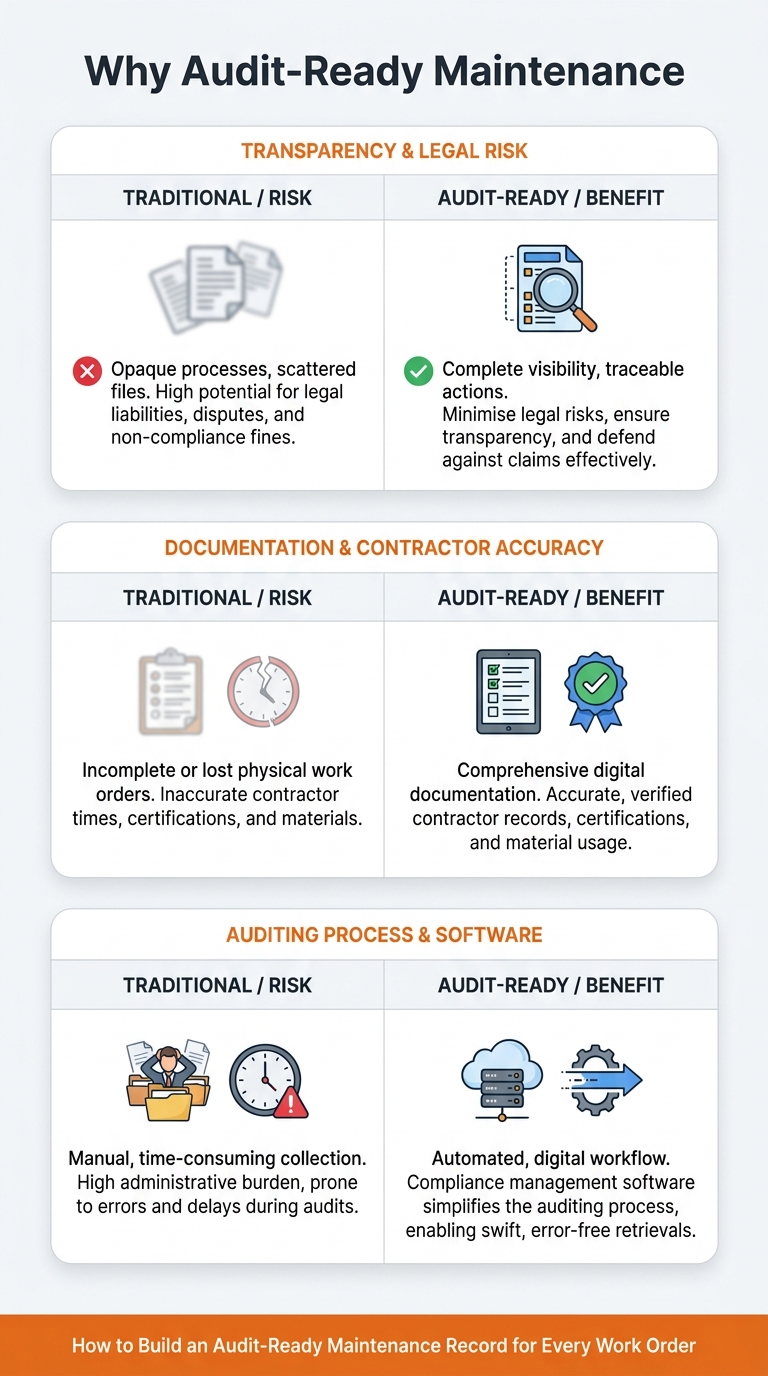
Audit-ready maintenance records ensure transparency and minimise legal risks.
Comprehensive documentation and accurate contractor records are crucial.
Compliance management software simplifies the auditing process.
Key Answer
Building an audit-ready maintenance record for every work order requires detailed documentation, accurate contractor records, and an organised compliance register. Utilise compliance management software to ensure transparency and efficiency.
As a strata manager in Australia, ensuring your maintenance records are audit-ready is crucial. Whether you’re looking to enhance compliance, transparency, or dispute resolution, knowing how to build an audit-ready maintenance record for every work order is vital. By leveraging compliance management software and focusing on a comprehensive maintenance audit trail, you can streamline operations and improve accountability.
Why Audit-Ready Maintenance Records Matter
In the world of strata management, having audit-ready maintenance records can make all the difference. These records ensure transparency, foster trust among stakeholders, and provide a solid foundation for resolving disputes. When your records are ready for scrutiny at any moment, it streamlines compliance efforts and minimises potential legal risks.
Using work order management systems, strata managers can keep clear records that not only support operational efficiency but also uphold the integrity of the work performed. This preparation is not just a regulatory requirement but a proactive approach to maintaining high standards.
Capture Complete Work Order Information From the Start
The key to audit-ready records starts with capturing comprehensive details right from the outset. Each work order should include detailed information about the task, location, equipment involved, and expected outcomes. This level of detail prevents misunderstandings and provides a clear trail of what was intended versus what was executed.
By using a digital work order system, you can ensure that every piece of information is logged accurately and accessible when needed. This approach not only saves time but also ensures that your records can withstand any audit scrutiny.
Keep Contractor Records Accurate and Up to Date
Maintaining accurate contractor records is essential for creating audit-ready documents. These records should include certifications, work history, and any relevant compliance details. Regular updates and reviews are necessary to ensure these records reflect the most current and relevant information.
Incorporating a work order software can significantly aid in organising contractor information, making it easier to access and update as needed. This proactive management of contractor records not only boosts compliance but also enhances operational transparency.
Build a Clear Maintenance Audit Trail
A well-maintained audit trail is the backbone of any audit-ready record-keeping system. This involves detailed documentation of every stage of the work order process, from initiation to completion. Each step should be timestamped and include relevant communication, approvals, and follow-up actions.
Creating a clear audit trail ensures that all actions and decisions are documented and can be traced back to specific events or individuals. This kind of transparency is crucial in demonstrating accountability and resolving any disputes that may arise.
Store All Work Order Documentation in One Place
Centralising all work order documentation is a simple yet effective strategy to ensure nothing is lost in the shuffle. By storing all related documents in one accessible location, you simplify retrieval and ensure consistency across all records.
Utilising compliance management software to centralise documentation not only improves efficiency but also enhances the security and reliability of your data. This central hub can store everything from work orders, compliance registers, to contractor records, ensuring an organised and audit-ready environment.
Match Quotes, Work Orders and Invoices
To create a seamless audit-ready process, aligning quotes, work orders, and invoices is imperative. This alignment ensures that the financial aspects of maintenance tasks are well-documented and can be verified against actual work performed.
By systematically matching these documents, you can prevent discrepancies and ensure that all financial transactions are accounted for. This practice is essential for maintaining trust with stakeholders and providing a clear financial audit trail.
Avoid Common Maintenance Record-Keeping Mistakes
Mistakes in record-keeping can lead to significant compliance issues. Common errors include missing documentation, incorrect data entries, and failure to update records regularly. Avoid these pitfalls by implementing a system that flags incomplete records and prompts regular audits.
Leverage software tools that offer reminders and checks to ensure data accuracy. Regularly review your processes to ensure they meet evolving compliance standards and avoid unnecessary complications.
How Compliance Management Software Simplifies Audits
Compliance management software plays a crucial role in simplifying the auditing process. These tools automate documentation, track compliance requirements, and provide a comprehensive view of your audit trail.
By using software, you can effortlessly compile reports, monitor compliance registers, and ensure that your records are always up-to-date. This automation not only reduces the time spent on audits but also enhances accuracy and reliability, ensuring that you are always prepared for any compliance checks.
Schedule a demo of i4T Maintenance today to experience these benefits firsthand.
Frequently Asked Questions
An audit-ready maintenance record includes comprehensive documentation, accurate contractor records, a clear audit trail, and aligned financial documents, all stored in a central location.
Compliance management software automates documentation, tracks compliance requirements, and provides a comprehensive view of your audit trail, making audits quicker and more accurate.
Matching these documents ensures that financial records align with work performed, providing a clear audit trail and preventing discrepancies.
Common mistakes include missing documentation, incorrect data entries, and outdated records. These can be avoided with regular audits and software tools that flag discrepancies.
Centralised documentation systems store all records in one place, improving data access, security, and consistency, which are crucial for audit readiness.