
Share this article

Table of Contents

How EV Chargers Change Maintenance Planning for Strata Buildings

How EV Chargers Change Maintenance Planning for Strata Buildings

Table of Contents

Key Takeaways

  • Integrating EV chargers requires a shift in maintenance strategy, focusing on preventive measures.

  • Accurate asset registers and maintenance schedules are crucial for operational efficiency.

  • Clear ownership responsibilities and compliance records ensure smooth management and risk mitigation.

  • Maintenance software streamlines processes, enhancing efficiency and cost-effectiveness.

Key Answer

EV chargers transform maintenance planning for strata buildings by becoming essential assets requiring preventive maintenance, regular inspections, and strategic planning for future upgrades.

Incorporating EV chargers into your strata buildings significantly alters maintenance planning dynamics. These sophisticated additions become more than mere conveniences–they transform into ongoing assets that demand meticulous care and strategic foresight. From regular inspections to proactive fault management, understanding the nuances of EV charger maintenance is crucial for ensuring operational longevity and compliance.

Why EV Chargers Change Strata Maintenance Planning

EV chargers in strata buildings are changing the landscape of maintenance planning. As these electrical assets grow in prevalence, their integration brings unique challenges and responsibilities. EV chargers are not just plug-and-play devices; they require a comprehensive approach to asset management that includes preventive maintenance, fault management, and long-term planning.

As these chargers become integral to a building’s infrastructure, they necessitate a shift in strategy. Maintenance planning must now account for new factors such as electrical load management, software updates for smart charging capabilities, and the physical wear and tear of charging cables. Moreover, strata managers must navigate compliance with evolving local regulations that govern EV infrastructure.

Add EV Chargers to Your Building Asset Register

The first step in effectively managing EV chargers is to formally include them in your building’s asset register. By doing so, you establish a clear framework for regular inspections and maintenance tasks. An asset register helps you keep track of each charger’s specifications, warranty details, and maintenance history, thus enabling you to plan and budget for future upgrades and replacements efficiently.

Documentation is key to maintaining compliance and facilitating transparent communication with stakeholders. Make sure you record all pertinent details such as installation dates, contractor information, and compliance certificates. This comprehensive documentation supports informed decision-making and accountability within strata management teams.

Create a Preventive EV Charger Maintenance Schedule

Creating a preventive maintenance schedule is essential for the efficient operation of EV chargers. Scheduled maintenance helps prevent unexpected breakdowns, ensuring reliability and safety for residents. This involves regular inspections to identify early signs of wear or damage, thermal imaging of connections, and periodic firmware updates to keep the charging systems running smoothly.

Consider integrating preventive maintenance strategies into your broader building maintenance plan. This approach not only extends the lifespan of your EV chargers but also contributes to a more sustainable and cost-effective strata management model.

Plan for Electrical Capacity and Future Growth

Electrical capacity is a critical consideration when introducing EV chargers to a strata building. You must assess whether the existing electrical infrastructure can support the additional load and plan for future growth as the adoption of electric vehicles increases. This may involve upgrading transformers, installing smart load management systems, or even adding additional supply lines.

Engaging a qualified electrician to conduct a load assessment is a prudent step. This ensures your building is well-prepared to handle the demands of EV charging without compromising other essential electrical systems. Proactive planning in this area can prevent costly upgrades and disruptions in the future.

Define Ownership and Maintenance Responsibilities

One of the most crucial aspects of integrating EV chargers into strata buildings is clearly defining ownership and maintenance responsibilities. This involves determining who is responsible for the maintenance costs and liability in case of a malfunction or damage. Establishing these roles early on helps avoid disputes and ensures accountability.

Typically, the strata committee and individual owners share responsibilities. Clearly documented agreements outlining who handles day-to-day maintenance, emergency repairs, and regular inspections are essential. Regular communication with all parties involved helps maintain a harmonious community environment.

Keep EV Charger Compliance Records Up to Date

Maintaining up-to-date compliance records for your EV chargers is not just a regulatory requirement; it is also a best practice for risk management. Regularly update your records to reflect any maintenance work, inspections, or compliance checks completed. This documentation proves invaluable during audits or if any compliance issues arise.

You can streamline this process by using digital checklists and maintenance management software, which offer automated reminders for upcoming compliance deadlines and create a robust audit trail.

Respond Quickly to Faults and Maintenance Issues

Fast response to faults or maintenance issues is critical for maintaining resident satisfaction and ensuring the safety of EV charging infrastructure. Implement a responsive reporting system that allows residents to report issues easily, and prioritise urgent repairs to prevent longer-term disruptions.

Having a proactive strategy in place reduces downtime and aligns with best practices in strata maintenance planning. This ensures your building remains functional and enhances resident trust in management’s ability to handle infrastructure responsibly.
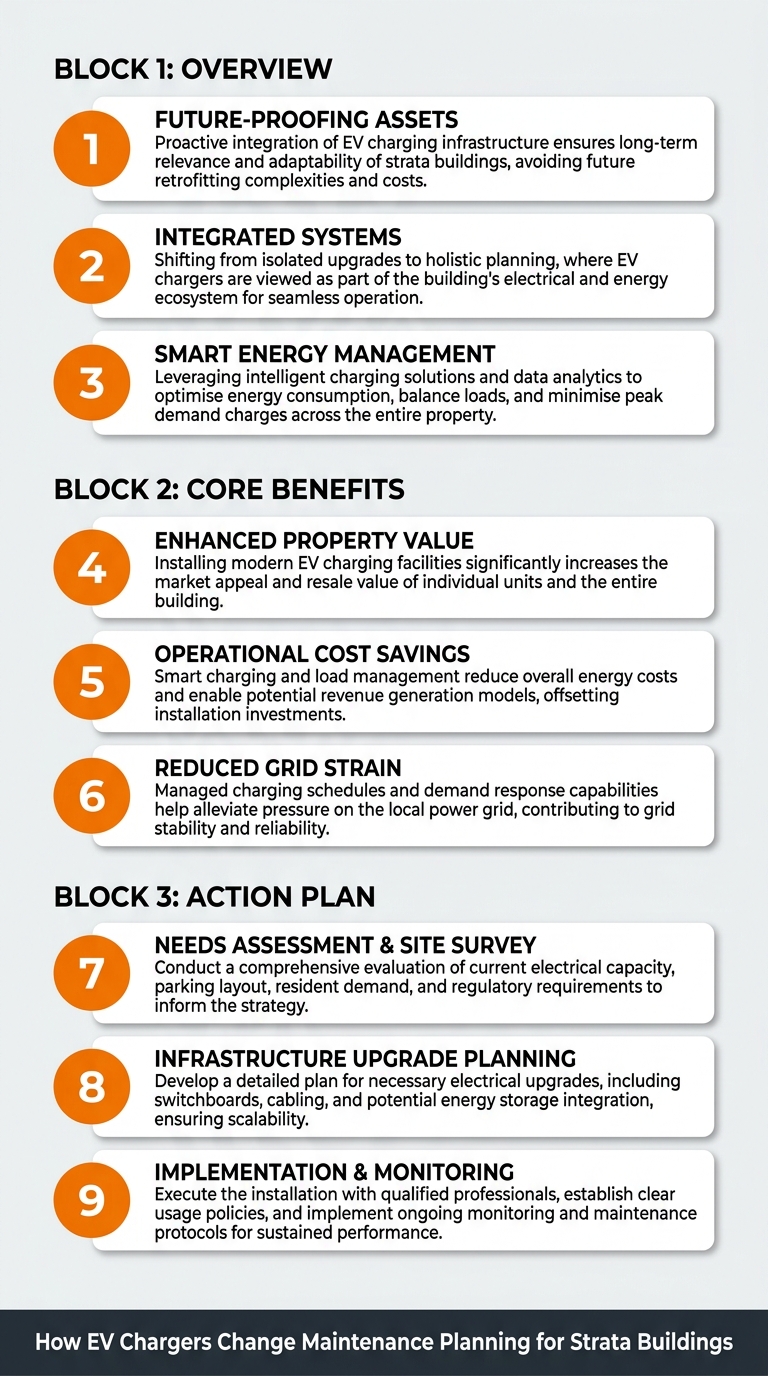
infographic_JVgVu3Xpqt.jpg

How Maintenance Software Simplifies EV Charger Maintenance

Maintenance software plays a pivotal role in managing EV charger maintenance efficiently. These platforms provide a centralised system to log maintenance activities, track work orders, and schedule inspections. By automating these tasks, you can minimise human error and ensure consistent adherence to maintenance schedules.

Adopting a connected maintenance ecosystem like i4T Maintenance, enhances operational efficiency and transparency, ultimately reducing costs and improving asset longevity. Furthermore, maintenance software helps you keep compliance records updated, reducing liability and aligning with industry regulations.

Schedule a demo today!

Frequently Asked Questions

EV chargers increase the electrical load on a building’s infrastructure, necessitating a review and potential upgrade of the electrical system to handle the additional demand.

Maintenance responsibilities typically include regular inspections, preventive maintenance, and ensuring compliance with regulations. These responsibilities are often shared between the strata committee and individual owners.

Maintenance software centralises tracking of maintenance activities, ensures adherence to schedules, and simplifies compliance management, ultimately improving operational efficiency.

Keeping up-to-date compliance records ensures adherence to regulations, mitigates liability risks, and provides a valuable resource during audits or compliance checks.

A preventive maintenance schedule should include regular inspections, checks for wear and tear, thermal imaging of connections, firmware updates, and documentation of all maintenance activities.

Scroll to Top
i4T Maintenance  Australia
Privacy Overview

This website uses cookies so that we can provide you with the best user experience possible. Cookie information is stored in your browser and performs functions such as recognising you when you return to our website and helping our team to understand which sections of the website you find most interesting and useful.