

Key Takeaways
A maintenance compliance register is essential for tracking and managing compliance tasks and documents in strata management.
Including building assets, maintenance schedules, and supplier credentials in your register is crucial for thorough compliance management.
Digital tools like i4T Maintenance simplify the tracking and updating of compliance data, ensuring you are always audit-ready.
Key Answer
A maintenance compliance register is a crucial tool for strata managers to track building assets, inspections, and compliance tasks. It ensures all legal and safety requirements are met efficiently.
In the bustling world of Australian strata management, ensuring everything is running smoothly is no small feat. From inspections to maintenance records and supplier documents, managing a strata property requires precision and organisation. How to Build a Maintenance Compliance Register That Actually Works is your comprehensive guide to establishing a system that keeps you on top of all necessary tasks.
What Is a Maintenance Compliance Register?
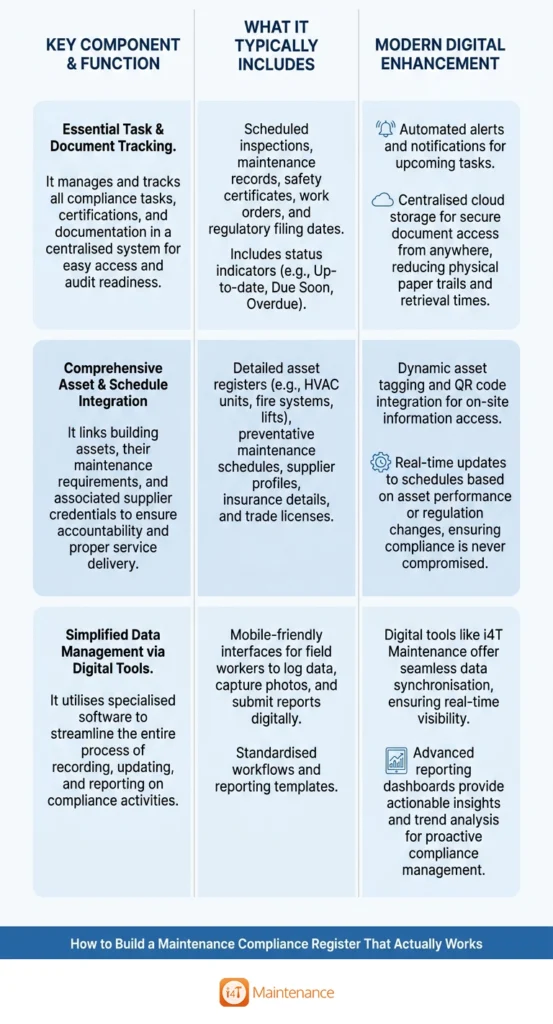
A maintenance compliance register is essentially a detailed log or system that helps strata managers keep track of all compliance-related tasks and documentation for a building or complex. It includes inspections, maintenance records, supplier credentials, and expiry dates. This register is vital in ensuring all regulatory requirements are met, thereby safeguarding both the physical structure and its occupants.
Why Strata Managers Need a Compliance Register
Strata managers face the unique challenge of balancing tenant expectations with regulatory compliance. A compliance register helps streamline this process by providing a clear overview of all compliance tasks and their statuses. It mitigates risks associated with missing a compliance deadline, which could otherwise result in fines or safety hazards. Additionally, it enhances accountability and transparency within the management team and offers peace of mind to residents, knowing their environment is safe and up to code.
What to Include in Your Register
When building your maintenance compliance register, you need to include several key components. Start with a list of all building assets, like elevators, fire extinguishers, and HVAC systems. Record their maintenance schedules and inspection dates. Supplier information, including licences and insurance details, should also be captured. Finally, document audit trails and any corrective actions taken. This comprehensive approach ensures no aspect of compliance is overlooked.
Tracking Building Assets and Essential Services
Efficiently tracking building assets requires a systematic approach. Begin by cataloguing all essential services and equipment. This includes fire safety systems, lifts, and electrical installations. Use this catalogue to create a schedule that outlines regular inspection and maintenance tasks. By integrating this into your compliance register, you ensure that all critical components are serviced regularly, thereby reducing the risk of failures and enhancing safety.
Managing Supplier Licences, Insurance and Certifications
Suppliers play a crucial role in maintaining your building’s compliance. Keeping a record of their licences, insurance certificates, and qualifications within your register is vital. It is not just about having these documents; regular checks should be scheduled to ensure they remain current and valid. This proactive management prevents lapses that could compromise the building’s compliance status.
Setting Due Dates, Status Labels and Reminders
The use of due dates and status labels in your compliance register helps keep track of upcoming tasks and obligations. Set up reminders for each task based on its urgency and importance. This prevents last-minute scrambles and ensures that all compliance activities are completed on time. Using digital tools to automate these reminders can further streamline the process, allowing for seamless management and updates.
Storing Evidence and Linking Work Orders
Storing evidence of completed tasks and linking them to work orders is crucial for compliance verification. Every inspection or maintenance task should be documented with detailed reports and photographs. These records serve as proof of compliance and can be invaluable during audits. By linking these documents to specific work orders in your register, you create a clear and accessible audit trail.
How i4T Maintenance Helps Build a Working Compliance Register
i4T Maintenance offers a robust solution for building an effective compliance register. With its user-friendly platform, you can easily input and track all necessary compliance data. The software allows for seamless integration of reminders, document storage, and asset management, making compliance a hassle-free process. By centralising all compliance activities, i4T Maintenance ensures you’re always prepared for audits and inspections.
Explore to see how our solutions can streamline your maintenance compliance. Book your demo now!
Frequently Asked Questions
A compliance register is important because it helps strata managers track and document all compliance-related tasks, ensuring regulatory obligations are met and reducing the risk of legal issues.
A compliance register should include building assets, maintenance schedules, supplier information, audit trails, and evidence of compliance activities.
Digital tools can automate reminders, streamline documentation, and make it easier to update and access compliance information, improving overall efficiency.
Suppliers provide essential services and equipment, and managing their licences, insurance, and certifications is crucial to maintaining compliance.
i4T Maintenance offers a platform to centralise compliance data, integrate reminders, and manage documents, simplifying compliance processes for strata managers.